Plausible vs Umami
Learn how Plausible and Umami differ in their key features, development activity, technology
stack and community adoption, so you can decide which of these web analytics is best for you.
Learn how Plausible and Umami differ in their key features, development activity, technology stack and community adoption, so you can decide which of these web analytics is best for you.

Plausible
Last 30 days
Last commit
1 day agoRepository age
8 yearsVersion
v3.2.1License
AGPL-3.0Self-hosted
YesRepository
plausible/analytics
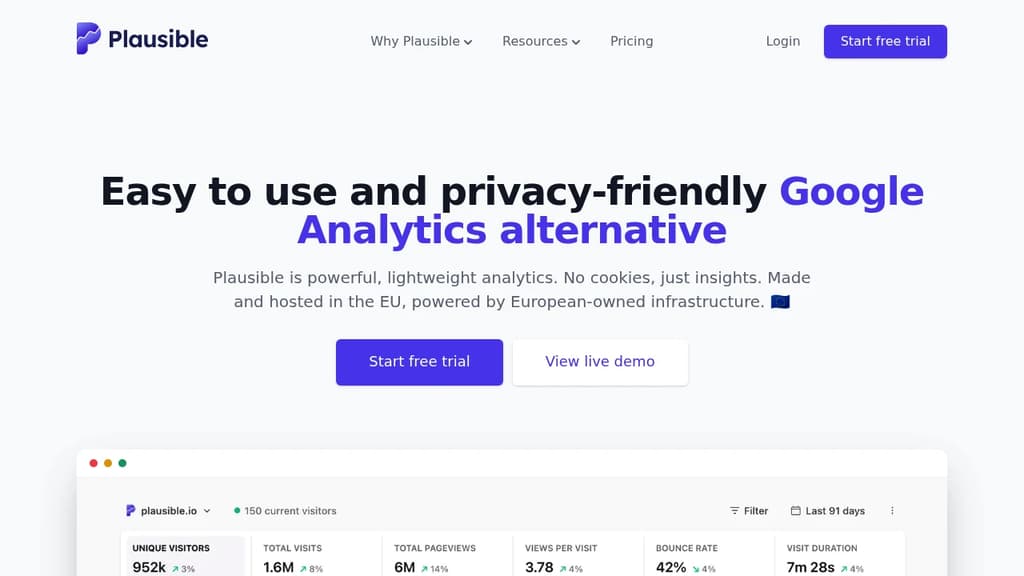

Umami
Last 30 days
Last commit
24 hours agoRepository age
6 yearsVersion
v3.4.1License
MITSelf-hosted
YesRepository
umami-software/umami
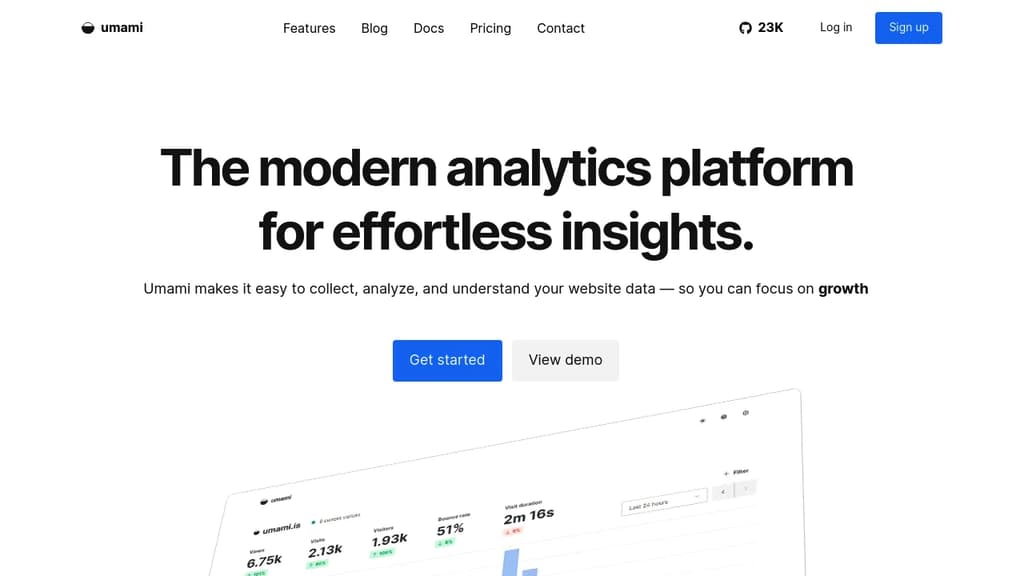
Detailed Comparison
Both Plausible and Umami have their unique strengths and serve similar purposes effectively. Consider your specific needs regarding popularity, growth, activity, technology, maturity, licensing and features when making your decision.
Both Plausible and Umami have their unique strengths and serve similar purposes effectively. Consider your specific needs regarding popularity, growth, activity, technology, maturity, licensing and features when making your decision.
Community & Popularity
Both tools have similar popularity levels, with Plausible having 29,640 stars and Umami having 39,636 stars on GitHub. In terms of developer contributions, Umami has 8,400 forks, indicating strong developer engagement.
Growth Momentum
Plausible and Umami are moving at much the same rate, adding 435 stars and adding 644 stars respectively over the last 30 days (+1.5% vs +1.7%). Neither is pulling away from the other on momentum alone.
Development Activity
Both projects show recent activity, with Plausible last updated 1 day ago and Umami 24 hours ago.
Technology Stack
Both tools share common technology foundations, being built with JavaScript, CSS, Typescript, JSX. However, they differ in their additional technology choices: Plausible uses Bash, PHP, Elixir while Umami leverages Next.js.
Project Maturity
Plausible has been in development longer, starting 8 years ago, compared to Umami which began 6 years ago. This 1.6-year head start suggests Plausible may have more mature features and established processes.
Licensing
Umami uses the MIT license, which is more permissive than Plausible's AGPL-3.0 license, potentially offering greater flexibility for commercial use and integration.
Use Cases & Features
Both tools serve similar use cases in Web Analytics.
Hosting & Deployment
Both Plausible and Umami offer self-hosting capabilities, giving you full control over your data and infrastructure.
Other tool comparisons to consider
Plausiblevs
 OpenPanelPlausible
vs
 MatomoPlausible
vs
 RybbitPlausible
vs
 Fathom LitePlausible
vs
 CountlyPlausible
vs
 OpenWebAnalyticsPlausible
vs
 DatabuddyPlausible
vs
 LitlyxPlausible
vs
 SwetrixPlausible
vs
 VemetricPlausible
vs
 BetterlyticsPlausible
vs
 HitKeepPlausible
vs
 Prisme AnalyticsUmami
vs
OpenPanelUmamivs
MatomoUmamivs
RybbitUmamivs
Fathom LiteUmamivs
CountlyUmamivs
OpenWebAnalyticsUmamivs
DatabuddyUmamivs
LitlyxUmamivs
SwetrixUmamivs
VemetricUmamivs
BetterlyticsUmamivs
HitKeepUmamivs
Prisme Analytics c15t – Open-source cookie banner, built for control and lightening fast modern web apps.