Fathom Lite vs HitKeep
Learn how Fathom Lite and HitKeep differ in their key features, development activity, technology
stack and community adoption, so you can decide which of these web analytics is best for you.
Learn how Fathom Lite and HitKeep differ in their key features, development activity, technology stack and community adoption, so you can decide which of these web analytics is best for you.

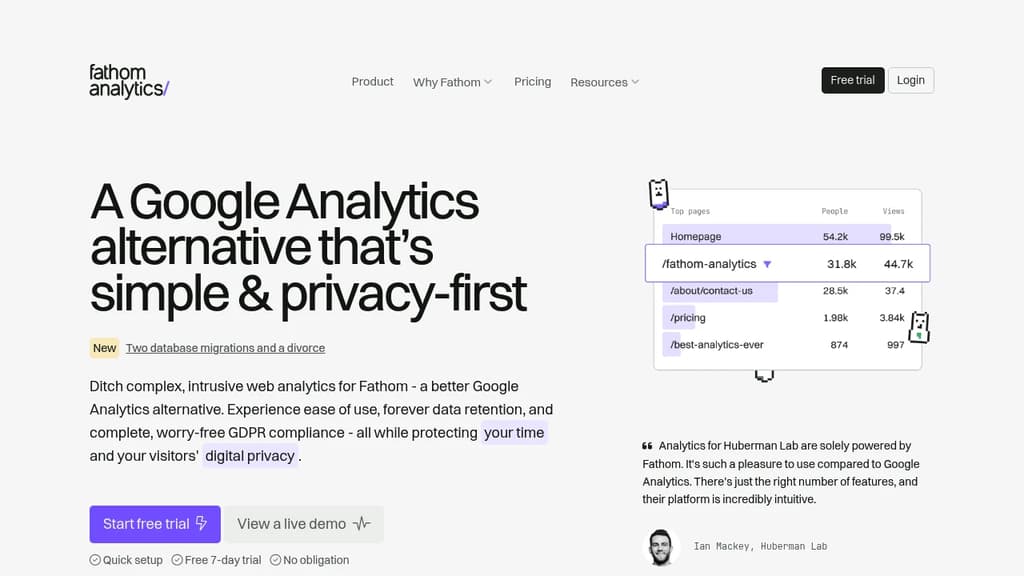
Fathom Lite
Last 30 days
Last commit
7 months agoRepository age
10 yearsVersion
v1.3.1License
MITRepository
usefathom/fathom

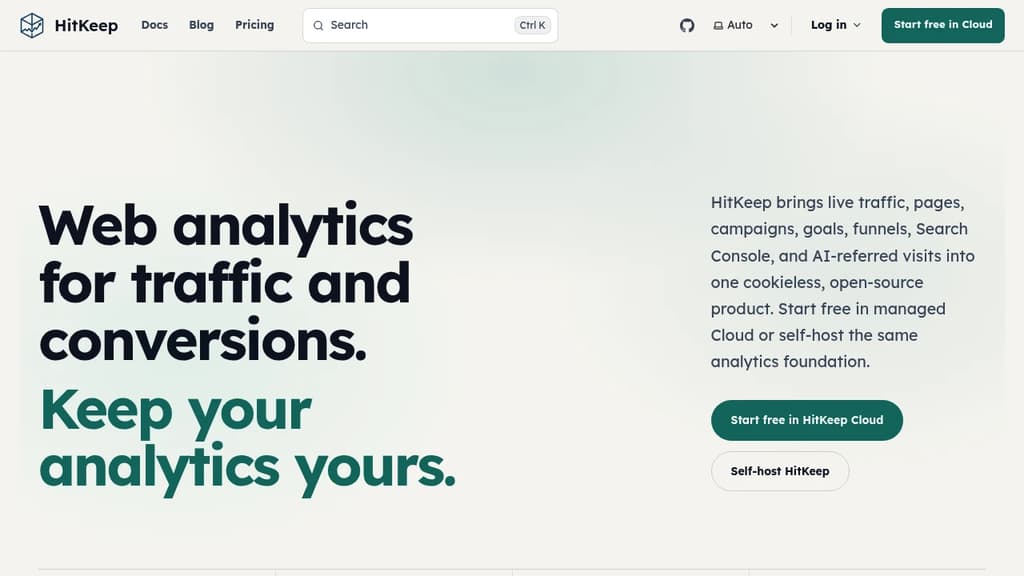
HitKeep
Last 30 days
Last commit
6 hours agoRepository age
1 yearVersion
v2.14.2License
MITSelf-hosted
YesRepository
pascalebeier/hitkeep
Detailed Comparison
Both Fathom Lite and HitKeep have their unique strengths and serve similar purposes effectively. Consider your specific needs regarding popularity, activity, maturity, licensing and features when making your decision.
Both Fathom Lite and HitKeep have their unique strengths and serve similar purposes effectively. Consider your specific needs regarding popularity, activity, maturity, licensing and features when making your decision.
Community & Popularity
Fathom Lite significantly outpaces HitKeep in community adoption with 8,019 stars compared to 98 stars on GitHub. This 81.8x difference suggests Fathom Lite has a much larger and more active community. In terms of developer contributions, Fathom Lite has 386 forks, indicating moderate developer engagement.
Development Activity
HitKeep shows more recent development activity with its last commit 6 hours ago, while Fathom Lite was last updated 7 months ago. This suggests HitKeep is being more actively maintained.
Project Maturity
Fathom Lite has been in development longer, starting 10 years ago, compared to HitKeep which began 1 year ago. This 9.1-year head start suggests Fathom Lite may have more mature features and established processes.
Licensing
Both projects use the MIT license, providing identical terms for usage and distribution.
Use Cases & Features
Both tools serve similar use cases in Web Analytics.
Hosting & Deployment
HitKeep provides self-hosting options for complete data control and customization, while Fathom Lite may be primarily cloud-based or require different deployment approaches.
Other tool comparisons to consider
Fathom Litevs
 OpenPanelFathom Lite
vs
 UmamiFathom Lite
vs
 PlausibleFathom Lite
vs
 MatomoFathom Lite
vs
 RybbitFathom Lite
vs
 CountlyFathom Lite
vs
 OpenWebAnalyticsFathom Lite
vs
 DatabuddyFathom Lite
vs
 LitlyxFathom Lite
vs
 SwetrixFathom Lite
vs
 VemetricFathom Lite
vs
 BetterlyticsFathom Lite
vs
 Prisme AnalyticsHitKeep
vs
OpenPanelHitKeepvs
UmamiHitKeepvs
PlausibleHitKeepvs
MatomoHitKeepvs
RybbitHitKeepvs
CountlyHitKeepvs
OpenWebAnalyticsHitKeepvs
DatabuddyHitKeepvs
LitlyxHitKeepvs
SwetrixHitKeepvs
VemetricHitKeepvs
BetterlyticsHitKeepvs
Prisme Analytics Stellar Hosted – Managed Open Source software hosting in the EU: secure, compliant, fast.