HitKeep vs Rybbit
Learn how HitKeep and Rybbit differ in their key features, development activity, technology
stack and community adoption, so you can decide which of these web analytics is best for you.
Learn how HitKeep and Rybbit differ in their key features, development activity, technology stack and community adoption, so you can decide which of these web analytics is best for you.

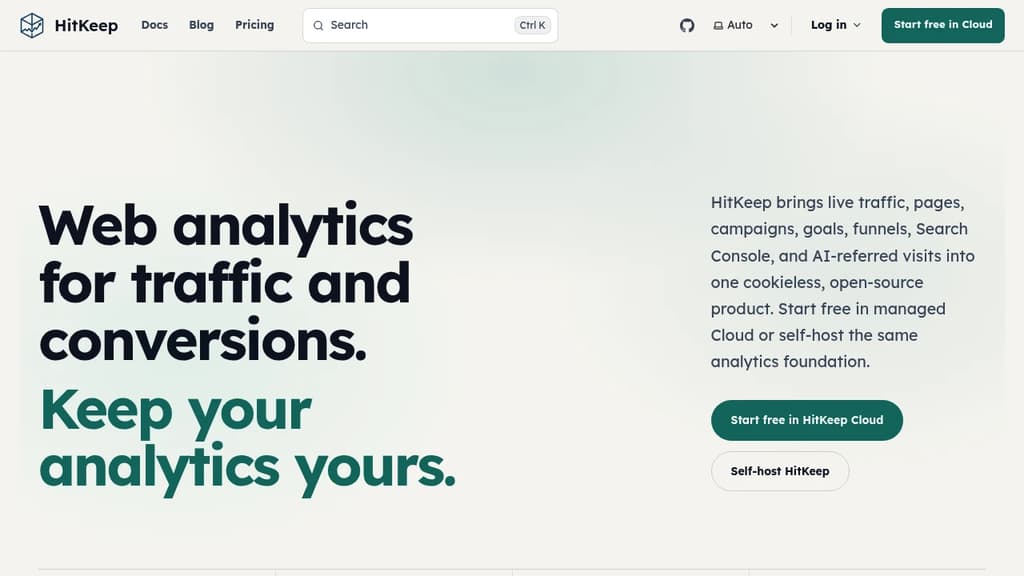
HitKeep
Last 30 days
Last commit
6 hours agoRepository age
1 yearVersion
v2.14.2License
MITSelf-hosted
YesRepository
pascalebeier/hitkeep

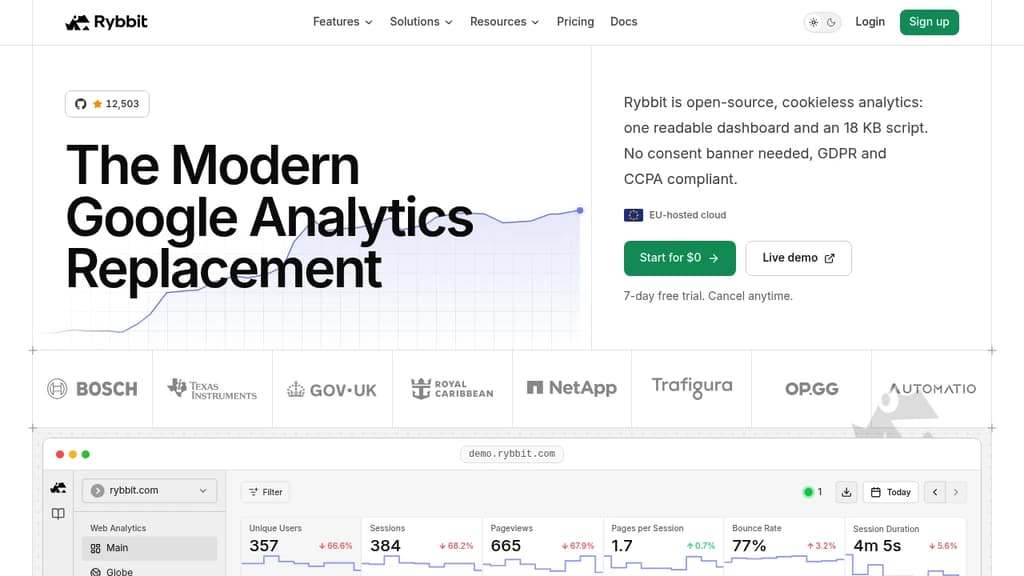
Rybbit
Last 30 days
Last commit
6 hours agoRepository age
2 yearsVersion
v2.9.2License
AGPL-3.0Self-hosted
YesRepository
rybbit-io/rybbit
Detailed Comparison
Both HitKeep and Rybbit have their unique strengths and serve similar purposes effectively. Consider your specific needs regarding popularity, activity, technology, maturity, licensing and features when making your decision.
Both HitKeep and Rybbit have their unique strengths and serve similar purposes effectively. Consider your specific needs regarding popularity, activity, technology, maturity, licensing and features when making your decision.
Community & Popularity
Rybbit significantly outpaces HitKeep in community adoption with 13,156 stars compared to 98 stars on GitHub. This 134.2x difference suggests Rybbit has a much larger and more active community. In terms of developer contributions, Rybbit has 761 forks, indicating moderate developer engagement.
Development Activity
Both projects show recent activity, with HitKeep last updated 6 hours ago and Rybbit 6 hours ago.
Technology Stack
Both tools share common technology foundations, being built with JavaScript, CSS, Bash, Typescript. However, they differ in their additional technology choices: HitKeep uses Golang, SCSS while Rybbit leverages JSX, Next.js.
Project Maturity
Both projects started around the same time, with HitKeep beginning 1 year ago and Rybbit 2 years ago.
Licensing
HitKeep uses the MIT license, which is more permissive than Rybbit's AGPL-3.0 license, potentially offering greater flexibility for commercial use and integration.
Use Cases & Features
Both tools serve similar use cases in Web Analytics. However, they also have distinct specializations: Rybbit extends into Product Analytics.
Hosting & Deployment
Both HitKeep and Rybbit offer self-hosting capabilities, giving you full control over your data and infrastructure.
Other tool comparisons to consider
HitKeepvs
 OpenPanelHitKeep
vs
 UmamiHitKeep
vs
 PlausibleHitKeep
vs
 MatomoHitKeep
vs
 Fathom LiteHitKeep
vs
 CountlyHitKeep
vs
 OpenWebAnalyticsHitKeep
vs
 DatabuddyHitKeep
vs
 LitlyxHitKeep
vs
 SwetrixHitKeep
vs
 VemetricHitKeep
vs
 BetterlyticsHitKeep
vs
 Prisme AnalyticsRybbit
vs
OpenPanelRybbitvs
UmamiRybbitvs
 PostHogRybbit
vs
PlausibleRybbitvs
MatomoRybbitvs
Fathom LiteRybbitvs
CountlyRybbitvs
OpenWebAnalyticsRybbitvs
 AptabaseRybbit
vs
DatabuddyRybbitvs
LitlyxRybbitvs
 TrenchRybbit
vs
SwetrixRybbitvs
VemetricRybbitvs
BetterlyticsRybbitvs
Prisme Analytics Stellar Hosted – Managed Open Source software hosting in the EU: secure, compliant, fast.