Keycloak vs Zitadel
Learn how Keycloak and Zitadel differ in their key features, development activity, technology
stack and community adoption, so you can decide which of these authentication & sso providers is best for you.
Learn how Keycloak and Zitadel differ in their key features, development activity, technology stack and community adoption, so you can decide which of these authentication & sso providers is best for you.

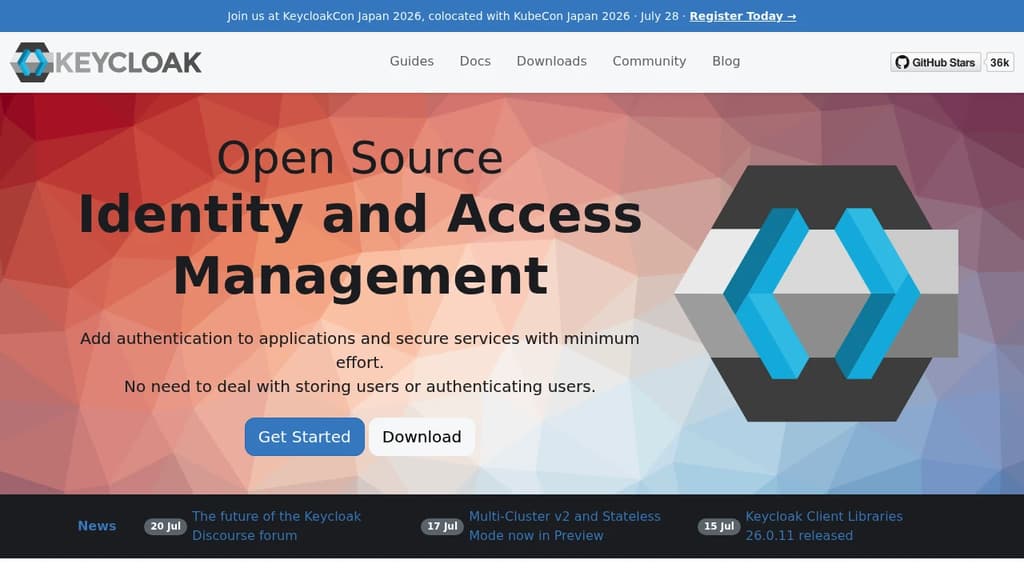
Keycloak
Last 30 days
Last commit
11 hours agoRepository age
13 yearsVersion
26.8.0License
Apache-2.0Self-hosted
YesRepository
keycloak/keycloak

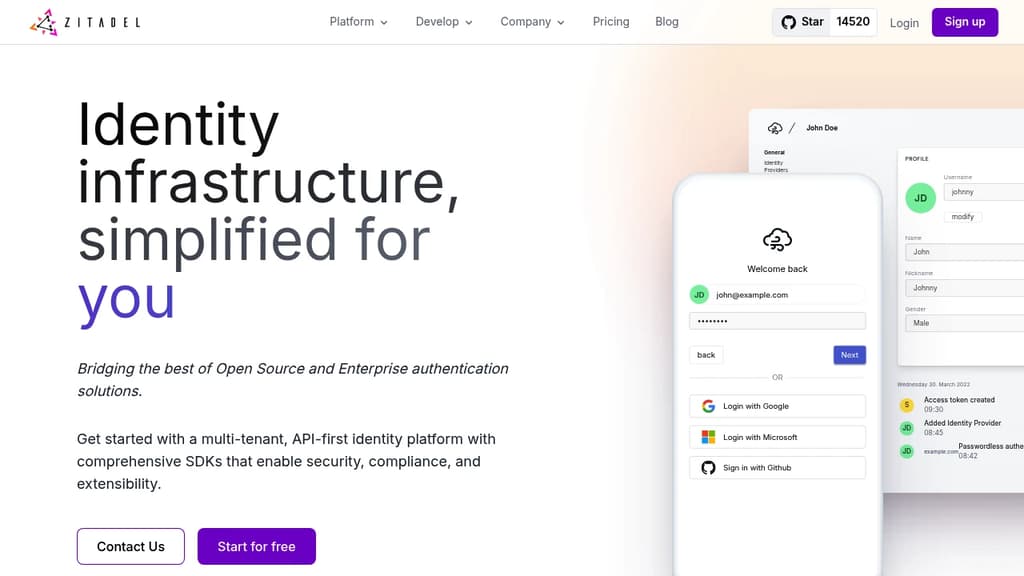
Zitadel
Last 30 days
Last commit
1 day agoRepository age
7 yearsVersion
v4.19.4License
AGPL-3.0Self-hosted
YesRepository
zitadel/zitadel
Detailed Comparison
Both Keycloak and Zitadel have their unique strengths and serve similar purposes effectively. Consider your specific needs regarding popularity, growth, activity, technology, maturity, licensing and features when making your decision.
Both Keycloak and Zitadel have their unique strengths and serve similar purposes effectively. Consider your specific needs regarding popularity, growth, activity, technology, maturity, licensing and features when making your decision.
Community & Popularity
Keycloak leads in popularity with 37,276 stars vs 15,270 stars for Zitadel. The 144% higher star count indicates stronger community adoption. In terms of developer contributions, Keycloak has 9,031 forks, indicating strong developer engagement.
Growth Momentum
Zitadel is growing faster, adding 283 stars in the last 30 days (+1.9%) against adding 567 stars for Keycloak (+1.5%). Zitadel is the smaller project of the two, so it is closing the gap rather than extending a lead.
Development Activity
Both projects show recent activity, with Keycloak last updated 11 hours ago and Zitadel 1 day ago.
Technology Stack
Both tools share common technology foundations, being built with JavaScript, CSS, Bash, Typescript, JSX. However, they differ in their additional technology choices: Keycloak uses Python, C, Java while Zitadel leverages Next.js, Golang, SCSS, Lua.
Project Maturity
Keycloak has been in development longer, starting 13 years ago, compared to Zitadel which began 7 years ago. This 6.8-year head start suggests Keycloak may have more mature features and established processes.
Licensing
The projects use different licenses: Keycloak is licensed under Apache-2.0 while Zitadel uses AGPL-3.0. Consider the licensing requirements when choosing for your project.
Use Cases & Features
Both tools serve similar use cases in Authentication & SSO, Authorization & Permissions.
Hosting & Deployment
Both Keycloak and Zitadel offer self-hosting capabilities, giving you full control over your data and infrastructure.
Other tool comparisons to consider
Keycloakvs
 HankoKeycloak
vs
 Better AuthKeycloak
vs
 AuthentikKeycloak
vs
 LogtoKeycloak
vs
 SuperTokensKeycloak
vs
 OryKeycloak
vs
 Pocket IDKeycloak
vs
 HexclaveKeycloak
vs
 PermifyKeycloak
vs
 CerbosKeycloak
vs
 AuthgearZitadel
vs
HankoZitadelvs
Better AuthZitadelvs
AuthentikZitadelvs
LogtoZitadelvs
SuperTokensZitadelvs
OryZitadelvs
Pocket IDZitadelvs
HexclaveZitadelvs
PermifyZitadelvs
CerbosZitadelvs
Authgear c15t – Open-source cookie banner, built for control and lightening fast modern web apps.