Authentik vs Zitadel
Learn how Authentik and Zitadel differ in their key features, development activity, technology
stack and community adoption, so you can decide which of these authentication & sso providers is best for you.
Learn how Authentik and Zitadel differ in their key features, development activity, technology stack and community adoption, so you can decide which of these authentication & sso providers is best for you.

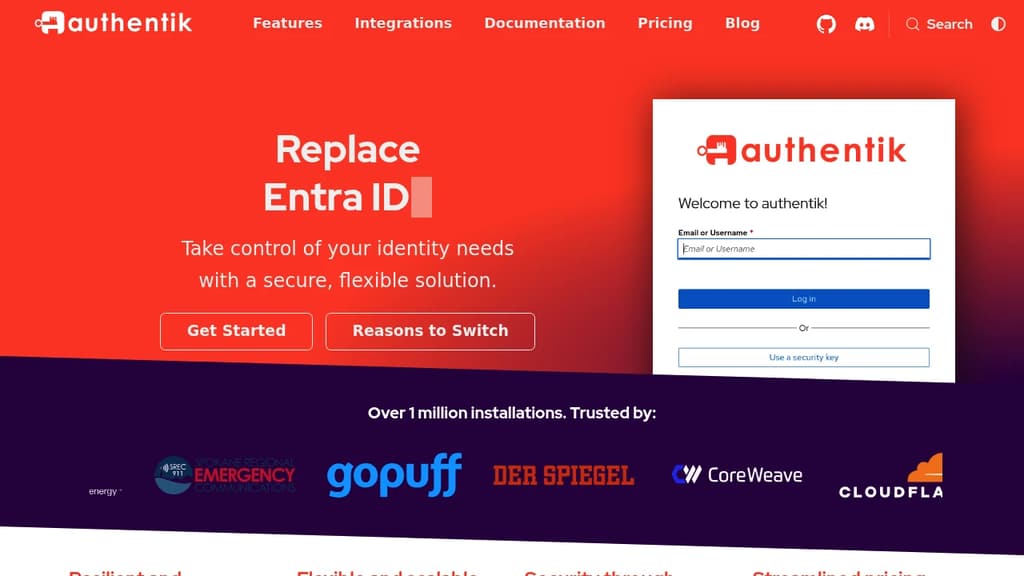
Authentik
Last 30 days
Last commit
7 hours agoRepository age
7 yearsVersion
2026.8.3License
MITSelf-hosted
YesRepository
goauthentik/authentik

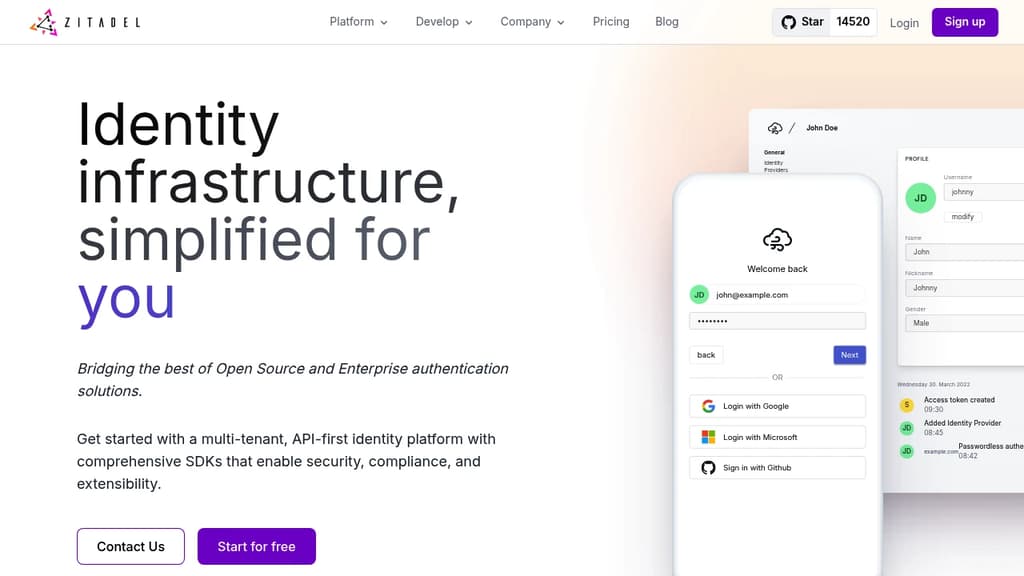
Zitadel
Last 30 days
Last commit
1 day agoRepository age
7 yearsVersion
v4.19.4License
AGPL-3.0Self-hosted
YesRepository
zitadel/zitadel
Detailed Comparison
Authentik appears to have several advantages over Zitadel, particularly in popularity and licensing. Consider your specific needs regarding popularity, growth, activity, technology, maturity, licensing and features when making your decision.
Authentik appears to have several advantages over Zitadel, particularly in popularity and licensing. Consider your specific needs regarding popularity, growth, activity, technology, maturity, licensing and features when making your decision.
Community & Popularity
Authentik leads in popularity with 25,904 stars vs 15,270 stars for Zitadel. The 70% higher star count indicates stronger community adoption. In terms of developer contributions, Authentik has 2,063 forks, indicating strong developer engagement.
Growth Momentum
Authentik and Zitadel are moving at much the same rate, adding 483 stars and adding 283 stars respectively over the last 30 days (+1.9% vs +1.9%). Neither is pulling away from the other on momentum alone.
Development Activity
Both projects show recent activity, with Authentik last updated 7 hours ago and Zitadel 1 day ago.
Technology Stack
Both tools share common technology foundations, being built with JavaScript, CSS, Bash, Typescript, JSX, Golang. However, they differ in their additional technology choices: Authentik uses Python, Rust, Django while Zitadel leverages Next.js, SCSS, Lua.
Project Maturity
Both projects started around the same time, with Authentik beginning 7 years ago and Zitadel 7 years ago.
Licensing
Authentik uses the MIT license, which is more permissive than Zitadel's AGPL-3.0 license, potentially offering greater flexibility for commercial use and integration.
Use Cases & Features
Both tools serve similar use cases in Authentication & SSO, Authorization & Permissions.
Hosting & Deployment
Both Authentik and Zitadel offer self-hosting capabilities, giving you full control over your data and infrastructure.
Other tool comparisons to consider
Authentikvs
 HankoAuthentik
vs
 KeycloakAuthentik
vs
 Better AuthAuthentik
vs
 LogtoAuthentik
vs
 SuperTokensAuthentik
vs
 OryAuthentik
vs
 Pocket IDAuthentik
vs
 HexclaveAuthentik
vs
 PermifyAuthentik
vs
 CerbosAuthentik
vs
 AuthgearZitadel
vs
HankoZitadelvs
KeycloakZitadelvs
Better AuthZitadelvs
LogtoZitadelvs
SuperTokensZitadelvs
OryZitadelvs
Pocket IDZitadelvs
HexclaveZitadelvs
PermifyZitadelvs
CerbosZitadelvs
Authgear Sent – Messaging Infrastructure for Developers. One API for SMS, WhatsApp, and RCS across 190+ countries.