NetData vs SigNoz
Learn how NetData and SigNoz differ in their key features, development activity, technology
stack and community adoption, so you can decide which of these infrastructure monitoring tools is best for you.
Learn how NetData and SigNoz differ in their key features, development activity, technology stack and community adoption, so you can decide which of these infrastructure monitoring tools is best for you.

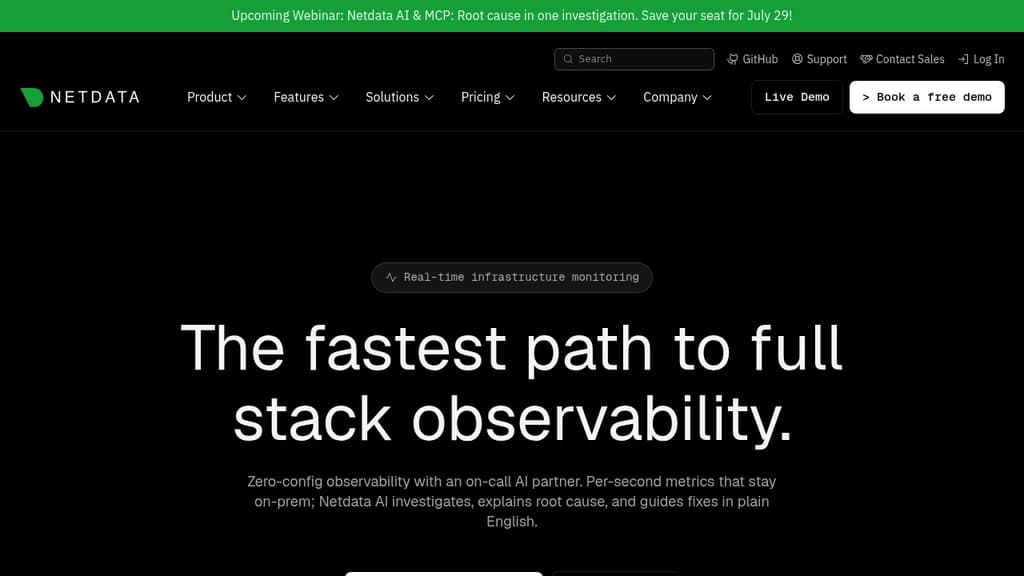
NetData
Last 30 days
Last commit
6 hours agoRepository age
13 yearsVersion
v2.12.1License
GPL-3.0Self-hosted
YesRepository
netdata/netdata

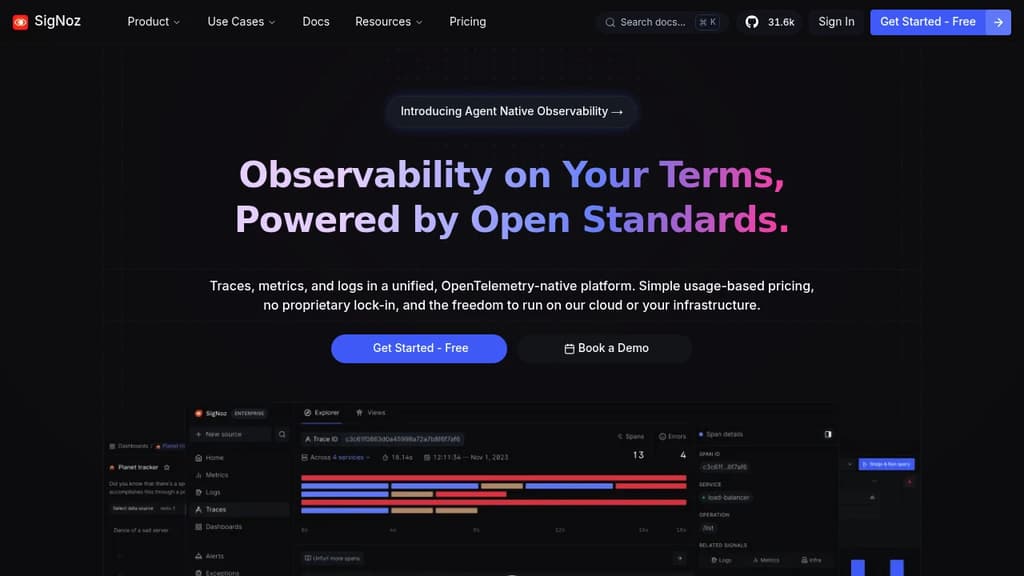
SigNoz
Last 30 days
Last commit
6 hours agoRepository age
6 yearsVersion
v0.145.0License
MITSelf-hosted
YesRepository
signoz/signoz
Detailed Comparison
Both NetData and SigNoz have their unique strengths and serve similar purposes effectively. Consider your specific needs regarding popularity, growth, activity, technology, maturity, licensing and features when making your decision.
Both NetData and SigNoz have their unique strengths and serve similar purposes effectively. Consider your specific needs regarding popularity, growth, activity, technology, maturity, licensing and features when making your decision.
Community & Popularity
NetData leads in popularity with 80,901 stars vs 32,338 stars for SigNoz. The 150% higher star count indicates stronger community adoption. In terms of developer contributions, NetData has 6,662 forks, indicating strong developer engagement.
Growth Momentum
SigNoz is growing faster, adding 252 stars in the last 30 days (+0.8%) against adding 401 stars for NetData (+0.5%). SigNoz is the smaller project of the two, so it is closing the gap rather than extending a lead.
Development Activity
Both projects show recent activity, with NetData last updated 6 hours ago and SigNoz 6 hours ago.
Technology Stack
Both tools share common technology foundations, being built with JavaScript, Bash, Python, Golang. However, they differ in their additional technology choices: NetData uses CSS, Rust, C, Objective-C, C++ while SigNoz leverages Typescript, JSX, SCSS.
Project Maturity
NetData has been in development longer, starting 13 years ago, compared to SigNoz which began 6 years ago. This 7.7-year head start suggests NetData may have more mature features and established processes.
Licensing
SigNoz uses the MIT license, which is more permissive than NetData's GPL-3.0 license, potentially offering greater flexibility for commercial use and integration.
Use Cases & Features
Both tools serve similar use cases in Infrastructure Monitoring, Performance Monitoring (APM). However, they also have distinct specializations: SigNoz extends into Log Management.
Hosting & Deployment
Both NetData and SigNoz offer self-hosting capabilities, giving you full control over your data and infrastructure.
Other tool comparisons to consider
NetDatavs
 GrafanaNetData
vs
 PrometheusNetData
vs
 ProjectDiscoveryNetData
vs
 Apache SkyWalkingNetData
vs
 OpenObserveNetData
vs
 HyperDXNetData
vs
 CorootNetData
vs
 ScanopyNetData
vs
 ZabbixNetData
vs
 LogfireNetData
vs
 UptraceNetData
vs
 CheckmkNetData
vs
 MapleNetData
vs
 IcingaNetData
vs
 NagiosSigNoz
vs
GrafanaSigNozvs
PrometheusSigNozvs
ProjectDiscoverySigNozvs
 Grafana LokiSigNoz
vs
Apache SkyWalkingSigNozvs
OpenObserveSigNozvs
 VectorSigNoz
vs
 VictoriaMetricsSigNoz
vs
 LogstashSigNoz
vs
HyperDXSigNozvs
CorootSigNozvs
 GreptimeDBSigNoz
vs
LogfireSigNozvs
UptraceSigNozvs
CheckmkSigNozvs
MapleSigNozvs
 Gigapipe
 Sent – Messaging Infrastructure for Developers. One API for SMS, WhatsApp, and RCS across 190+ countries.