EasyMonitor vs Tianji
Learn how EasyMonitor and Tianji differ in their key features, development activity, technology
stack and community adoption, so you can decide which of these uptime monitoring tools is best for you.
Learn how EasyMonitor and Tianji differ in their key features, development activity, technology stack and community adoption, so you can decide which of these uptime monitoring tools is best for you.

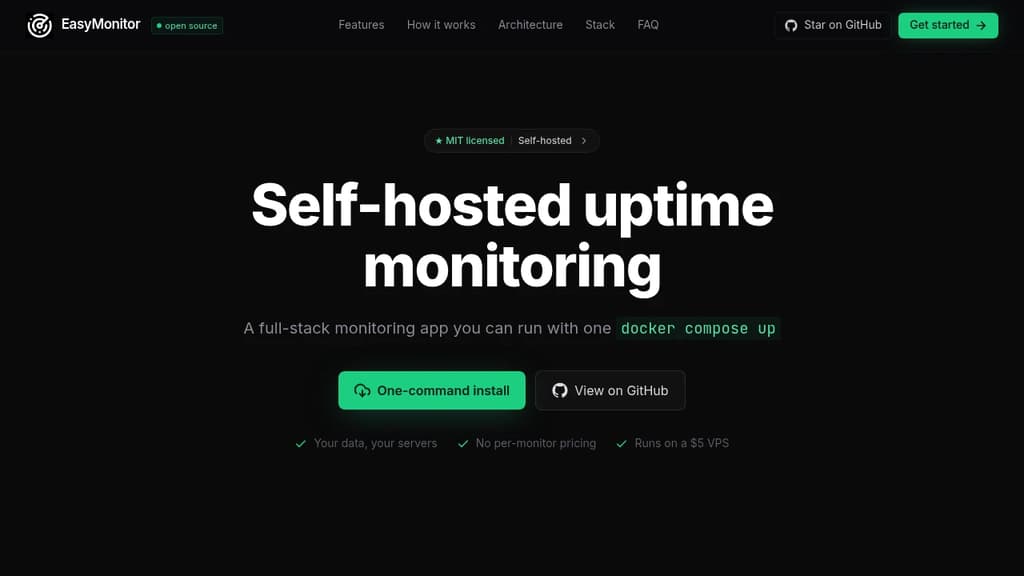
EasyMonitor
Last 30 days
Last commit
2 months agoRepository age
1 yearVersion
v0.3.0License
MITSelf-hosted
YesRepository
easymonitor

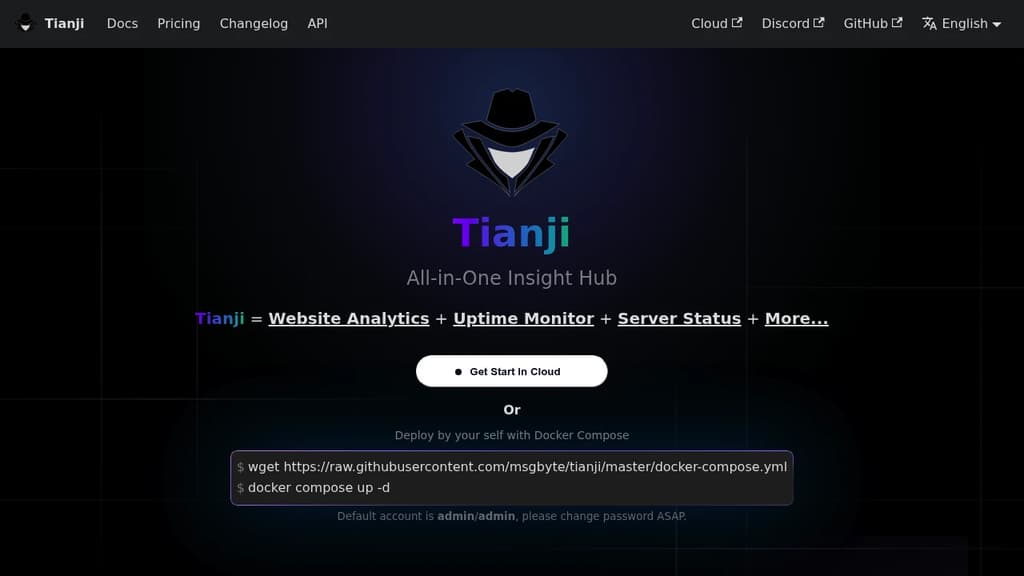
Tianji
Last 30 days
Last commit
3 days agoRepository age
3 yearsVersion
v1.33.12License
Apache-2.0Self-hosted
YesRepository
msgbyte/tianji
Detailed Comparison
Tianji appears to have several advantages over EasyMonitor, particularly in popularity, activity and maturity. Consider your specific needs regarding popularity, activity, technology, maturity, licensing and features when making your decision.
Tianji appears to have several advantages over EasyMonitor, particularly in popularity, activity and maturity. Consider your specific needs regarding popularity, activity, technology, maturity, licensing and features when making your decision.
Community & Popularity
Tianji significantly outpaces EasyMonitor in community adoption with 3,121 stars compared to 84 stars on GitHub. This 37.2x difference suggests Tianji has a much larger and more active community. In terms of developer contributions, Tianji has 198 forks, indicating moderate developer engagement.
Development Activity
Tianji shows more recent development activity with its last commit 3 days ago, while EasyMonitor was last updated 2 months ago. This suggests Tianji is being more actively maintained.
Technology Stack
Both tools share common technology foundations, being built with JavaScript, CSS, Bash, Golang. However, they differ in their additional technology choices: EasyMonitor uses PHP, Laravel while Tianji leverages Typescript, JSX, Next.js.
Project Maturity
Tianji has been in development longer, starting 3 years ago, compared to EasyMonitor which began 1 year ago. This 2.2-year head start suggests Tianji may have more mature features and established processes.
Licensing
EasyMonitor uses the MIT license, which is more permissive than Tianji's Apache-2.0 license, potentially offering greater flexibility for commercial use and integration.
Use Cases & Features
Both tools serve similar use cases in Uptime Monitoring, Status Pages. However, they also have distinct specializations: Tianji extends into Web Analytics.
Hosting & Deployment
Both EasyMonitor and Tianji offer self-hosting capabilities, giving you full control over your data and infrastructure.
Other tool comparisons to consider
EasyMonitorvs
 Uptime KumaEasyMonitor
vs
 CachetEasyMonitor
vs
 CheckmateEasyMonitor
vs
 GatusEasyMonitor
vs
 OpenStatusEasyMonitor
vs
 HealthchecksEasyMonitor
vs
 OneUptimeEasyMonitor
vs
 KenerEasyMonitor
vs
 PeekapingEasyMonitor
vs
 StatusnookEasyMonitor
vs
 UptimepageEasyMonitor
vs
 StatusScoutTianji
vs
 MatomoTianji
vs
GatusTianjivs
OpenStatusTianjivs
HealthchecksTianjivs
OneUptimeTianjivs
KenerTianjivs
 DatabuddyTianji
vs
 LitlyxTianji
vs
PeekapingTianjivs
StatusnookTianjivs
 Prisme AnalyticsTianji
vs
UptimepageTianjivs
StatusScout Sent – Messaging Infrastructure for Developers. One API for SMS, WhatsApp, and RCS across 190+ countries.