Huly vs Redmine
Learn how Huly and Redmine differ in their key features, development activity, technology
stack and community adoption, so you can decide which of these project management suites is best for you.
Learn how Huly and Redmine differ in their key features, development activity, technology stack and community adoption, so you can decide which of these project management suites is best for you.

Huly
Last 30 days


Redmine
Last 30 days
Last commit
13 hours agoRepository age
14 yearsLicense
GPL-2.0Self-hosted
YesRepository
redmine/redmine
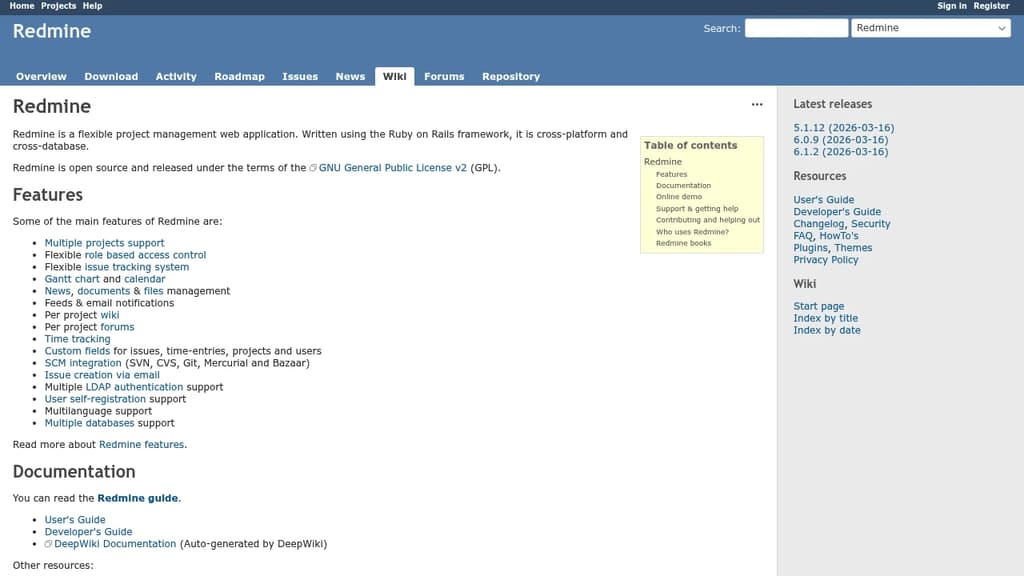
Detailed Comparison
Both Huly and Redmine have their unique strengths and serve similar purposes effectively. Consider your specific needs regarding popularity, growth, activity, technology, maturity, licensing and features when making your decision.
Both Huly and Redmine have their unique strengths and serve similar purposes effectively. Consider your specific needs regarding popularity, growth, activity, technology, maturity, licensing and features when making your decision.
Community & Popularity
Huly significantly outpaces Redmine in community adoption with 27,998 stars compared to 6,062 stars on GitHub. This 4.6x difference suggests Huly has a much larger and more active community. In terms of developer contributions, Redmine has 2,474 forks, indicating strong developer engagement.
Growth Momentum
Huly is growing faster, adding 208 stars in the last 30 days (+0.7%) against adding 23 stars for Redmine (+0.4%). Huly is both larger and pulling further ahead.
Development Activity
Both projects show recent activity, with Huly last updated 1 day ago and Redmine 13 hours ago.
Technology Stack
Both tools share common technology foundations, being built with JavaScript, Python. However, they differ in their additional technology choices: Huly uses Bash, Typescript, SCSS while Redmine leverages CSS, Ruby, Perl.
Project Maturity
Redmine has been in development longer, starting 14 years ago, compared to Huly which began 5 years ago. This 8.8-year head start suggests Redmine may have more mature features and established processes.
Licensing
The projects use different licenses: Huly is licensed under EPL-2.0 while Redmine uses GPL-2.0. Consider the licensing requirements when choosing for your project.
Use Cases & Features
Both tools serve similar use cases in Project Management Suites. However, they also have distinct specializations: Huly also focuses on Collaborative Workspaces, Video Conferencing & Virtual Office.
Hosting & Deployment
Both Huly and Redmine offer self-hosting capabilities, giving you full control over your data and infrastructure.
Other tool comparisons to consider
Hulyvs
 PlaneHuly
vs
 WekanHuly
vs
 OpenProjectHuly
vs
 PlankaHuly
vs
 LeantimeHuly
vs
 KanHuly
vs
 VikunjaHuly
vs
 ColanodeHuly
vs
 WorklenzHuly
vs
 TaigaHuly
vs
 KanbaHuly
vs
 OperatelyHuly
vs
 Ever TeamsHuly
vs
 WindshiftHuly
vs
 OrgniseHuly
vs
 ManageHuly
vs
 SayrHuly
vs
 MimraiRedmine
vs
PlaneRedminevs
WekanRedminevs
OpenProjectRedminevs
PlankaRedminevs
LeantimeRedminevs
KanRedminevs
VikunjaRedminevs
WorklenzRedminevs
TaigaRedminevs
KanbaRedminevs
OperatelyRedminevs
Ever TeamsRedminevs
WindshiftRedminevs
OrgniseRedminevs
ManageRedminevs
SayrRedminevs
Mimrai Sent – A unified API for sending messages across SMS, RCS, and apps like WhatsApp.