Redmine vs Wekan
Learn how Redmine and Wekan differ in their key features, development activity, technology
stack and community adoption, so you can decide which of these project management suites is best for you.
Learn how Redmine and Wekan differ in their key features, development activity, technology stack and community adoption, so you can decide which of these project management suites is best for you.

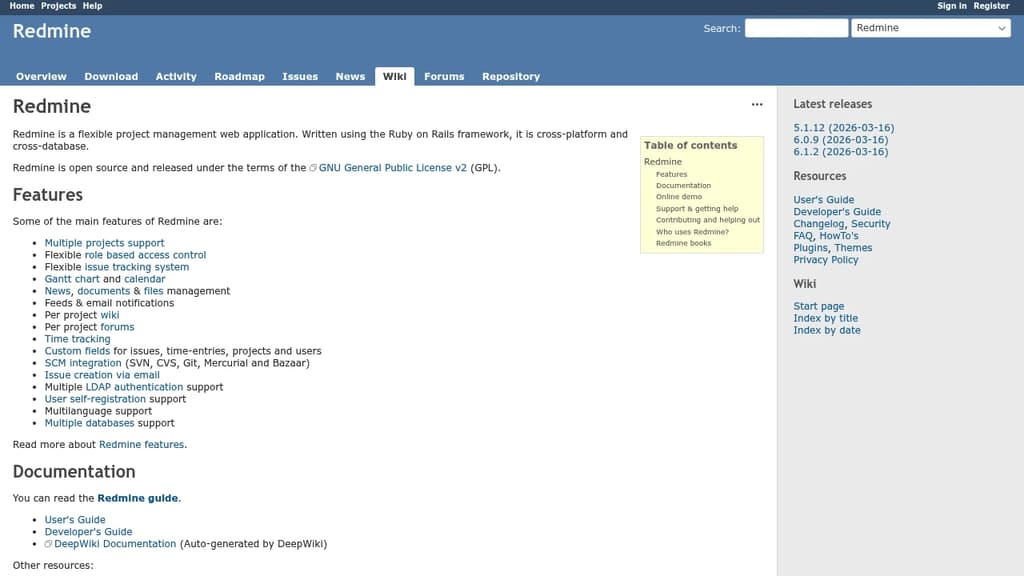
Redmine
Last 30 days
Last commit
18 hours agoRepository age
14 yearsLicense
GPL-2.0Self-hosted
YesRepository
redmine/redmine

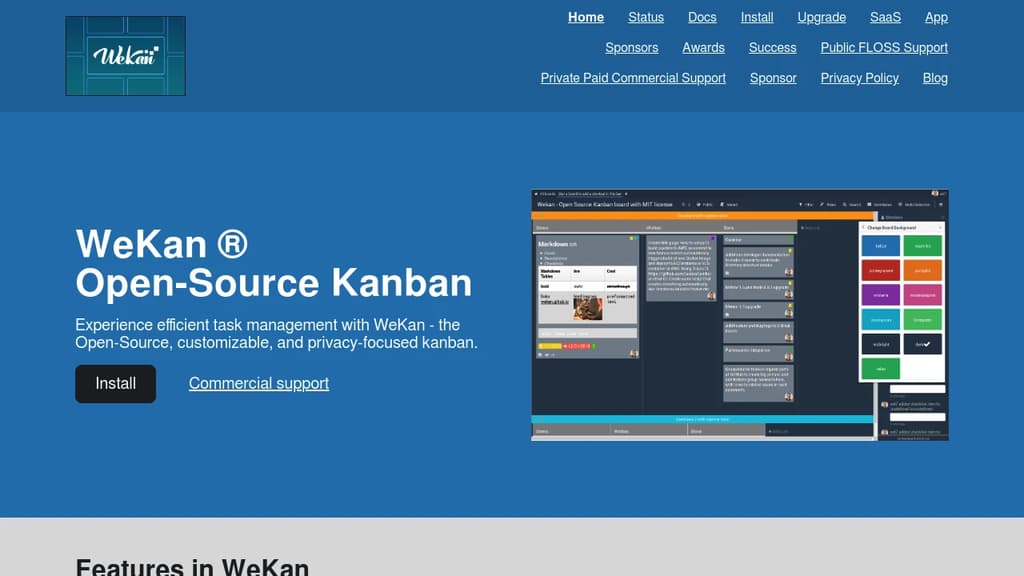
Wekan
Last 30 days
Last commit
6 hours agoRepository age
13 yearsVersion
v12.47License
MITSelf-hosted
YesRepository
wekan/wekan
Detailed Comparison
Both Redmine and Wekan have their unique strengths and serve similar purposes effectively. Consider your specific needs regarding popularity, growth, activity, technology, maturity, licensing and features when making your decision.
Both Redmine and Wekan have their unique strengths and serve similar purposes effectively. Consider your specific needs regarding popularity, growth, activity, technology, maturity, licensing and features when making your decision.
Community & Popularity
Wekan significantly outpaces Redmine in community adoption with 21,120 stars compared to 6,045 stars on GitHub. This 3.5x difference suggests Wekan has a much larger and more active community. In terms of developer contributions, Wekan has 3,002 forks, indicating strong developer engagement.
Growth Momentum
Redmine and Wekan are moving at much the same rate, adding 14 stars and adding 37 stars respectively over the last 30 days (+0.2% vs +0.2%). Neither is pulling away from the other on momentum alone.
Development Activity
Both projects show recent activity, with Redmine last updated 18 hours ago and Wekan 6 hours ago.
Technology Stack
Both tools share common technology foundations, being built with JavaScript, CSS, Python, Perl. However, they differ in their additional technology choices: Redmine uses Ruby while Wekan leverages Bash, SCSS, PHP, Meteor.
Project Maturity
Redmine has been in development longer, starting 14 years ago, compared to Wekan which began 13 years ago. This 1.2-year head start suggests Redmine may have more mature features and established processes.
Licensing
Wekan uses the MIT license, which is more permissive than Redmine's GPL-2.0 license, potentially offering greater flexibility for commercial use and integration.
Use Cases & Features
Both tools serve similar use cases in Project Management Suites.
Hosting & Deployment
Both Redmine and Wekan offer self-hosting capabilities, giving you full control over your data and infrastructure.
Other tool comparisons to consider
Redminevs
 PlaneRedmine
vs
 HulyRedmine
vs
 OpenProjectRedmine
vs
 PlankaRedmine
vs
 LeantimeRedmine
vs
 KanRedmine
vs
 VikunjaRedmine
vs
 WorklenzRedmine
vs
 TaigaRedmine
vs
 KanbaRedmine
vs
 OperatelyRedmine
vs
 Ever TeamsRedmine
vs
 WindshiftRedmine
vs
 OrgniseRedmine
vs
 ManageRedmine
vs
 SayrRedmine
vs
 MimraiWekan
vs
PlaneWekanvs
HulyWekanvs
OpenProjectWekanvs
PlankaWekanvs
LeantimeWekanvs
KanWekanvs
VikunjaWekanvs
WorklenzWekanvs
TaigaWekanvs
KanbaWekanvs
OperatelyWekanvs
Ever TeamsWekanvs
WindshiftWekanvs
OrgniseWekanvs
ManageWekanvs
SayrWekanvs
Mimrai InfluxDB – The purpose-built time series platform for high-velocity ingestion and real-time queries at scale.