Redmine vs Vikunja
Learn how Redmine and Vikunja differ in their key features, development activity, technology
stack and community adoption, so you can decide which of these project management suites is best for you.
Learn how Redmine and Vikunja differ in their key features, development activity, technology stack and community adoption, so you can decide which of these project management suites is best for you.

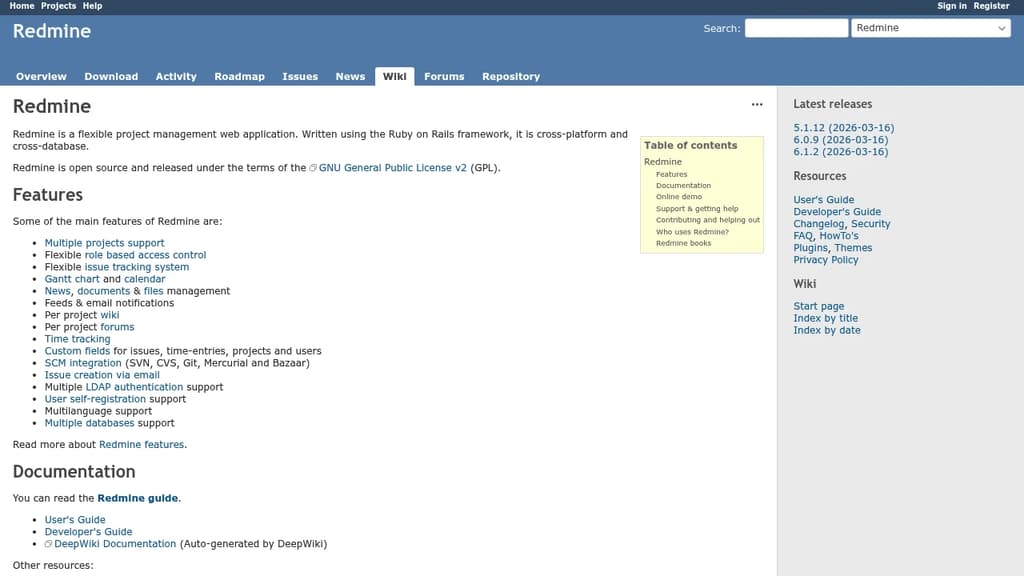
Redmine
Last 30 days
Last commit
19 hours agoRepository age
14 yearsLicense
GPL-2.0Self-hosted
YesRepository
redmine/redmine

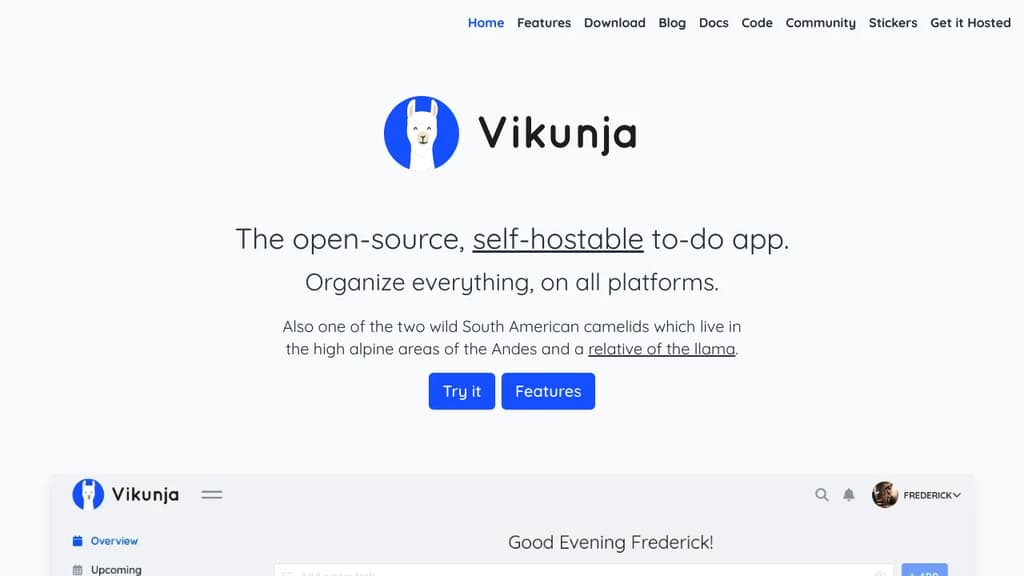
Vikunja
Last 30 days
Last commit
10 hours agoRepository age
8 yearsVersion
v2.8.0License
AGPL-3.0Self-hosted
YesRepository
go-vikunja/vikunja
Detailed Comparison
Both Redmine and Vikunja have their unique strengths and serve similar purposes effectively. Consider your specific needs regarding popularity, growth, activity, technology, maturity, licensing and features when making your decision.
Both Redmine and Vikunja have their unique strengths and serve similar purposes effectively. Consider your specific needs regarding popularity, growth, activity, technology, maturity, licensing and features when making your decision.
Community & Popularity
Both Redmine and Vikunja show comparable community engagement with 6,084 and 6,073 stars respectively. In terms of developer contributions, Redmine has 2,468 forks, indicating strong developer engagement.
Growth Momentum
Vikunja is growing faster, adding 295 stars in the last 30 days (+5.1%) against adding 35 stars for Redmine (+0.6%). Vikunja is the smaller project of the two, so it is closing the gap rather than extending a lead.
Development Activity
Both projects show recent activity, with Redmine last updated 19 hours ago and Vikunja 10 hours ago.
Technology Stack
Both tools share common technology foundations, being built with JavaScript. However, they differ in their additional technology choices: Redmine uses CSS, Python, Ruby, Perl while Vikunja leverages Bash, Typescript, Golang, SCSS, Vue.
Project Maturity
Redmine has been in development longer, starting 14 years ago, compared to Vikunja which began 8 years ago. This 6.1-year head start suggests Redmine may have more mature features and established processes.
Licensing
The projects use different licenses: Redmine is licensed under GPL-2.0 while Vikunja uses AGPL-3.0. Consider the licensing requirements when choosing for your project.
Use Cases & Features
Both tools serve similar use cases in Project Management Suites. However, they also have distinct specializations: Vikunja extends into Task Management.
Hosting & Deployment
Both Redmine and Vikunja offer self-hosting capabilities, giving you full control over your data and infrastructure.
Other tool comparisons to consider
Redminevs
 It's a PlanRedmine
vs
 PlaneRedmine
vs
 HulyRedmine
vs
 WekanRedmine
vs
 OpenProjectRedmine
vs
 PlankaRedmine
vs
 LeantimeRedmine
vs
 KanRedmine
vs
 WorklenzRedmine
vs
 TaigaRedmine
vs
 KanbaRedmine
vs
 OperatelyRedmine
vs
 WindshiftRedmine
vs
 Ever TeamsRedmine
vs
 OrgniseRedmine
vs
 ManageRedmine
vs
 MimraiRedmine
vs
 SayrVikunja
vs
 Macro TasksVikunja
vs
It's a PlanVikunjavs
PlaneVikunjavs
HulyVikunjavs
 Super ProductivityVikunja
vs
WekanVikunjavs
OpenProjectVikunjavs
 KaneoVikunja
vs
PlankaVikunjavs
LeantimeVikunjavs
KanVikunjavs
WorklenzVikunjavs
 DonetickVikunja
vs
 KanriVikunja
vs
TaigaVikunjavs
KanbaVikunjavs
OperatelyVikunjavs
WindshiftVikunjavs
Ever TeamsVikunjavs
OrgniseVikunjavs
ManageVikunjavs
MimraiVikunjavs
Sayr Sent – Messaging Infrastructure for Developers. One API for SMS, WhatsApp, and RCS across 190+ countries.