Focalboard vs Windshift
Learn how Focalboard and Windshift differ in their key features, development activity, technology
stack and community adoption, so you can decide which of these project management suites is best for you.
Learn how Focalboard and Windshift differ in their key features, development activity, technology stack and community adoption, so you can decide which of these project management suites is best for you.

Focalboard
Stars
26,269Forks
2,556Last commit
2 months agoRepository age
6 yearsSelf-hosted
Yes
Activity score


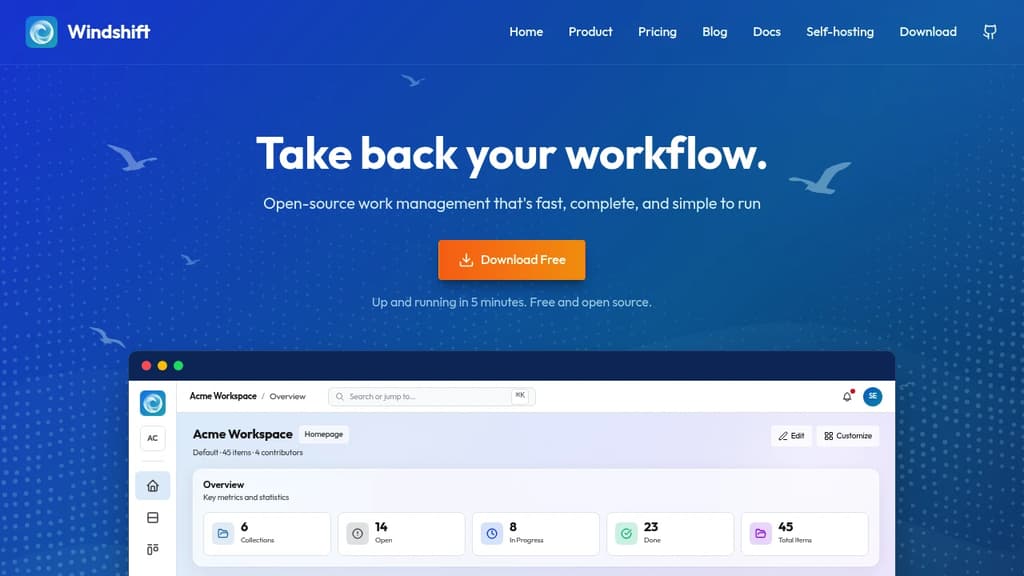
Windshift
Activity score
Detailed Comparison
Both Focalboard and Windshift have their unique strengths and serve similar purposes effectively. Consider your specific needs regarding popularity, activity, technology, maturity, licensing and features when making your decision.
Both Focalboard and Windshift have their unique strengths and serve similar purposes effectively. Consider your specific needs regarding popularity, activity, technology, maturity, licensing and features when making your decision.
Community & Popularity
Focalboard significantly outpaces Windshift in community adoption with 26,269 stars compared to 26 stars on GitHub. This 1010.3x difference suggests Focalboard has a much larger and more active community. In terms of developer contributions, Focalboard has 2,556 forks, indicating strong developer engagement.
Development Activity
Windshift shows more recent development activity with its last commit 14 hours ago, while Focalboard was last updated 2 months ago. This suggests Windshift is being more actively maintained.
Technology Stack
Both tools share common technology foundations, being built with JavaScript, Bash, Typescript, JSX, Golang. However, they differ in their additional technology choices: Focalboard uses SCSS, Swift, C# while Windshift leverages CSS, Python, Tauri.
Project Maturity
Focalboard has been in development longer, starting 6 years ago, compared to Windshift which began 7 months ago. This 5.3-year head start suggests Focalboard may have more mature features and established processes.
Licensing
Windshift is licensed under AGPL-3.0, while Focalboard's license terms are not publicly specified.
Use Cases & Features
Both tools serve similar use cases in Project Management Suites. However, they also have distinct specializations: Focalboard also focuses on Collaborative Workspaces, Agile Project Management.
Hosting & Deployment
Both Focalboard and Windshift offer self-hosting capabilities, giving you full control over your data and infrastructure.
Other tool comparisons to consider
Focalboardvs
 PlaneFocalboard
vs
 HulyFocalboard
vs
 OpenProjectFocalboard
vs
 PlankaFocalboard
vs
 LeantimeFocalboard
vs
 VikunjaFocalboard
vs
 WorklenzFocalboard
vs
 KanriFocalboard
vs
 TaigaFocalboard
vs
 Ever TeamsFocalboard
vs
 OperatelyFocalboard
vs
 OrgniseFocalboard
vs
 ManageFocalboard
vs
 MimraiWindshift
vs
PlaneWindshiftvs
HulyWindshiftvs
OpenProjectWindshiftvs
PlankaWindshiftvs
LeantimeWindshiftvs
 KanWindshift
vs
VikunjaWindshiftvs
WorklenzWindshiftvs
TaigaWindshiftvs
Ever TeamsWindshiftvs
OperatelyWindshiftvs
OrgniseWindshiftvs
ManageWindshiftvs
MimraiWindshiftvs
 Sayr
Sayr Logto – Modern auth infrastructure for developers.