Better Auth vs Pocket ID
Learn how Better Auth and Pocket ID differ in their key features, development activity, technology
stack and community adoption, so you can decide which of these authentication & sso providers is best for you.
Learn how Better Auth and Pocket ID differ in their key features, development activity, technology stack and community adoption, so you can decide which of these authentication & sso providers is best for you.

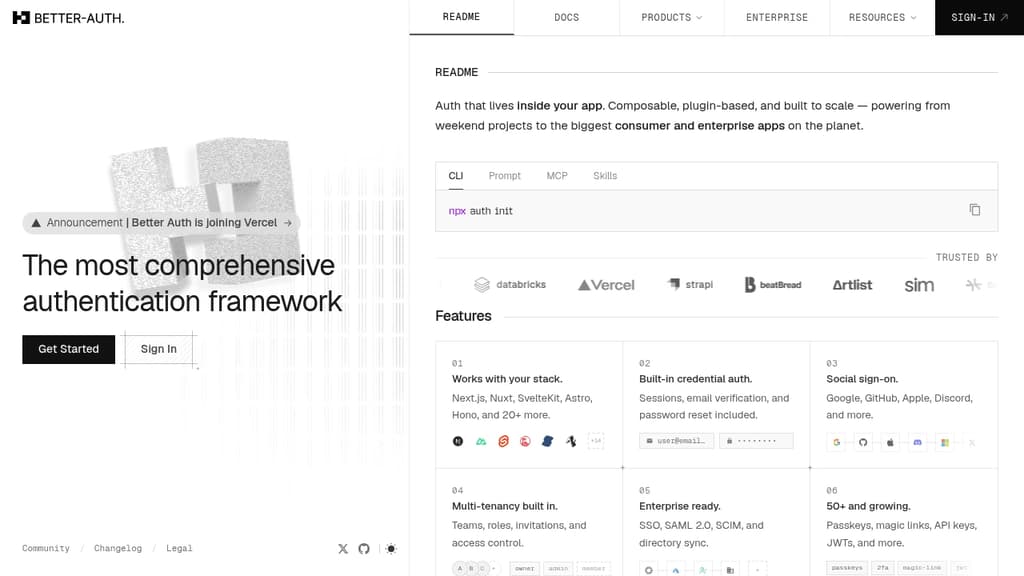
Better Auth
Last 30 days
Last commit
4 hours agoRepository age
2 yearsVersion
v1.7.25License
MITRepository
better-auth

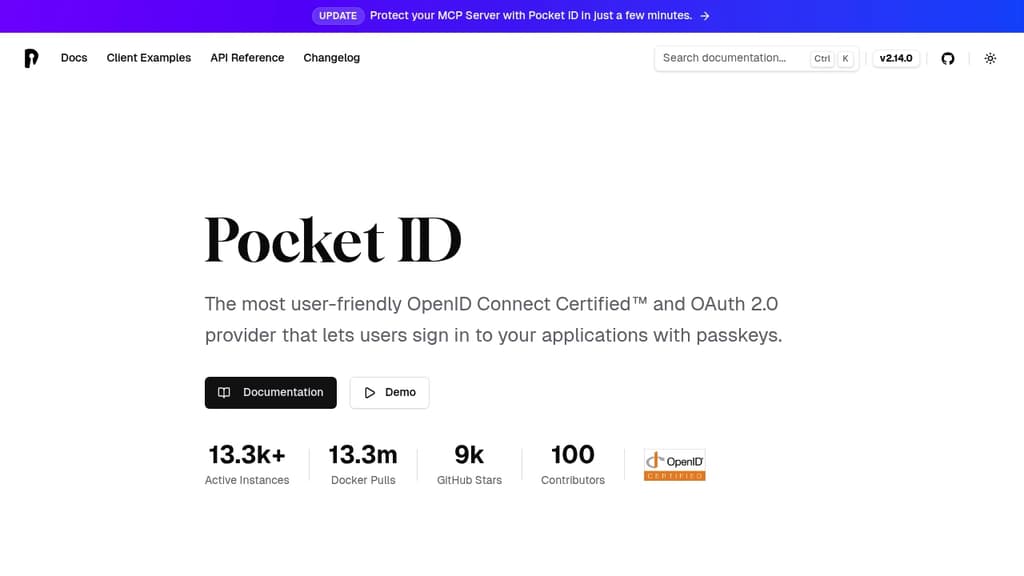
Pocket ID
Last 30 days
Last commit
4 hours agoRepository age
2 yearsVersion
v2.19.3License
BSD-2-ClauseSelf-hosted
YesRepository
pocket-id/pocket-id
Detailed Comparison
Both Better Auth and Pocket ID have their unique strengths and serve similar purposes effectively. Consider your specific needs regarding popularity, growth, activity, technology, maturity, licensing and features when making your decision.
Both Better Auth and Pocket ID have their unique strengths and serve similar purposes effectively. Consider your specific needs regarding popularity, growth, activity, technology, maturity, licensing and features when making your decision.
Community & Popularity
Better Auth leads in popularity with 30,750 stars vs 10,317 stars for Pocket ID. The 198% higher star count indicates stronger community adoption. In terms of developer contributions, Better Auth has 3,080 forks, indicating strong developer engagement.
Growth Momentum
Pocket ID is growing faster, adding 713 stars in the last 30 days (+7.4%) against adding 419 stars for Better Auth (+1.4%). Pocket ID is the smaller project of the two, so it is closing the gap rather than extending a lead.
Development Activity
Both projects show recent activity, with Better Auth last updated 4 hours ago and Pocket ID 4 hours ago.
Technology Stack
Both tools share common technology foundations, being built with JavaScript, CSS, Typescript, JSX, SvelteKit. However, they differ in their additional technology choices: Better Auth uses Next.js, Vue, Nuxt.js, Tanstack Start, Remix while Pocket ID leverages Bash, Golang.
Project Maturity
Both projects started around the same time, with Better Auth beginning 2 years ago and Pocket ID 2 years ago.
Licensing
The projects use different licenses: Better Auth is licensed under MIT while Pocket ID uses BSD-2-Clause. Consider the licensing requirements when choosing for your project.
Use Cases & Features
Both tools serve similar use cases in Authentication & SSO.
Hosting & Deployment
Pocket ID provides self-hosting options for complete data control and customization, while Better Auth may be primarily cloud-based or require different deployment approaches.
Other tool comparisons to consider
Better Authvs
 HankoBetter Auth
vs
 KeycloakBetter Auth
vs
 AuthentikBetter Auth
vs
 ZitadelBetter Auth
vs
 LogtoBetter Auth
vs
 SuperTokensBetter Auth
vs
 OryBetter Auth
vs
 HexclaveBetter Auth
vs
 VoidAuthBetter Auth
vs
 AuthgearPocket ID
vs
HankoPocket IDvs
KeycloakPocket IDvs
AuthentikPocket IDvs
ZitadelPocket IDvs
LogtoPocket IDvs
SuperTokensPocket IDvs
OryPocket IDvs
HexclavePocket IDvs
VoidAuthPocket IDvs
 DefguardPocket ID
vs
Authgear Openlane – Open-source, developer-first platform for automated compliance, risk management, and built-in Trust Center.