Super Productivity vs Worklenz
Learn how Super Productivity and Worklenz differ in their key features, development activity, technology
stack and community adoption, so you can decide which of these task management tools is best for you.
Learn how Super Productivity and Worklenz differ in their key features, development activity, technology stack and community adoption, so you can decide which of these task management tools is best for you.

Super Productivity
Last 30 days
Last commit
18 hours agoRepository age
10 yearsVersion
v19.1.0License
MITRepository
johannesjo/super-productivity


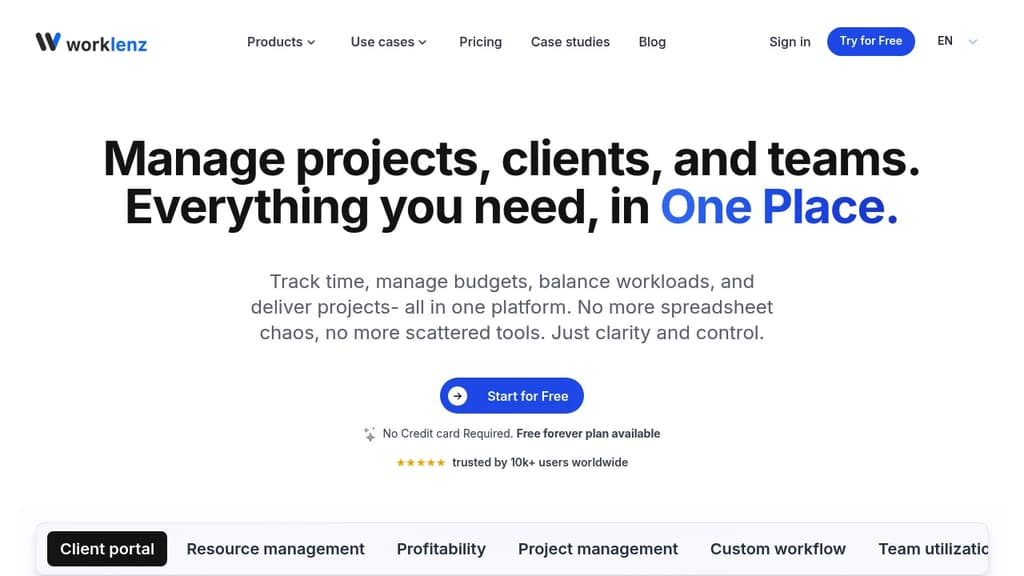
Worklenz
Last 30 days
Last commit
6 hours agoRepository age
2 yearsVersion
v3.1.0License
AGPL-3.0Repository
worklenz/worklenz
Detailed Comparison
Super Productivity appears to have several advantages over Worklenz, particularly in popularity, growth, maturity and licensing. Consider your specific needs regarding popularity, growth, activity, technology, maturity, licensing and features when making your decision.
Super Productivity appears to have several advantages over Worklenz, particularly in popularity, growth, maturity and licensing. Consider your specific needs regarding popularity, growth, activity, technology, maturity, licensing and features when making your decision.
Community & Popularity
Super Productivity significantly outpaces Worklenz in community adoption with 22,592 stars compared to 3,199 stars on GitHub. This 7.1x difference suggests Super Productivity has a much larger and more active community. In terms of developer contributions, Super Productivity has 2,126 forks, indicating strong developer engagement.
Growth Momentum
Super Productivity is growing faster, adding 724 stars in the last 30 days (+3.3%) against adding 34 stars for Worklenz (+1.1%). Super Productivity is both larger and pulling further ahead.
Development Activity
Both projects show recent activity, with Super Productivity last updated 18 hours ago and Worklenz 6 hours ago.
Technology Stack
Both tools share common technology foundations, being built with JavaScript, CSS, Bash, Typescript, JSX, SCSS. However, they differ in their additional technology choices: Super Productivity uses Objective-C, Java, Swift, Ruby, Kotlin, MATLAB.
Project Maturity
Super Productivity has been in development longer, starting 10 years ago, compared to Worklenz which began 2 years ago. This 7.5-year head start suggests Super Productivity may have more mature features and established processes.
Licensing
Super Productivity uses the MIT license, which is more permissive than Worklenz's AGPL-3.0 license, potentially offering greater flexibility for commercial use and integration.
Use Cases & Features
Both tools serve similar use cases in Task Management. However, they also have distinct specializations: Super Productivity also focuses on Time Tracking while Worklenz extends into Project Management Suites.
Other tool comparisons to consider
Super Productivityvs
 Macro TasksSuper Productivity
vs
 PlankaSuper Productivity
vs
 KaneoSuper Productivity
vs
 LeantimeSuper Productivity
vs
 SolidTimeSuper Productivity
vs
 KanSuper Productivity
vs
 VikunjaSuper Productivity
vs
 KimaiSuper Productivity
vs
 WakapiSuper Productivity
vs
 DonetickSuper Productivity
vs
 KanriSuper Productivity
vs
 TimeScribeSuper Productivity
vs
 Ever TeamsSuper Productivity
vs
 MimraiWorklenz
vs
Macro TasksWorklenzvs
 PlaneWorklenz
vs
 HulyWorklenz
vs
 WekanWorklenz
vs
 OpenProjectWorklenz
vs
PlankaWorklenzvs
KaneoWorklenzvs
LeantimeWorklenzvs
 RedmineWorklenz
vs
KanWorklenzvs
VikunjaWorklenzvs
KanriWorklenzvs
 TaigaWorklenz
vs
 KanbaWorklenz
vs
Ever TeamsWorklenzvs
 OperatelyWorklenz
vs
 WindshiftWorklenz
vs
 OrgniseWorklenz
vs
 ManageWorklenz
vs
 SayrWorklenz
vs
Mimrai c15t – Open-source cookie banner, built for control and lightening fast modern web apps.