Mimrai vs Super Productivity
Learn how Mimrai and Super Productivity differ in their key features, development activity, technology
stack and community adoption, so you can decide which of these task management tools is best for you.
Learn how Mimrai and Super Productivity differ in their key features, development activity, technology stack and community adoption, so you can decide which of these task management tools is best for you.

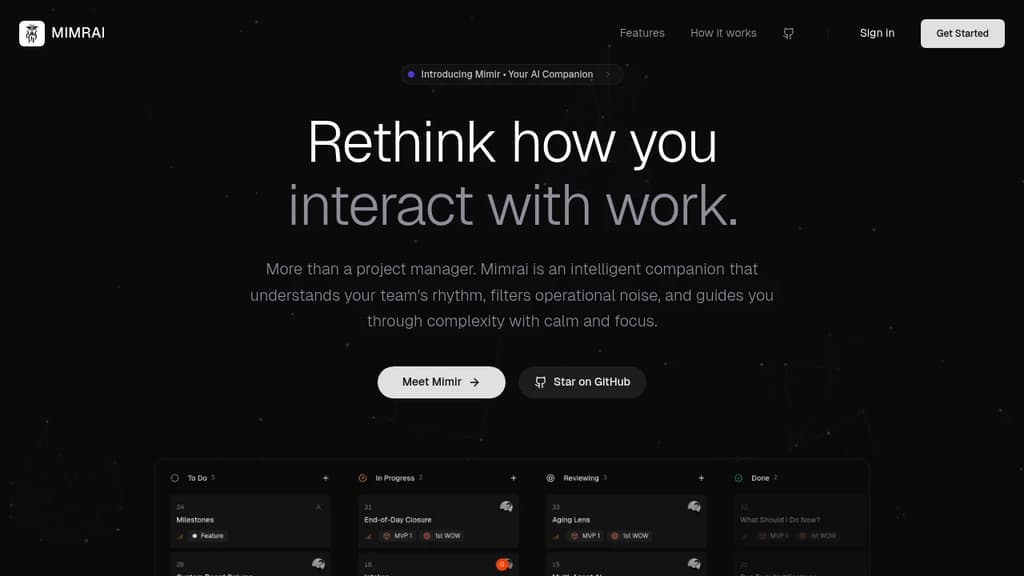
Mimrai
Last 30 days
This repository was archived by the owner and is no longer maintained.
Last commit
7 months agoRepository age
1 yearLicense
AGPL-3.0Repository
mimrai-org/mimrai

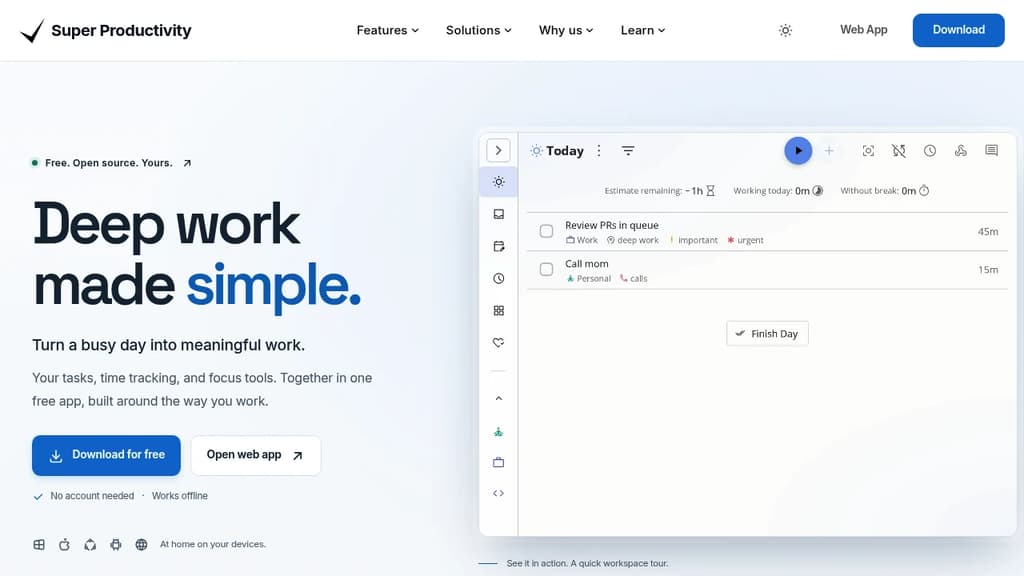
Super Productivity
Last 30 days
Last commit
8 hours agoRepository age
10 yearsVersion
v19.2.0License
MITRepository
super-productivity
Detailed Comparison
Super Productivity appears to have several advantages over Mimrai, particularly in popularity, activity, maturity and licensing. Consider your specific needs regarding popularity, activity, technology, maturity, licensing and features when making your decision.
Super Productivity appears to have several advantages over Mimrai, particularly in popularity, activity, maturity and licensing. Consider your specific needs regarding popularity, activity, technology, maturity, licensing and features when making your decision.
Community & Popularity
Super Productivity significantly outpaces Mimrai in community adoption with 22,942 stars compared to 25 stars on GitHub. This 917.7x difference suggests Super Productivity has a much larger and more active community. In terms of developer contributions, Super Productivity has 2,171 forks, indicating strong developer engagement.
Development Activity
Super Productivity shows more recent development activity with its last commit 8 hours ago, while Mimrai was last updated 7 months ago. This suggests Super Productivity is being more actively maintained.
Technology Stack
Both tools share common technology foundations, being built with JavaScript, CSS, Typescript, JSX. However, they differ in their additional technology choices: Mimrai uses Python, Next.js while Super Productivity leverages Bash, SCSS, Objective-C, Java, Swift, Ruby, Kotlin, MATLAB.
Project Maturity
Super Productivity has been in development longer, starting 10 years ago, compared to Mimrai which began 1 year ago. This 8.9-year head start suggests Super Productivity may have more mature features and established processes.
Licensing
Super Productivity uses the MIT license, which is more permissive than Mimrai's AGPL-3.0 license, potentially offering greater flexibility for commercial use and integration.
Use Cases & Features
Both tools serve similar use cases in Task Management. However, they also have distinct specializations: Mimrai also focuses on Project Management Suites while Super Productivity extends into Time Tracking.
Other tool comparisons to consider
Mimraivs
 Macro TasksMimrai
vs
 PlaneMimrai
vs
 HulyMimrai
vs
 WekanMimrai
vs
 OpenProjectMimrai
vs
 KaneoMimrai
vs
 PlankaMimrai
vs
 LeantimeMimrai
vs
 RedmineMimrai
vs
 KanMimrai
vs
 VikunjaMimrai
vs
 WorklenzMimrai
vs
 KanriMimrai
vs
 TaigaMimrai
vs
 KanbaMimrai
vs
 OperatelyMimrai
vs
 Ever TeamsMimrai
vs
 WindshiftMimrai
vs
 OrgniseMimrai
vs
 ManageMimrai
vs
 SayrSuper Productivity
vs
Macro TasksSuper Productivityvs
KaneoSuper Productivityvs
PlankaSuper Productivityvs
LeantimeSuper Productivityvs
 SolidTimeSuper Productivity
vs
KanSuper Productivityvs
VikunjaSuper Productivityvs
 KimaiSuper Productivity
vs
 WakapiSuper Productivity
vs
 DonetickSuper Productivity
vs
KanriSuper Productivityvs
 TimeScribe
 Capture – Capture screenshots, generate PDFs, scrape content, extract metadata, and automate browsers with one API.