Leantime vs Mimrai
Learn how Leantime and Mimrai differ in their key features, development activity, technology
stack and community adoption, so you can decide which of these project management suites is best for you.
Learn how Leantime and Mimrai differ in their key features, development activity, technology stack and community adoption, so you can decide which of these project management suites is best for you.

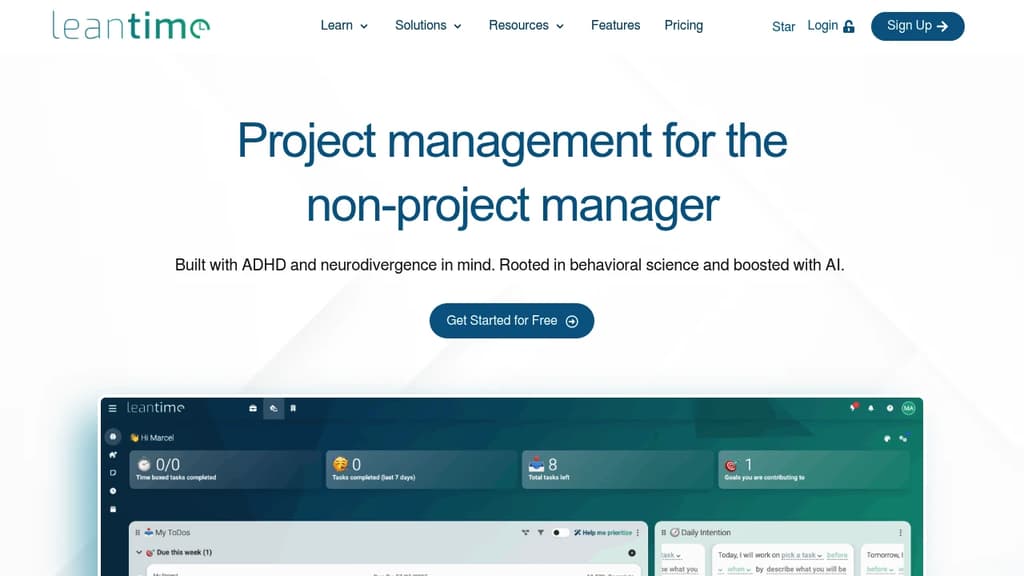
Leantime
Last 30 days
Last commit
11 hours agoRepository age
12 yearsVersion
v3.12.0License
AGPL-3.0Self-hosted
YesRepository
leantime/leantime

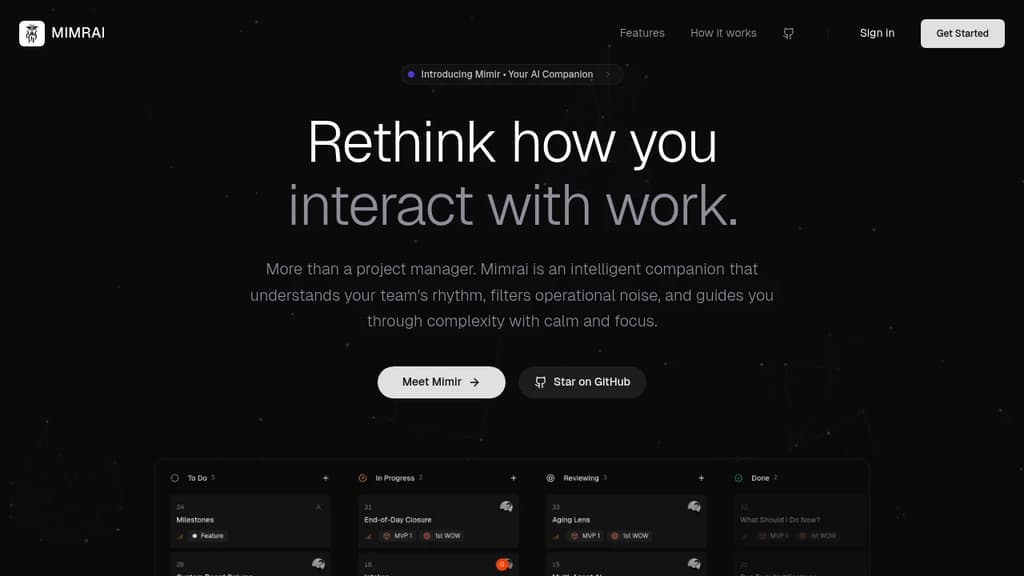
Mimrai
Last 30 days
This repository was archived by the owner and is no longer maintained.
Last commit
7 months agoRepository age
1 yearLicense
AGPL-3.0Repository
mimrai-org/mimrai
Detailed Comparison
Leantime appears to have several advantages over Mimrai, particularly in popularity, activity, maturity and features. Consider your specific needs regarding popularity, activity, technology, maturity, licensing and features when making your decision.
Leantime appears to have several advantages over Mimrai, particularly in popularity, activity, maturity and features. Consider your specific needs regarding popularity, activity, technology, maturity, licensing and features when making your decision.
Community & Popularity
Leantime significantly outpaces Mimrai in community adoption with 11,913 stars compared to 25 stars on GitHub. This 476.5x difference suggests Leantime has a much larger and more active community. In terms of developer contributions, Leantime has 1,163 forks, indicating strong developer engagement.
Development Activity
Leantime shows more recent development activity with its last commit 11 hours ago, while Mimrai was last updated 7 months ago. This suggests Leantime is being more actively maintained.
Technology Stack
Both tools share common technology foundations, being built with JavaScript, CSS. However, they differ in their additional technology choices: Leantime uses PHP, Laravel while Mimrai leverages Typescript, JSX, Python, Next.js.
Project Maturity
Leantime has been in development longer, starting 12 years ago, compared to Mimrai which began 1 year ago. This 10.8-year head start suggests Leantime may have more mature features and established processes.
Licensing
Both projects use the AGPL-3.0 license, providing identical terms for usage and distribution.
Use Cases & Features
Both tools serve similar use cases in Project Management Suites, Task Management.
Hosting & Deployment
Leantime provides self-hosting options for complete data control and customization, while Mimrai may be primarily cloud-based or require different deployment approaches.
Other tool comparisons to consider
Leantimevs
 Macro TasksLeantime
vs
 PlaneLeantime
vs
 HulyLeantime
vs
 Super ProductivityLeantime
vs
 WekanLeantime
vs
 OpenProjectLeantime
vs
 KaneoLeantime
vs
 PlankaLeantime
vs
 RedmineLeantime
vs
 KanLeantime
vs
 VikunjaLeantime
vs
 WorklenzLeantime
vs
 KanriLeantime
vs
 TaigaLeantime
vs
 KanbaLeantime
vs
 OperatelyLeantime
vs
 Ever TeamsLeantime
vs
 WindshiftLeantime
vs
 OrgniseLeantime
vs
 ManageLeantime
vs
 SayrMimrai
vs
Macro TasksMimraivs
PlaneMimraivs
HulyMimraivs
Super ProductivityMimraivs
WekanMimraivs
OpenProjectMimraivs
KaneoMimraivs
PlankaMimraivs
RedmineMimraivs
KanMimraivs
VikunjaMimraivs
WorklenzMimraivs
KanriMimraivs
TaigaMimraivs
KanbaMimraivs
OperatelyMimraivs
Ever TeamsMimraivs
WindshiftMimraivs
OrgniseMimraivs
ManageMimraivs
Sayr InfluxDB – The purpose-built time series platform for high-velocity ingestion and real-time queries at scale.