GlitchTip vs HyperDX
Learn how GlitchTip and HyperDX differ in their key features, development activity, technology
stack and community adoption, so you can decide which of these error tracking tools is best for you.
Learn how GlitchTip and HyperDX differ in their key features, development activity, technology stack and community adoption, so you can decide which of these error tracking tools is best for you.

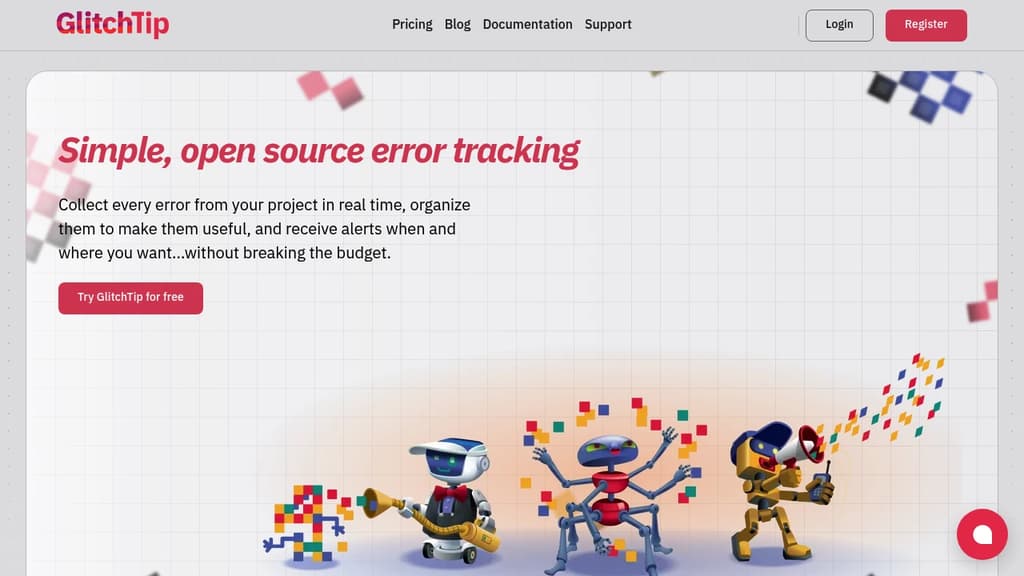
GlitchTip
Last 30 days
Last commit
2 days agoRepository age
6 yearsLicense
MITSelf-hosted
YesRepository
glitchtip/glitchtip

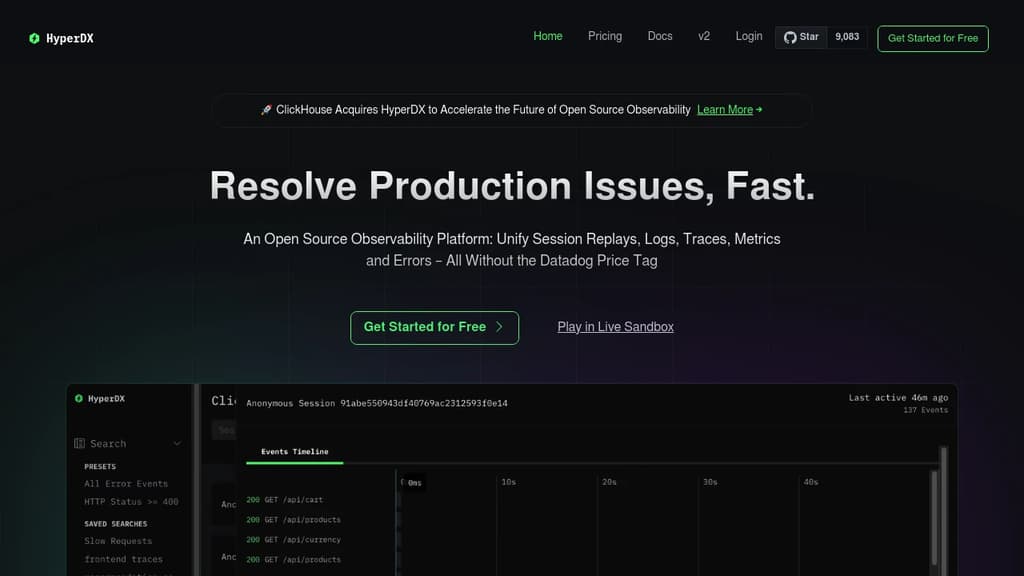
HyperDX
Last 30 days
Last commit
2 days agoRepository age
3 yearsVersion
v0.8.0License
MITSelf-hosted
YesRepository
hyperdxio/hyperdx
Detailed Comparison
Both GlitchTip and HyperDX have their unique strengths and serve similar purposes effectively. Consider your specific needs regarding popularity, growth, activity, maturity, licensing and features when making your decision.
Both GlitchTip and HyperDX have their unique strengths and serve similar purposes effectively. Consider your specific needs regarding popularity, growth, activity, maturity, licensing and features when making your decision.
Community & Popularity
HyperDX significantly outpaces GlitchTip in community adoption with 9,971 stars compared to 170 stars on GitHub. This 58.7x difference suggests HyperDX has a much larger and more active community. In terms of developer contributions, HyperDX has 502 forks, indicating moderate developer engagement.
Growth Momentum
GlitchTip is growing faster, adding 5 stars in the last 30 days (+3%) against adding 55 stars for HyperDX (+0.6%). GlitchTip is the smaller project of the two, so it is closing the gap rather than extending a lead.
Development Activity
Both projects show recent activity, with GlitchTip last updated 2 days ago and HyperDX 2 days ago.
Project Maturity
GlitchTip has been in development longer, starting 6 years ago, compared to HyperDX which began 3 years ago. This 2.7-year head start suggests GlitchTip may have more mature features and established processes.
Licensing
Both projects use the MIT license, providing identical terms for usage and distribution.
Use Cases & Features
Both tools serve similar use cases in Error Tracking. However, they also have distinct specializations: GlitchTip also focuses on Uptime Monitoring while HyperDX extends into Performance Monitoring (APM), Log Management.
Hosting & Deployment
Both GlitchTip and HyperDX offer self-hosting capabilities, giving you full control over your data and infrastructure.
Other tool comparisons to consider
GlitchTipvs
 SentryGlitchTip
vs
 HighlightGlitchTip
vs
 BugsinkHyperDX
vs
 GrafanaHyperDX
vs
 NetDataHyperDX
vs
SentryHyperDXvs
 SigNozHyperDX
vs
 Grafana LokiHyperDX
vs
 Apache SkyWalkingHyperDX
vs
 OpenObserveHyperDX
vs
 VectorHyperDX
vs
 LogstashHyperDX
vs
HighlightHyperDXvs
 CorootHyperDX
vs
 GreptimeDBHyperDX
vs
 LogfireHyperDX
vs
 UptraceHyperDX
vs
 MapleHyperDX
vs
BugsinkHyperDXvs
 Gigapipe
 Stellar Hosted – Managed Open Source software hosting in the EU: secure, compliant, fast.