HyperDX vs Logstash
Learn how HyperDX and Logstash differ in their key features, development activity, technology
stack and community adoption, so you can decide which of these log management tools is best for you.
Learn how HyperDX and Logstash differ in their key features, development activity, technology stack and community adoption, so you can decide which of these log management tools is best for you.

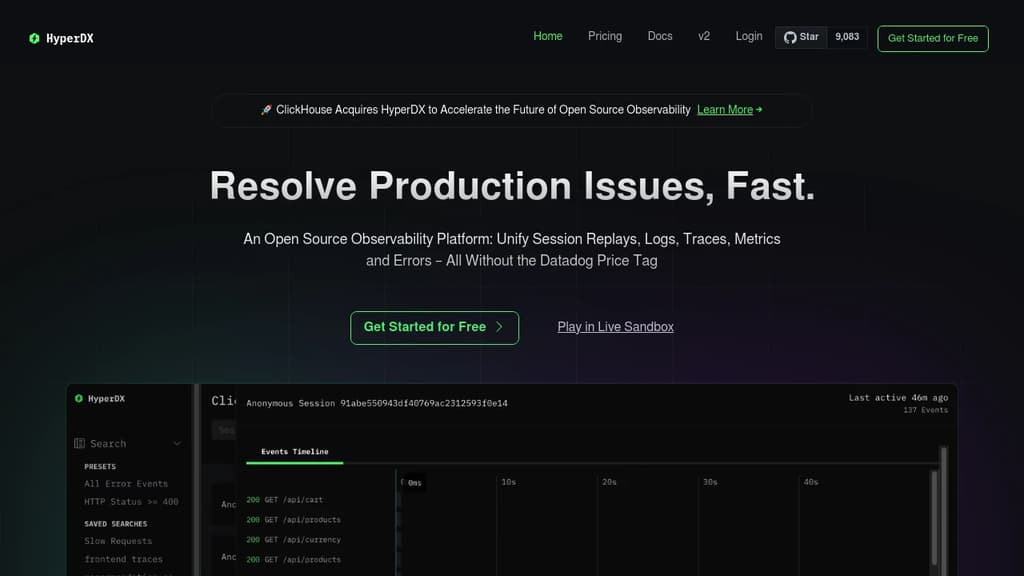
HyperDX
Last 30 days
Last commit
21 hours agoRepository age
3 yearsVersion
v0.9.2License
MITSelf-hosted
YesRepository
hyperdxio/hyperdx

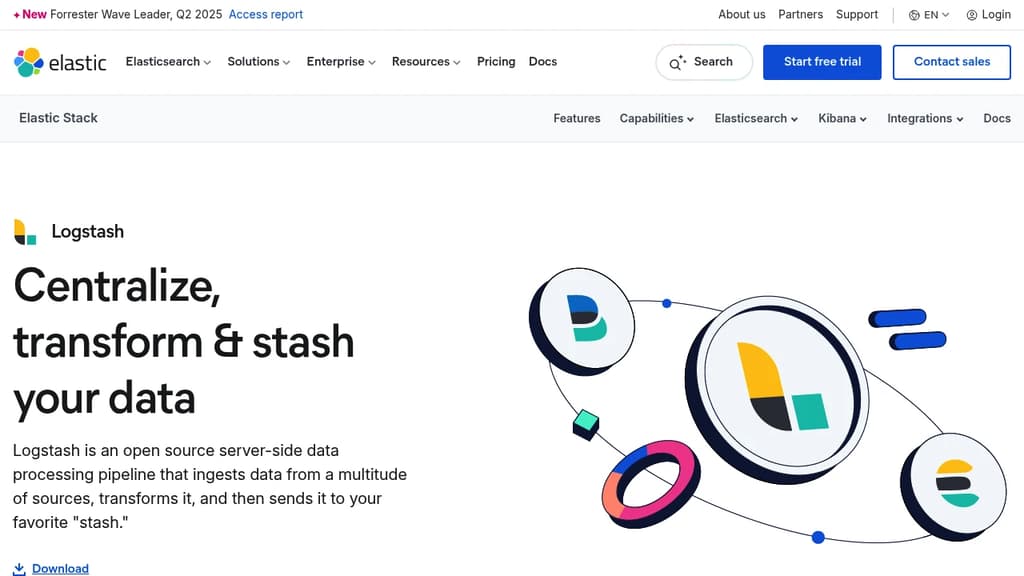
Logstash
Last 30 days
Last commit
2 days agoRepository age
16 yearsVersion
v9.5.7Self-hosted
YesRepository
elastic/logstash
Detailed Comparison
Both HyperDX and Logstash have their unique strengths and serve similar purposes effectively. Consider your specific needs regarding popularity, growth, activity, technology, maturity, licensing and features when making your decision.
Both HyperDX and Logstash have their unique strengths and serve similar purposes effectively. Consider your specific needs regarding popularity, growth, activity, technology, maturity, licensing and features when making your decision.
Community & Popularity
Both tools have similar popularity levels, with HyperDX having 10,084 stars and Logstash having 14,984 stars on GitHub. In terms of developer contributions, Logstash has 3,496 forks, indicating strong developer engagement.
Growth Momentum
HyperDX is growing faster, adding 106 stars in the last 30 days (+1.1%) against adding 14 stars for Logstash (+0.1%). HyperDX is the smaller project of the two, so it is closing the gap rather than extending a lead.
Development Activity
Both projects show recent activity, with HyperDX last updated 21 hours ago and Logstash 2 days ago.
Technology Stack
Both tools share common technology foundations, being built with CSS, Bash. However, they differ in their additional technology choices: HyperDX uses JavaScript, Typescript, JSX, Next.js, Golang, SCSS while Logstash leverages Python, C, Java, Ruby.
Project Maturity
Logstash has been in development longer, starting 16 years ago, compared to HyperDX which began 3 years ago. This 13.0-year head start suggests Logstash may have more mature features and established processes.
Licensing
HyperDX is licensed under MIT, while Logstash's license terms are not publicly specified.
Use Cases & Features
Both tools serve similar use cases in Log Management. However, they also have distinct specializations: HyperDX also focuses on Performance Monitoring (APM), Error Tracking while Logstash extends into ETL & Data Integration, Stream Processing.
Hosting & Deployment
Both HyperDX and Logstash offer self-hosting capabilities, giving you full control over your data and infrastructure.
Other tool comparisons to consider
HyperDXvs
 GrafanaHyperDX
vs
 NetdataHyperDX
vs
 SentryHyperDX
vs
 SigNozHyperDX
vs
 Grafana LokiHyperDX
vs
 Apache SkyWalkingHyperDX
vs
 OpenObserveHyperDX
vs
 VectorHyperDX
vs
 HighlightHyperDX
vs
 CorootHyperDX
vs
 GreptimeDBHyperDX
vs
 LogfireHyperDX
vs
 UptraceHyperDX
vs
 MapleHyperDX
vs
 BugsinkHyperDX
vs
 GigapipeHyperDX
vs
 GlitchTipLogstash
vs
SigNozLogstashvs
Grafana LokiLogstashvs
OpenObserveLogstashvs
VectorLogstashvs
GreptimeDBLogstashvs
MapleLogstashvs
Gigapipe Postiz – The All-in-One agentic social media scheduling tool