Ever Teams vs Operately
Learn how Ever Teams and Operately differ in their key features, development activity, technology
stack and community adoption, so you can decide which of these project management suites is best for you.
Learn how Ever Teams and Operately differ in their key features, development activity, technology stack and community adoption, so you can decide which of these project management suites is best for you.

Ever Teams
Last 30 days
Last commit
9 hours agoRepository age
4 yearsVersion
v0.235.2License
AGPL-3.0Repository
ever-co/ever-teams
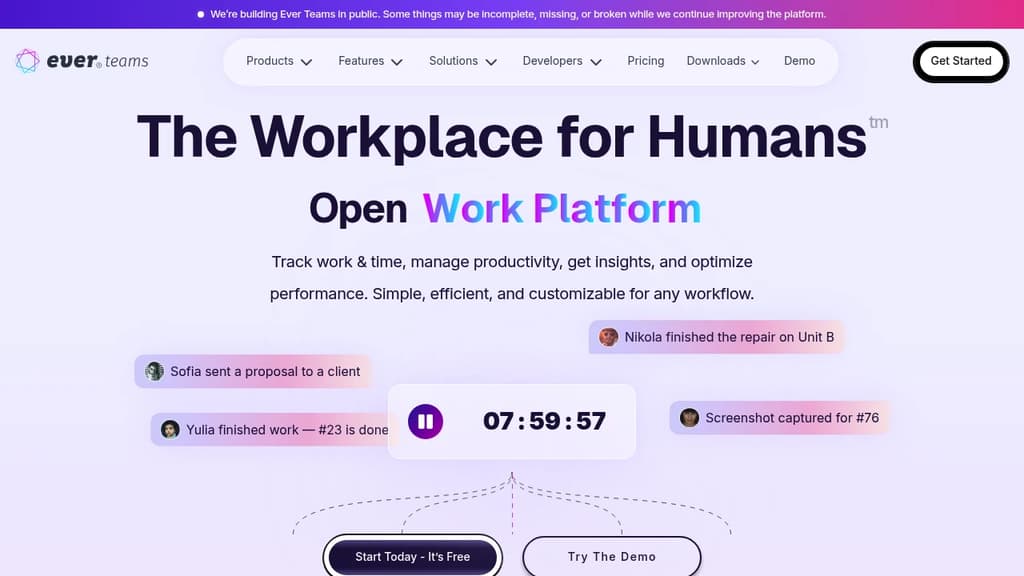

Operately
Last 30 days
Last commit
9 hours agoRepository age
4 yearsVersion
1.10.0License
Apache-2.0Self-hosted
YesRepository
operately/operately
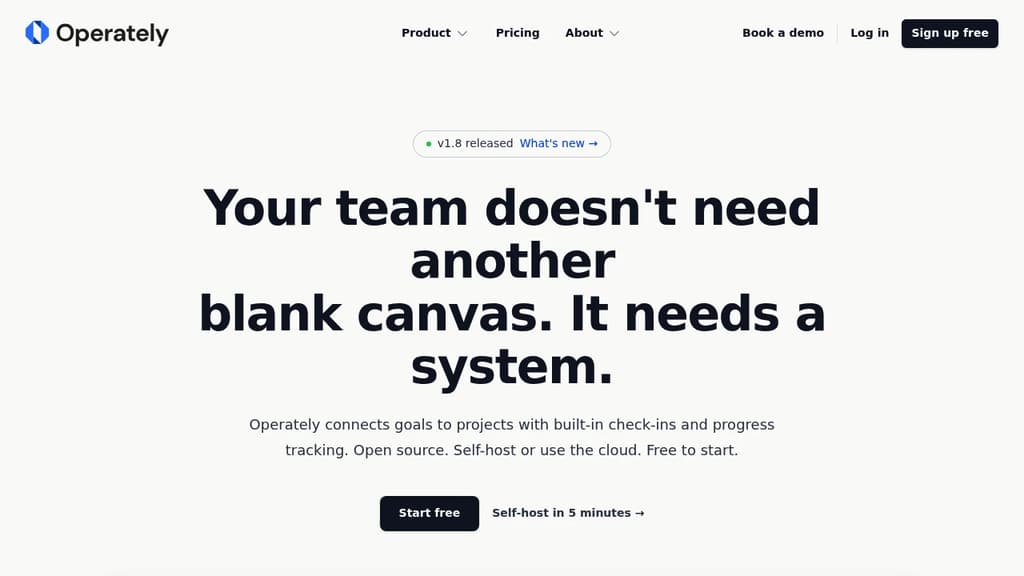
Detailed Comparison
Operately appears to have several advantages over Ever Teams, particularly in growth and features. Consider your specific needs regarding popularity, growth, activity, technology, maturity, licensing and features when making your decision.
Operately appears to have several advantages over Ever Teams, particularly in growth and features. Consider your specific needs regarding popularity, growth, activity, technology, maturity, licensing and features when making your decision.
Community & Popularity
Both Ever Teams and Operately show comparable community engagement with 606 and 621 stars respectively. In terms of developer contributions, Ever Teams has 115 forks, indicating moderate developer engagement.
Growth Momentum
Operately is growing faster, adding 35 stars in the last 30 days (+6%) against adding 17 stars for Ever Teams (+2.9%). Operately is both larger and pulling further ahead.
Development Activity
Both projects show recent activity, with Ever Teams last updated 9 hours ago and Operately 9 hours ago.
Technology Stack
Both tools share common technology foundations, being built with JavaScript, CSS, Bash, Typescript, JSX. However, they differ in their additional technology choices: Ever Teams uses Next.js while Operately leverages Python, Ruby, Elixir.
Project Maturity
Both projects started around the same time, with Ever Teams beginning 4 years ago and Operately 4 years ago.
Licensing
The projects use different licenses: Ever Teams is licensed under AGPL-3.0 while Operately uses Apache-2.0. Consider the licensing requirements when choosing for your project.
Use Cases & Features
Both tools serve similar use cases in Project Management Suites. However, they also have distinct specializations: Ever Teams also focuses on Collaborative Workspaces, Time Tracking.
Hosting & Deployment
Operately provides self-hosting options for complete data control and customization, while Ever Teams may be primarily cloud-based or require different deployment approaches.
Other tool comparisons to consider
Ever Teamsvs
 It's a PlanEver Teams
vs
 PlaneEver Teams
vs
 HulyEver Teams
vs
 WekanEver Teams
vs
 OpenProjectEver Teams
vs
 PlankaEver Teams
vs
 LeantimeEver Teams
vs
 SolidTimeEver Teams
vs
 RedmineEver Teams
vs
 KanEver Teams
vs
 VikunjaEver Teams
vs
 KimaiEver Teams
vs
 WorklenzEver Teams
vs
 TaigaEver Teams
vs
 KanbaEver Teams
vs
 WindshiftEver Teams
vs
 OrgniseEver Teams
vs
 ManageEver Teams
vs
 MimraiEver Teams
vs
 SayrOperately
vs
It's a PlanOperatelyvs
PlaneOperatelyvs
HulyOperatelyvs
WekanOperatelyvs
OpenProjectOperatelyvs
PlankaOperatelyvs
LeantimeOperatelyvs
RedmineOperatelyvs
KanOperatelyvs
VikunjaOperatelyvs
WorklenzOperatelyvs
TaigaOperatelyvs
KanbaOperatelyvs
WindshiftOperatelyvs
OrgniseOperatelyvs
ManageOperatelyvs
MimraiOperatelyvs
Sayr InfluxDB – The purpose-built time series platform for high-velocity ingestion and real-time queries at scale.