KeystoneJS vs Webiny
Learn how KeystoneJS and Webiny differ in their key features, development activity, technology
stack and community adoption, so you can decide which of these headless cms tools is best for you.
Learn how KeystoneJS and Webiny differ in their key features, development activity, technology stack and community adoption, so you can decide which of these headless cms tools is best for you.

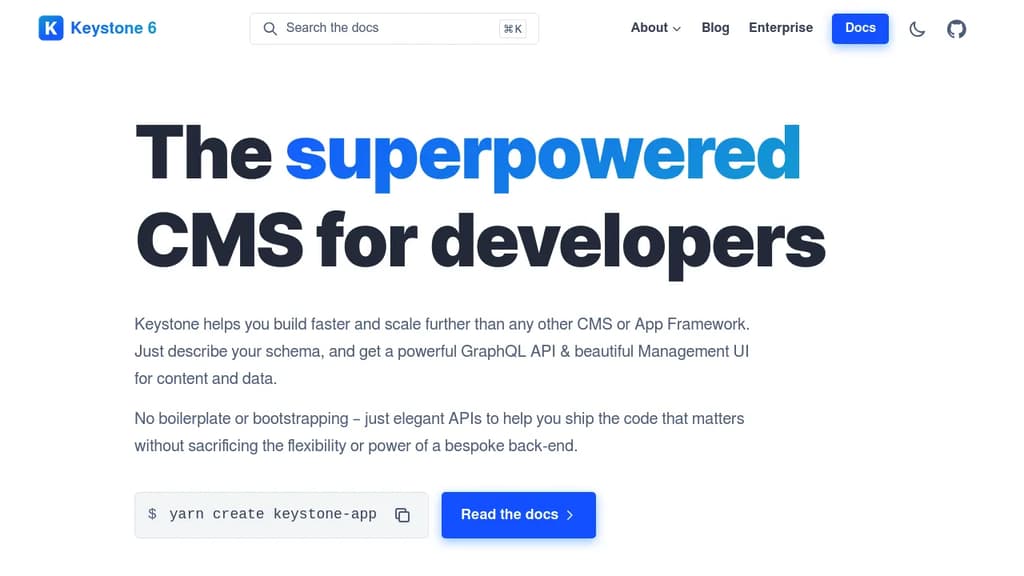
KeystoneJS
Last 30 days
Last commit
22 days agoRepository age
9 yearsLicense
MITRepository
keystonejs/keystone

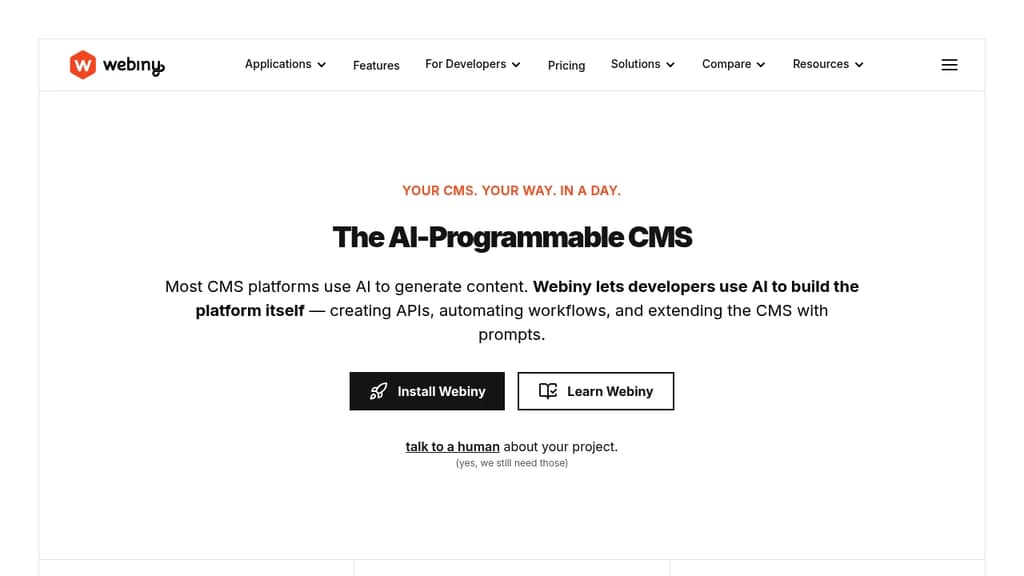
Webiny
Last 30 days
Last commit
7 hours agoRepository age
9 yearsVersion
v6.4.11License
MITSelf-hosted
YesRepository
webiny/webiny-js
Detailed Comparison
Both KeystoneJS and Webiny have their unique strengths and serve similar purposes effectively. Consider your specific needs regarding popularity, growth, activity, technology, maturity, licensing and features when making your decision.
Both KeystoneJS and Webiny have their unique strengths and serve similar purposes effectively. Consider your specific needs regarding popularity, growth, activity, technology, maturity, licensing and features when making your decision.
Community & Popularity
Both tools have similar popularity levels, with KeystoneJS having 9,981 stars and Webiny having 8,047 stars on GitHub. In terms of developer contributions, KeystoneJS has 1,260 forks, indicating strong developer engagement.
Growth Momentum
KeystoneJS and Webiny are moving at much the same rate, adding 5 stars and adding 8 stars respectively over the last 30 days (+0.1% vs +0.1%). Neither is pulling away from the other on momentum alone.
Development Activity
Both projects show recent activity, with KeystoneJS last updated 22 days ago and Webiny 7 hours ago.
Technology Stack
Both tools share common technology foundations, being built with JavaScript, CSS, Typescript, JSX. However, they differ in their additional technology choices: KeystoneJS uses Bash, Next.js, Remix while Webiny leverages SCSS.
Project Maturity
Both projects started around the same time, with KeystoneJS beginning 9 years ago and Webiny 9 years ago.
Licensing
Both projects use the MIT license, providing identical terms for usage and distribution.
Use Cases & Features
Both tools serve similar use cases in Headless CMS, Web Frameworks.
Hosting & Deployment
Webiny provides self-hosting options for complete data control and customization, while KeystoneJS may be primarily cloud-based or require different deployment approaches.








 c15t – Open-source cookie banner, built for control and lightening fast modern web apps.