Buzz vs Rocket.Chat
Learn how Buzz and Rocket.Chat differ in their key features, development activity, technology
stack and community adoption, so you can decide which of these team chat & messaging tools is best for you.
Learn how Buzz and Rocket.Chat differ in their key features, development activity, technology stack and community adoption, so you can decide which of these team chat & messaging tools is best for you.

Buzz
Last 30 days
Last commit
1 hour agoRepository age
7 monthsVersion
v0.5.28License
Apache-2.0Self-hosted
YesRepository
block/buzz

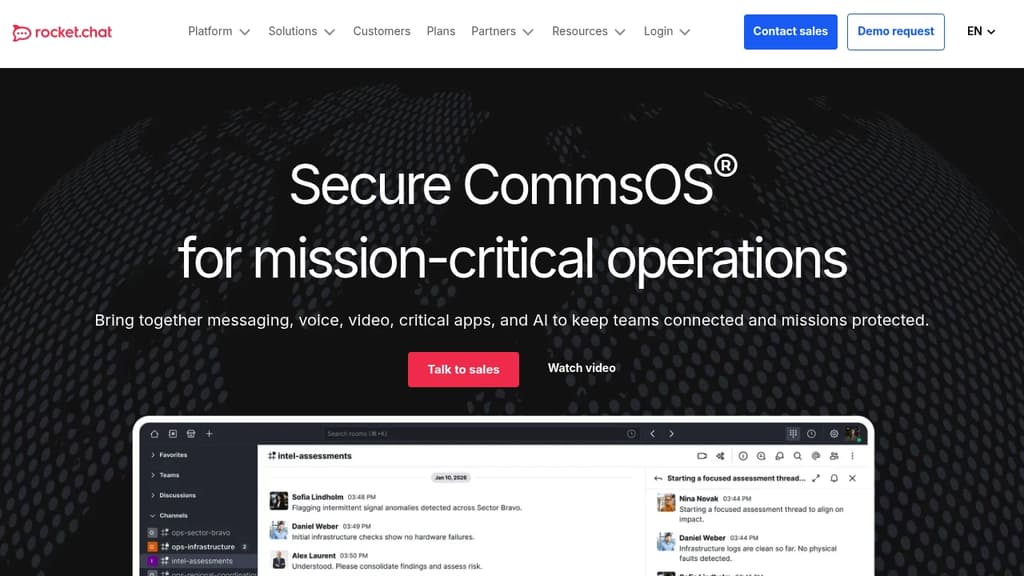
Rocket.Chat
Last 30 days
Last commit
1 hour agoRepository age
11 yearsVersion
8.9.0License
MITSelf-hosted
YesRepository
rocketchat/rocket.chat
Detailed Comparison
Both Buzz and Rocket.Chat have their unique strengths and serve similar purposes effectively. Consider your specific needs regarding popularity, growth, activity, technology, maturity, licensing and features when making your decision.
Both Buzz and Rocket.Chat have their unique strengths and serve similar purposes effectively. Consider your specific needs regarding popularity, growth, activity, technology, maturity, licensing and features when making your decision.
Community & Popularity
Both tools have similar popularity levels, with Buzz having 35,925 stars and Rocket.Chat having 46,269 stars on GitHub. In terms of developer contributions, Rocket.Chat has 13,984 forks, indicating strong developer engagement.
Growth Momentum
Buzz is growing faster, adding 3,274 stars in the last 30 days (+10%) against adding 155 stars for Rocket.Chat (+0.3%). Buzz is the smaller project of the two, so it is closing the gap rather than extending a lead.
Development Activity
Both projects show recent activity, with Buzz last updated 1 hour ago and Rocket.Chat 1 hour ago.
Technology Stack
Both tools share common technology foundations, being built with JavaScript, CSS, Bash, Typescript, JSX. However, they differ in their additional technology choices: Buzz uses Python, Rust, C, Objective-C, Swift, Kotlin, Tauri, Dart while Rocket.Chat leverages SCSS, Meteor.
Project Maturity
Rocket.Chat has been in development longer, starting 11 years ago, compared to Buzz which began 7 months ago. This 11.0-year head start suggests Rocket.Chat may have more mature features and established processes.
Licensing
Rocket.Chat uses the MIT license, which is more permissive than Buzz's Apache-2.0 license, potentially offering greater flexibility for commercial use and integration.
Use Cases & Features
Both tools serve similar use cases in Team Chat & Messaging. However, they also have distinct specializations: Rocket.Chat extends into Collaborative Workspaces, Video Conferencing & Virtual Office.
Hosting & Deployment
Both Buzz and Rocket.Chat offer self-hosting capabilities, giving you full control over your data and infrastructure.
Other tool comparisons to consider
Buzzvs
 Macro ChatBuzz
vs
 MattermostBuzz
vs
 ZulipBuzz
vs
 FluxerBuzz
vs
 ElementBuzz
vs
 CampfireBuzz
vs
 CinnyBuzz
vs
 StoatBuzz
vs
 QuietBuzz
vs
 MezonBuzz
vs
 WireBuzz
vs
 Twake ChatRocket.Chat
vs
Macro ChatRocket.Chatvs
MattermostRocket.Chatvs
ZulipRocket.Chatvs
FluxerRocket.Chatvs
ElementRocket.Chatvs
CampfireRocket.Chatvs
 ColanodeRocket.Chat
vs
CinnyRocket.Chatvs
StoatRocket.Chatvs
QuietRocket.Chatvs
MezonRocket.Chatvs
WireRocket.Chatvs
Twake Chat Sent – Messaging Infrastructure for Developers. One API for SMS, WhatsApp, and RCS across 190+ countries.