OpenCode vs Qwen Code
Learn how OpenCode and Qwen Code differ in their key features, development activity, technology
stack and community adoption, so you can decide which of these ai coding agents is best for you.
Learn how OpenCode and Qwen Code differ in their key features, development activity, technology stack and community adoption, so you can decide which of these ai coding agents is best for you.

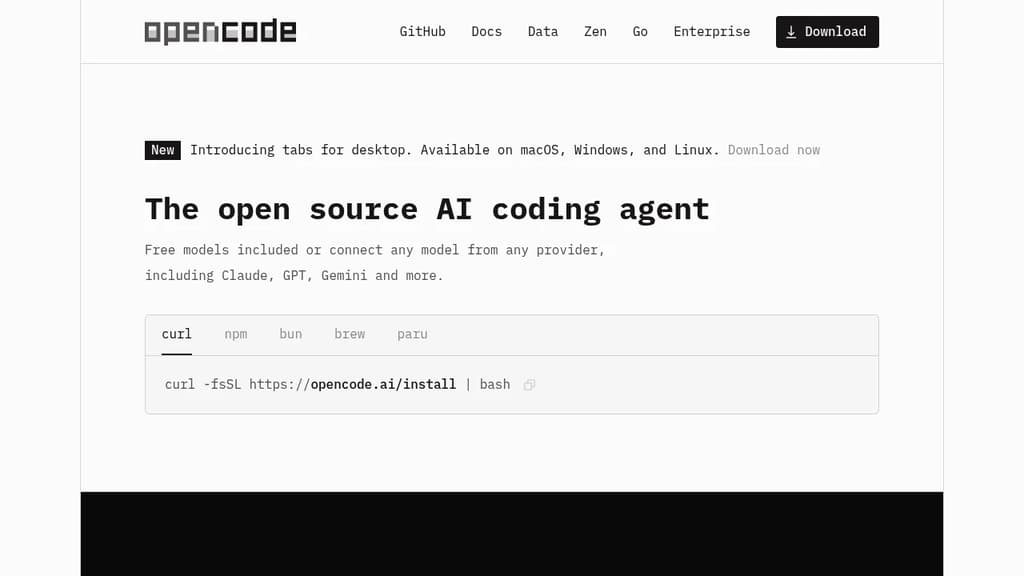
OpenCode
Last 30 days
Last commit
5 hours agoRepository age
2 yearsVersion
v1.19.6License
MITRepository
sst/opencode

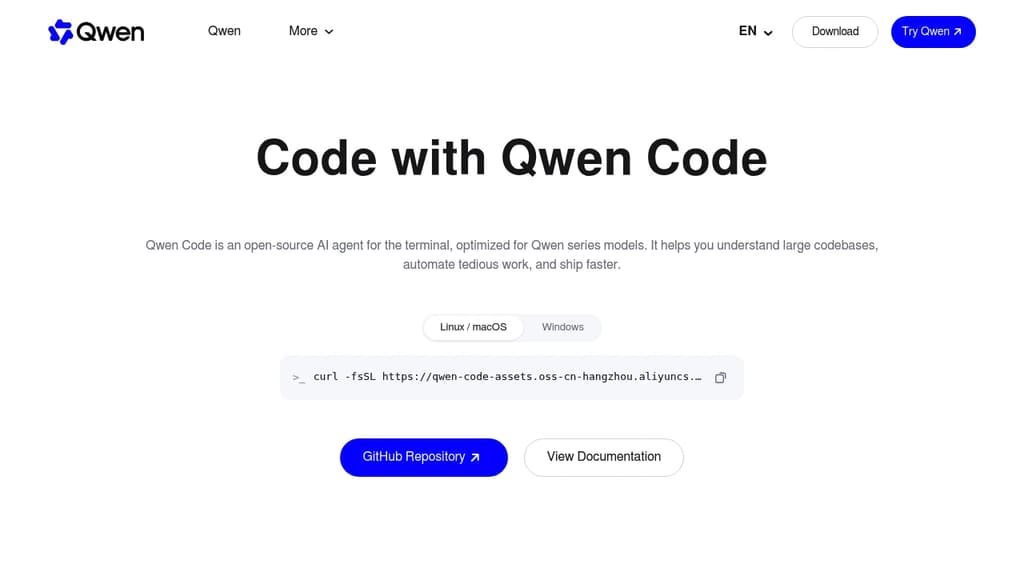
Qwen Code
Last 30 days
Last commit
5 hours agoRepository age
1 yearVersion
v0.28.4License
Apache-2.0Repository
qwenlm/qwen-code
Detailed Comparison
Both OpenCode and Qwen Code have their unique strengths and serve similar purposes effectively. Consider your specific needs regarding popularity, growth, activity, technology, maturity, licensing and features when making your decision.
Both OpenCode and Qwen Code have their unique strengths and serve similar purposes effectively. Consider your specific needs regarding popularity, growth, activity, technology, maturity, licensing and features when making your decision.
Community & Popularity
OpenCode significantly outpaces Qwen Code in community adoption with 229,045 stars compared to 30,930 stars on GitHub. This 7.4x difference suggests OpenCode has a much larger and more active community. In terms of developer contributions, OpenCode has 31,171 forks, indicating strong developer engagement.
Growth Momentum
Qwen Code is growing faster, adding 2,194 stars in the last 30 days (+7.6%) against adding 7,143 stars for OpenCode (+3.2%). Qwen Code is the smaller project of the two, so it is closing the gap rather than extending a lead.
Development Activity
Both projects show recent activity, with OpenCode last updated 5 hours ago and Qwen Code 5 hours ago.
Technology Stack
Both tools share common technology foundations, being built with JavaScript, CSS, Typescript, JSX, Rust, Tauri. However, they differ in their additional technology choices: Qwen Code leverages Bash, Python, Next.js, C, Objective-C, Java, Swift, C++, Kotlin, MATLAB.
Project Maturity
Both projects started around the same time, with OpenCode beginning 2 years ago and Qwen Code 1 year ago.
Licensing
OpenCode uses the MIT license, which is more permissive than Qwen Code's Apache-2.0 license, potentially offering greater flexibility for commercial use and integration.
Use Cases & Features
Both tools serve similar use cases in AI Coding Agents.
Other tool comparisons to consider
OpenCodevs
 piOpenCode
vs
 OpenHandsOpenCode
vs
 ClineOpenCode
vs
 Open InterpreterOpenCode
vs
 Grok BuildOpenCode
vs
 KiloOpenCode
vs
 SWE-agentOpenCode
vs
 ZeroOpenCode
vs
 CodeAFOpenCode
vs
 RoomoteQwen Code
vs
 Codex CLIQwen Code
vs
piQwen Codevs
OpenHandsQwen Codevs
ClineQwen Codevs
Open InterpreterQwen Codevs
 GooseQwen Code
vs
Grok BuildQwen Codevs
KiloQwen Codevs
ZeroQwen Codevs
CodeAF InfluxDB – The purpose-built time series platform for high-velocity ingestion and real-time queries at scale.