Open Interpreter vs Qwen Code
Learn how Open Interpreter and Qwen Code differ in their key features, development activity, technology
stack and community adoption, so you can decide which of these ai coding agents is best for you.
Learn how Open Interpreter and Qwen Code differ in their key features, development activity, technology stack and community adoption, so you can decide which of these ai coding agents is best for you.

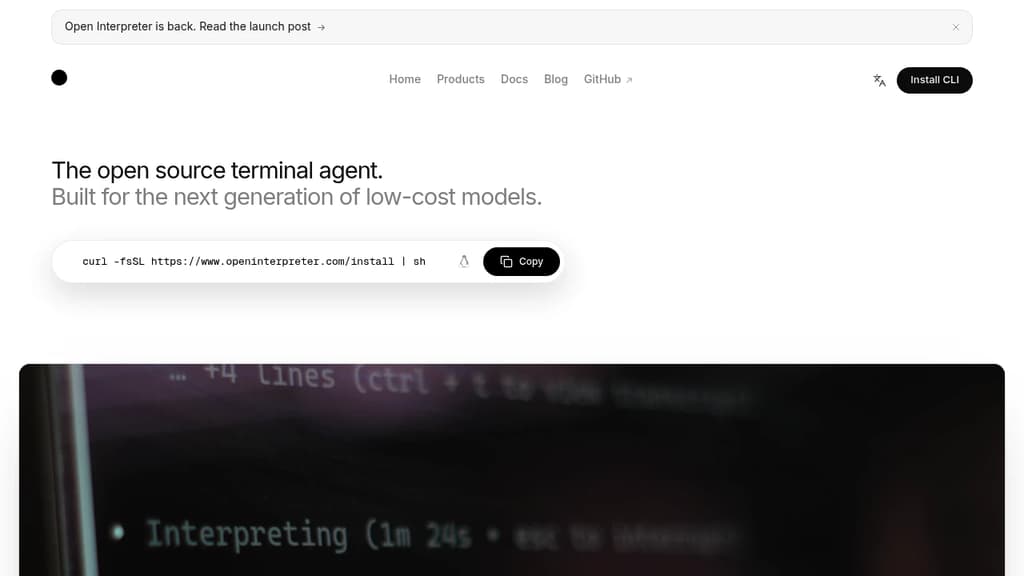
Open Interpreter
Last 30 days
Last commit
5 days agoRepository age
3 yearsVersion
v0.0.56License
Apache-2.0Self-hosted
YesRepository
openinterpreter

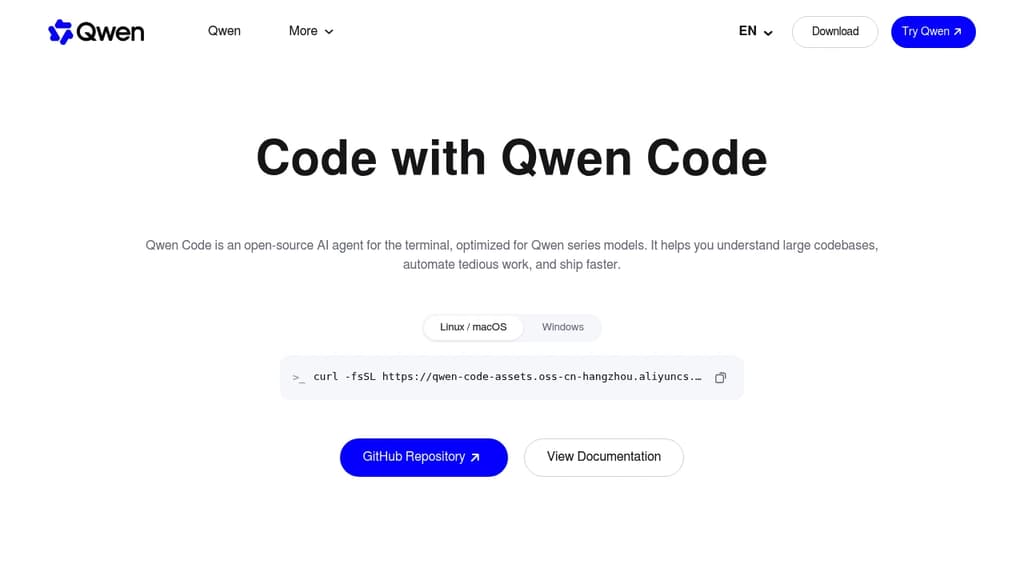
Qwen Code
Stars
28,504Last commit
2 hours agoRepository age
1 yearVersion
v0.1.20License
Apache-2.0Repository
qwenlm/qwen-code
Detailed Comparison
Open Interpreter appears to have several advantages over Qwen Code, particularly in popularity, maturity and features. Consider your specific needs regarding popularity, growth, activity, maturity, licensing and features when making your decision.
Open Interpreter appears to have several advantages over Qwen Code, particularly in popularity, maturity and features. Consider your specific needs regarding popularity, growth, activity, maturity, licensing and features when making your decision.
Community & Popularity
Open Interpreter leads in popularity with 68,582 stars vs 28,504 stars for Qwen Code. The 141% higher star count indicates stronger community adoption. In terms of developer contributions, Open Interpreter has 5,904 forks, indicating strong developer engagement.
Growth Momentum
Open Interpreter and Qwen Code are moving at much the same rate, adding 151 stars and adding 0 stars respectively over the last 30 days (+0.2% vs 0%). Neither is pulling away from the other on momentum alone.
Development Activity
Both projects show recent activity, with Open Interpreter last updated 5 days ago and Qwen Code 2 hours ago.
Project Maturity
Open Interpreter has been in development longer, starting 3 years ago, compared to Qwen Code which began 1 year ago. This 2.0-year head start suggests Open Interpreter may have more mature features and established processes.
Licensing
Both projects use the Apache-2.0 license, providing identical terms for usage and distribution.
Use Cases & Features
Both tools serve similar use cases in AI Coding Agents.
Hosting & Deployment
Open Interpreter provides self-hosting options for complete data control and customization, while Qwen Code may be primarily cloud-based or require different deployment approaches.
Other tool comparisons to consider
Open Interpretervs
 OpenCodeOpen Interpreter
vs
 piOpen Interpreter
vs
 OpenHandsOpen Interpreter
vs
 ClineOpen Interpreter
vs
 GooseOpen Interpreter
vs
 Grok BuildOpen Interpreter
vs
 KiloOpen Interpreter
vs
 ZeroOpen Interpreter
vs
 RoomoteQwen Code
vs
OpenCodeQwen Codevs
 Codex CLIQwen Code
vs
piQwen Codevs
OpenHandsQwen Codevs
ClineQwen Codevs
GooseQwen Codevs
Grok BuildQwen Codevs
KiloQwen Codevs
Zero Windshift – The self-hosted platform that replaces Jira.