Kilo vs OpenCode
Learn how Kilo and OpenCode differ in their key features, development activity, technology
stack and community adoption, so you can decide which of these ai coding agents is best for you.
Learn how Kilo and OpenCode differ in their key features, development activity, technology stack and community adoption, so you can decide which of these ai coding agents is best for you.

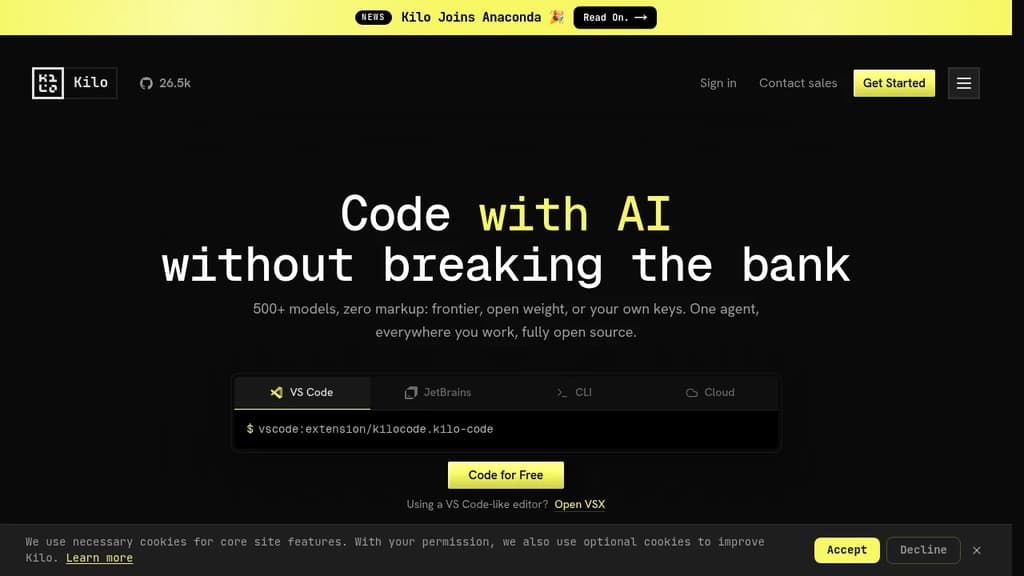
Kilo
Last 30 days
Last commit
12 hours agoRepository age
2 yearsVersion
v7.8.15License
MITRepository
kilo-org/kilocode

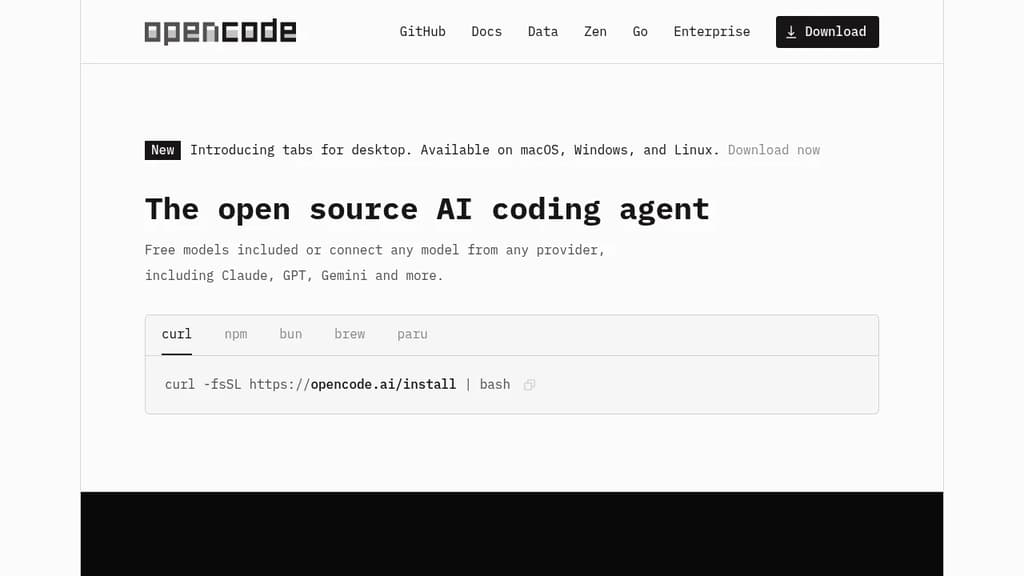
OpenCode
Last 30 days
Last commit
12 hours agoRepository age
1 yearVersion
v1.19.3License
MITRepository
sst/opencode
Detailed Comparison
OpenCode appears to have several advantages over Kilo, particularly in popularity and growth. Consider your specific needs regarding popularity, growth, activity, technology, maturity, licensing and features when making your decision.
OpenCode appears to have several advantages over Kilo, particularly in popularity and growth. Consider your specific needs regarding popularity, growth, activity, technology, maturity, licensing and features when making your decision.
Community & Popularity
OpenCode significantly outpaces Kilo in community adoption with 219,879 stars compared to 27,700 stars on GitHub. This 7.9x difference suggests OpenCode has a much larger and more active community. In terms of developer contributions, OpenCode has 29,384 forks, indicating strong developer engagement.
Growth Momentum
OpenCode is growing faster, adding 10,495 stars in the last 30 days (+5%) against adding 315 stars for Kilo (+1.2%). OpenCode is both larger and pulling further ahead.
Development Activity
Both projects show recent activity, with Kilo last updated 12 hours ago and OpenCode 12 hours ago.
Technology Stack
Both tools share common technology foundations, being built with JavaScript, CSS, Typescript, JSX. However, they differ in their additional technology choices: Kilo uses Bash, Python, Next.js, Golang, PHP while OpenCode leverages Rust, Tauri.
Project Maturity
Both projects started around the same time, with Kilo beginning 2 years ago and OpenCode 1 year ago.
Licensing
Both projects use the MIT license, providing identical terms for usage and distribution.
Use Cases & Features
Both tools serve similar use cases in AI Coding Agents.
Other tool comparisons to consider
Kilovs
 Codex CLIKilo
vs
 piKilo
vs
 OpenHandsKilo
vs
 ClineKilo
vs
 Open InterpreterKilo
vs
 GooseKilo
vs
 Grok BuildKilo
vs
 Qwen CodeKilo
vs
 SWE-agentKilo
vs
 ZeroKilo
vs
 RoomoteOpenCode
vs
piOpenCodevs
OpenHandsOpenCodevs
ClineOpenCodevs
Open InterpreterOpenCodevs
GooseOpenCodevs
Grok BuildOpenCodevs
Qwen CodeOpenCodevs
SWE-agentOpenCodevs
ZeroOpenCodevs
Roomote Postiz – The All-in-One agentic social media scheduling tool