Firefiles vs Seafile
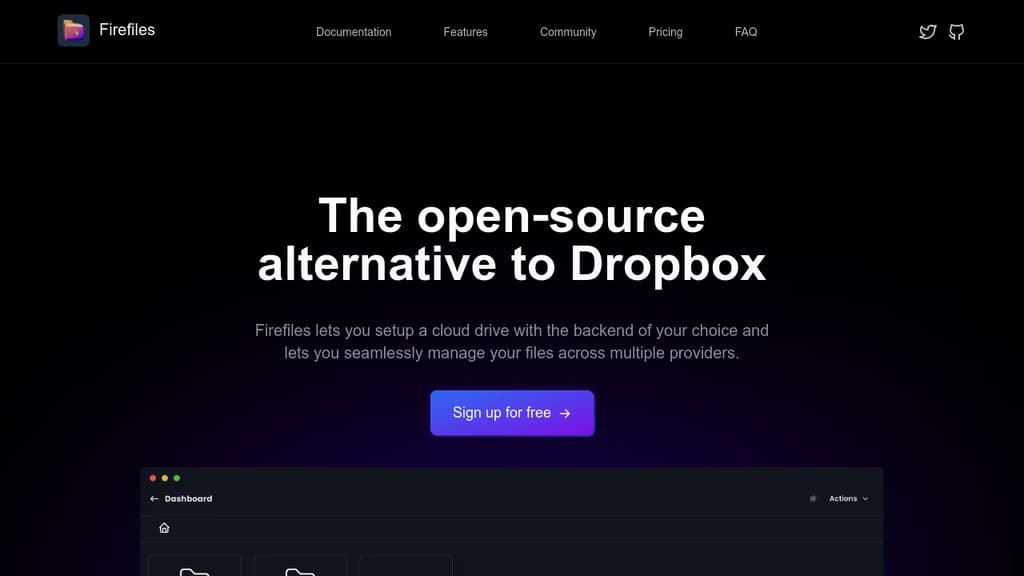
Learn how Firefiles and Seafile differ in their key features, development activity, technology
stack and community adoption, so you can decide which of these cloud file sync & share tools is best for you.
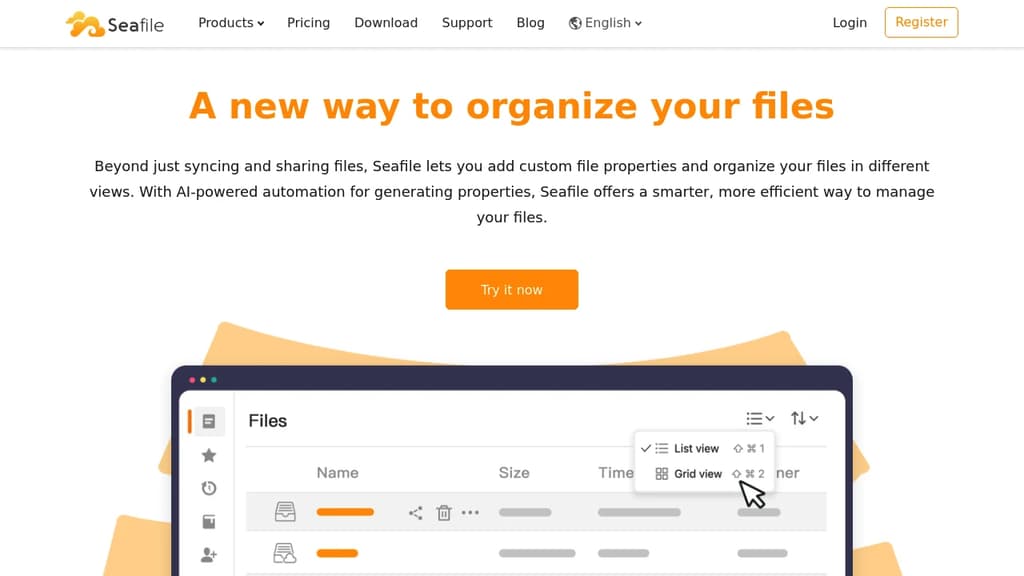
Learn how Firefiles and Seafile differ in their key features, development activity, technology stack and community adoption, so you can decide which of these cloud file sync & share tools is best for you.

Firefiles
Last 30 days

Seafile
Last 30 days
Last commit
9 days agoRepository age
14 yearsVersion
v9.0.5Self-hosted
YesRepository
haiwen/seafile
Detailed Comparison
Seafile appears to have several advantages over Firefiles, particularly in popularity, growth, activity and maturity. Consider your specific needs regarding popularity, growth, activity, technology, maturity, licensing and features when making your decision.
Seafile appears to have several advantages over Firefiles, particularly in popularity, growth, activity and maturity. Consider your specific needs regarding popularity, growth, activity, technology, maturity, licensing and features when making your decision.
Community & Popularity
Seafile significantly outpaces Firefiles in community adoption with 15,378 stars compared to 370 stars on GitHub. This 41.6x difference suggests Seafile has a much larger and more active community. In terms of developer contributions, Seafile has 1,675 forks, indicating strong developer engagement.
Growth Momentum
Seafile is growing faster, adding 104 stars in the last 30 days (+0.7%) against losing 1 stars for Firefiles (-0.3%). Seafile is both larger and pulling further ahead.
Development Activity
Seafile shows more recent development activity with its last commit 9 days ago, while Firefiles was last updated 1 year ago. This suggests Seafile is being more actively maintained.
Technology Stack
Firefiles uses JavaScript, CSS, Typescript, JSX, Next.js while Seafile leverages Bash, Python, C, Objective-C, C++.
Project Maturity
Seafile has been in development longer, starting 14 years ago, compared to Firefiles which began 5 years ago. This 9.5-year head start suggests Seafile may have more mature features and established processes.
Licensing
Firefiles is licensed under AGPL-3.0, while Seafile's license terms are not publicly specified.
Use Cases & Features
Both tools serve similar use cases in Cloud File Sync & Share. However, they also have distinct specializations: Firefiles also focuses on File Management while Seafile extends into Document Management Systems, Secure Document Sharing.
Hosting & Deployment
Both Firefiles and Seafile offer self-hosting capabilities, giving you full control over your data and infrastructure.
Other tool comparisons to consider
Firefilesvs
 PuterFirefiles
vs
 SpacedriveFirefiles
vs
 NextcloudFirefiles
vs
 FilestashFirefiles
vs
 OpenCloudFirefiles
vs
 Sync-inFirefiles
vs
 PeergosFirefiles
vs
 ownCloudFirefiles
vs
 HoodikFirefiles
vs
 Twake DriveSeafile
vs
PuterSeafilevs
SpacedriveSeafilevs
NextcloudSeafilevs
OpenCloudSeafilevs
Sync-inSeafilevs
PeergosSeafilevs
ownCloudSeafilevs
HoodikSeafilevs
Twake Drive Stellar Hosted – Managed Open Source software hosting in the EU: secure, compliant, fast.