Cachet vs Kener
Learn how Cachet and Kener differ in their key features, development activity, technology
stack and community adoption, so you can decide which of these uptime monitoring tools is best for you.
Learn how Cachet and Kener differ in their key features, development activity, technology stack and community adoption, so you can decide which of these uptime monitoring tools is best for you.

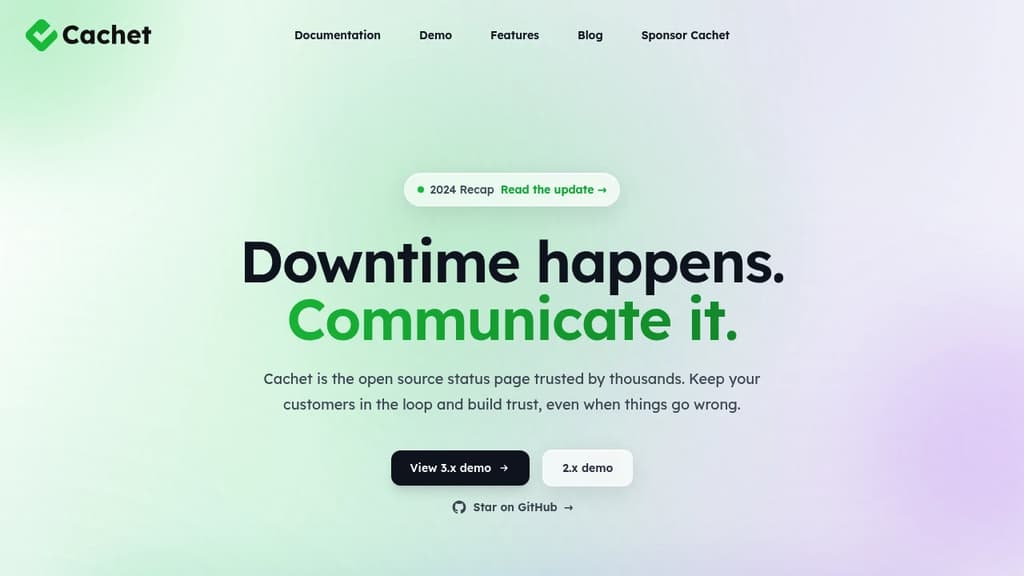
Cachet
Last 30 days
Last commit
3 days agoRepository age
12 yearsVersion
v2.4.1Self-hosted
YesRepository
cachethq/cachet

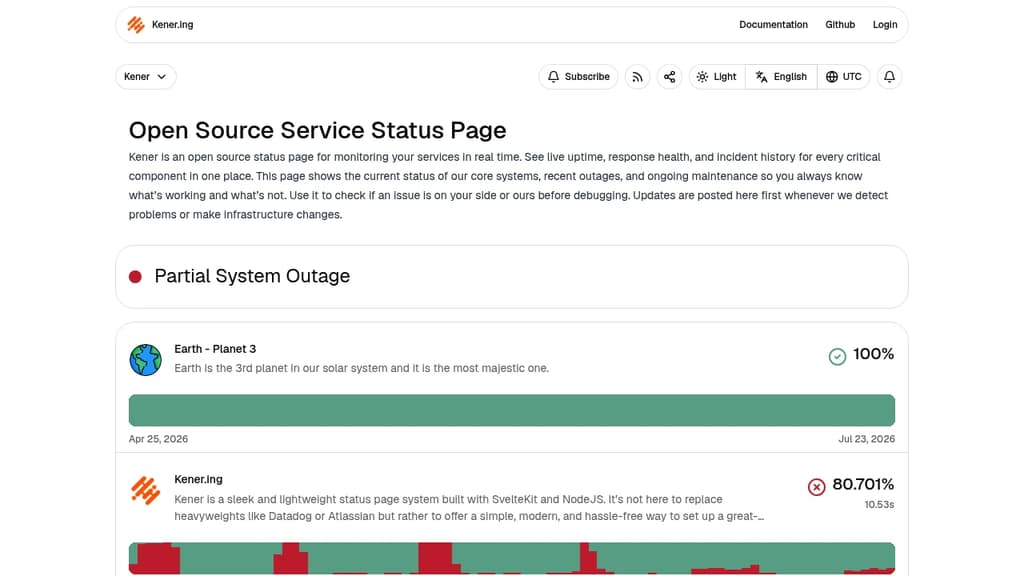
Kener
Last 30 days
Last commit
7 hours agoRepository age
3 yearsVersion
v4.1.7License
MITSelf-hosted
YesRepository
rajnandan1/kener
Detailed Comparison
Both Cachet and Kener have their unique strengths and serve similar purposes effectively. Consider your specific needs regarding popularity, growth, activity, technology, maturity, licensing and features when making your decision.
Both Cachet and Kener have their unique strengths and serve similar purposes effectively. Consider your specific needs regarding popularity, growth, activity, technology, maturity, licensing and features when making your decision.
Community & Popularity
Cachet leads in popularity with 15,261 stars vs 5,210 stars for Kener. The 193% higher star count indicates stronger community adoption. In terms of developer contributions, Cachet has 1,631 forks, indicating strong developer engagement.
Growth Momentum
Kener is growing faster, adding 40 stars in the last 30 days (+0.8%) against adding 17 stars for Cachet (+0.1%). Kener is the smaller project of the two, so it is closing the gap rather than extending a lead.
Development Activity
Both projects show recent activity, with Cachet last updated 3 days ago and Kener 7 hours ago.
Technology Stack
Cachet uses PHP, Laravel while Kener leverages JavaScript, CSS, Bash, Typescript, SvelteKit.
Project Maturity
Cachet has been in development longer, starting 12 years ago, compared to Kener which began 3 years ago. This 9.2-year head start suggests Cachet may have more mature features and established processes.
Licensing
Kener is licensed under MIT, while Cachet's license terms are not publicly specified.
Use Cases & Features
Both tools serve similar use cases in Uptime Monitoring, Status Pages.
Hosting & Deployment
Both Cachet and Kener offer self-hosting capabilities, giving you full control over your data and infrastructure.
Other tool comparisons to consider
Cachetvs
 Uptime KumaCachet
vs
 CheckmateCachet
vs
 GatusCachet
vs
 OpenStatusCachet
vs
 HealthchecksCachet
vs
 OneUptimeCachet
vs
 PeekapingCachet
vs
 StatusnookCachet
vs
 EasyMonitorCachet
vs
 UptimepageCachet
vs
 StatusScoutKener
vs
Uptime KumaKenervs
CheckmateKenervs
GatusKenervs
OpenStatusKenervs
HealthchecksKenervs
OneUptimeKenervs
 TianjiKener
vs
PeekapingKenervs
StatusnookKenervs
EasyMonitorKenervs
UptimepageKenervs
StatusScout Sent – A unified API for sending messages across SMS, RCS, and apps like WhatsApp.