Bklit vs Vemetric
Learn how Bklit and Vemetric differ in their key features, development activity, technology
stack and community adoption, so you can decide which of these web analytics is best for you.
Learn how Bklit and Vemetric differ in their key features, development activity, technology stack and community adoption, so you can decide which of these web analytics is best for you.

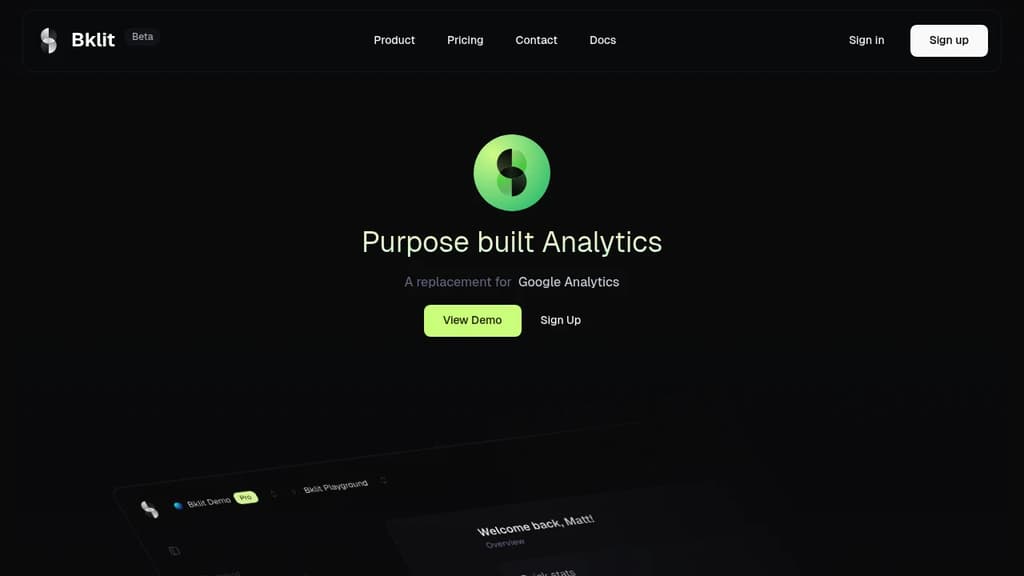
Bklit
Stars
262Forks
24Last commit
10 days agoRepository age
1 yearSelf-hosted
Yes
Auto-fetched .

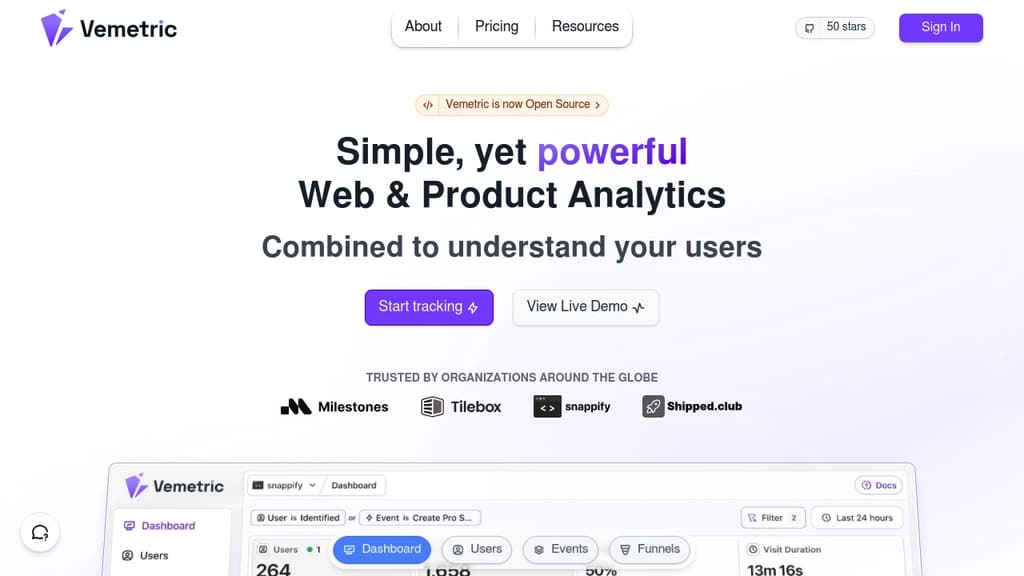
Vemetric
Stars
351Forks
33Last commit
3 days agoRepository age
1 yearLicense
AGPL-3.0
Auto-fetched .
Detailed Comparison
Both Bklit and Vemetric have their unique strengths and serve similar purposes effectively. Consider your specific needs regarding popularity, activity, technology, maturity, licensing and features when making your decision.
Both Bklit and Vemetric have their unique strengths and serve similar purposes effectively. Consider your specific needs regarding popularity, activity, technology, maturity, licensing and features when making your decision.
Community & Popularity
Both tools have similar popularity levels, with Bklit having 262 stars and Vemetric having 351 stars on GitHub. In terms of developer contributions, Vemetric has 33 forks, indicating growing developer engagement.
Development Activity
Both projects show recent activity, with Bklit last updated 10 days ago and Vemetric 3 days ago.
Technology Stack
Both tools share common technology foundations, being built with JavaScript, Typescript, JSX. However, they differ in their additional technology choices: Bklit uses CSS, Bash, Next.js.
Project Maturity
Both projects started around the same time, with Bklit beginning 1 year ago and Vemetric 1 year ago.
Licensing
Vemetric is licensed under AGPL-3.0, while Bklit's license terms are not publicly specified.
Use Cases & Features
Both tools serve similar use cases in Web Analytics. However, they also have distinct specializations: Vemetric extends into Product Analytics.
Hosting & Deployment
Bklit provides self-hosting options for complete data control and customization, while Vemetric may be primarily cloud-based or require different deployment approaches.
Other tool comparisons to consider
Bklitvs
 OpenPanelBklit
vs
 UmamiBklit
vs
 PlausibleBklit
vs
 MatomoBklit
vs
 RybbitBklit
vs
 Fathom LiteBklit
vs
 CountlyBklit
vs
 OpenWebAnalyticsBklit
vs
 LitlyxBklit
vs
 DatabuddyBklit
vs
 SwetrixBklit
vs
 BetterlyticsBklit
vs
 HitKeepBklit
vs
 Prisme AnalyticsVemetric
vs
OpenPanelVemetricvs
UmamiVemetricvs
 PostHogVemetric
vs
PlausibleVemetricvs
MatomoVemetricvs
RybbitVemetricvs
Fathom LiteVemetricvs
CountlyVemetricvs
OpenWebAnalyticsVemetricvs
LitlyxVemetricvs
DatabuddyVemetricvs
SwetrixVemetricvs
BetterlyticsVemetricvs
HitKeepVemetricvs
Prisme Analytics Databuddy – AI-Native Web & Product Analytics you can trust, turn manual dashboards into automated insights.