Orgnise vs Planka
Learn how Orgnise and Planka differ in their key features, development activity, technology
stack and community adoption, so you can decide which of these project management suites is best for you.
Learn how Orgnise and Planka differ in their key features, development activity, technology stack and community adoption, so you can decide which of these project management suites is best for you.

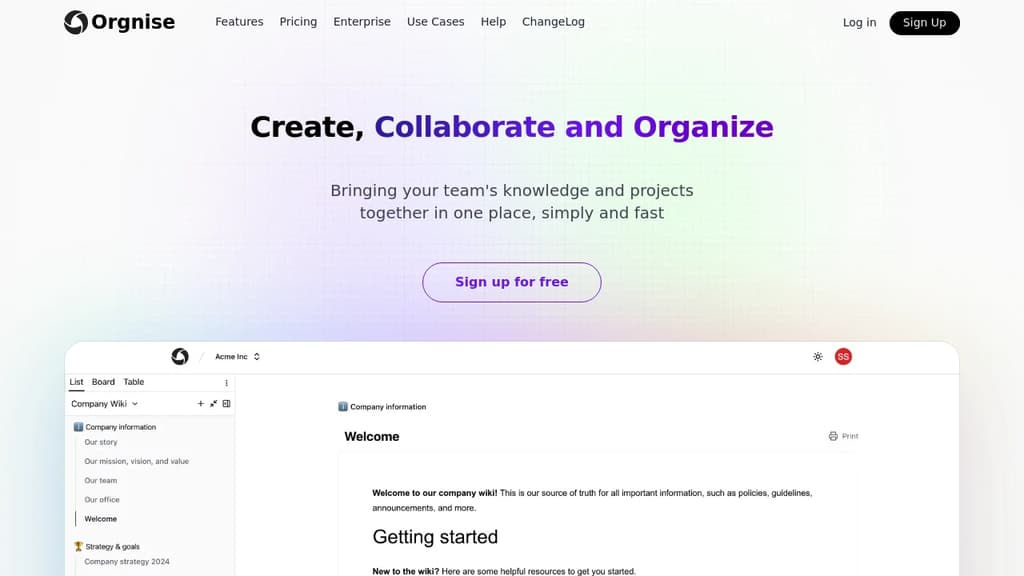
Orgnise
Last 30 days
Last commit
1 year agoRepository age
4 yearsVersion
1.0.0License
AGPL-3.0Repository
orgnise/webapp

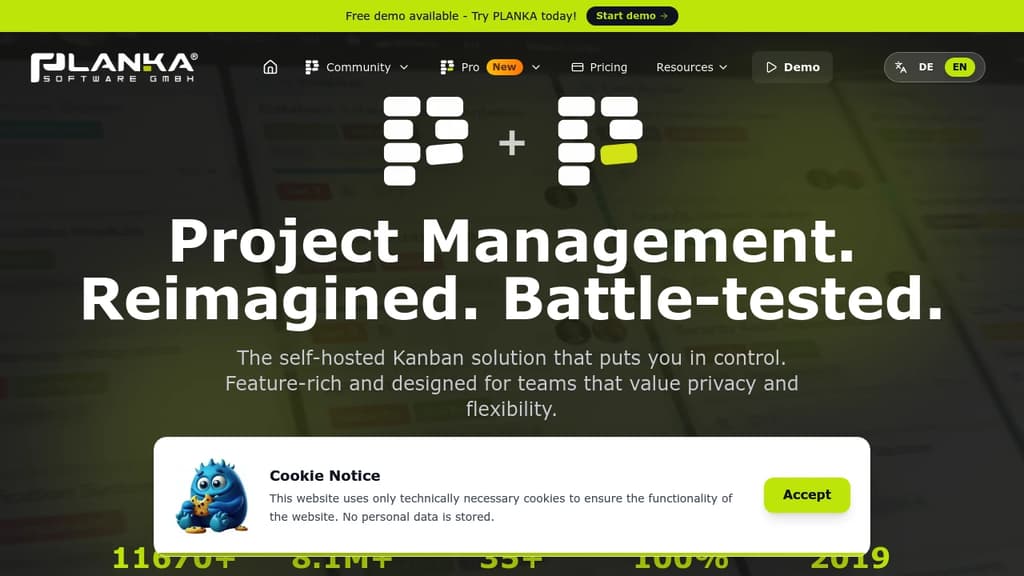
Planka
Last 30 days
Last commit
1 day agoRepository age
7 yearsVersion
v2.2.1Self-hosted
YesRepository
plankanban/planka
Detailed Comparison
Planka appears to have several advantages over Orgnise, particularly in popularity, growth, activity, maturity and features. Consider your specific needs regarding popularity, growth, activity, technology, maturity, licensing and features when making your decision.
Planka appears to have several advantages over Orgnise, particularly in popularity, growth, activity, maturity and features. Consider your specific needs regarding popularity, growth, activity, technology, maturity, licensing and features when making your decision.
Community & Popularity
Planka significantly outpaces Orgnise in community adoption with 12,625 stars compared to 247 stars on GitHub. This 51.1x difference suggests Planka has a much larger and more active community. In terms of developer contributions, Planka has 1,386 forks, indicating strong developer engagement.
Growth Momentum
Planka is growing faster, adding 61 stars in the last 30 days (+0.5%) against adding 0 stars for Orgnise (0%). Planka is both larger and pulling further ahead.
Development Activity
Planka shows more recent development activity with its last commit 1 day ago, while Orgnise was last updated 1 year ago. This suggests Planka is being more actively maintained.
Technology Stack
Both tools share common technology foundations, being built with JavaScript, CSS, JSX. However, they differ in their additional technology choices: Orgnise uses Typescript, Next.js while Planka leverages Bash, Python, SCSS.
Project Maturity
Planka has been in development longer, starting 7 years ago, compared to Orgnise which began 4 years ago. This 3.1-year head start suggests Planka may have more mature features and established processes.
Licensing
Orgnise is licensed under AGPL-3.0, while Planka's license terms are not publicly specified.
Use Cases & Features
Both tools serve similar use cases in Project Management Suites, Task Management. However, they also have distinct specializations: Planka extends into Agile Project Management.
Hosting & Deployment
Planka provides self-hosting options for complete data control and customization, while Orgnise may be primarily cloud-based or require different deployment approaches.
Other tool comparisons to consider
Orgnisevs
 Macro TasksOrgnise
vs
 PlaneOrgnise
vs
 HulyOrgnise
vs
 WekanOrgnise
vs
 OpenProjectOrgnise
vs
 KaneoOrgnise
vs
 LeantimeOrgnise
vs
 RedmineOrgnise
vs
 KanOrgnise
vs
 VikunjaOrgnise
vs
 WorklenzOrgnise
vs
 KanriOrgnise
vs
 TaigaOrgnise
vs
 KanbaOrgnise
vs
 OperatelyOrgnise
vs
 Ever TeamsOrgnise
vs
 WindshiftOrgnise
vs
 ManageOrgnise
vs
 SayrOrgnise
vs
 MimraiPlanka
vs
Macro TasksPlankavs
PlanePlankavs
HulyPlankavs
 Super ProductivityPlanka
vs
WekanPlankavs
OpenProjectPlankavs
KaneoPlankavs
LeantimePlankavs
 FizzyPlanka
vs
RedminePlankavs
KanPlankavs
VikunjaPlankavs
WorklenzPlankavs
KanriPlankavs
TaigaPlankavs
KanbaPlankavs
OperatelyPlankavs
Ever TeamsPlankavs
WindshiftPlankavs
ManagePlankavs
SayrPlankavs
Mimrai Bright Data – Web data for AI agents and apps. Built-in unblocking, proxies, and ready-made APIs.