Proton Lumo vs VT Chat
Learn how Proton Lumo and VT Chat differ in their key features, development activity, technology
stack and community adoption, so you can decide which of these ai chat interfaces is best for you.
Learn how Proton Lumo and VT Chat differ in their key features, development activity, technology stack and community adoption, so you can decide which of these ai chat interfaces is best for you.

Proton Lumo
Last 30 days
Last commit
6 hours agoRepository age
10 yearsVersion
1.1.6License
GPL-3.0Repository
protonmail/webclients
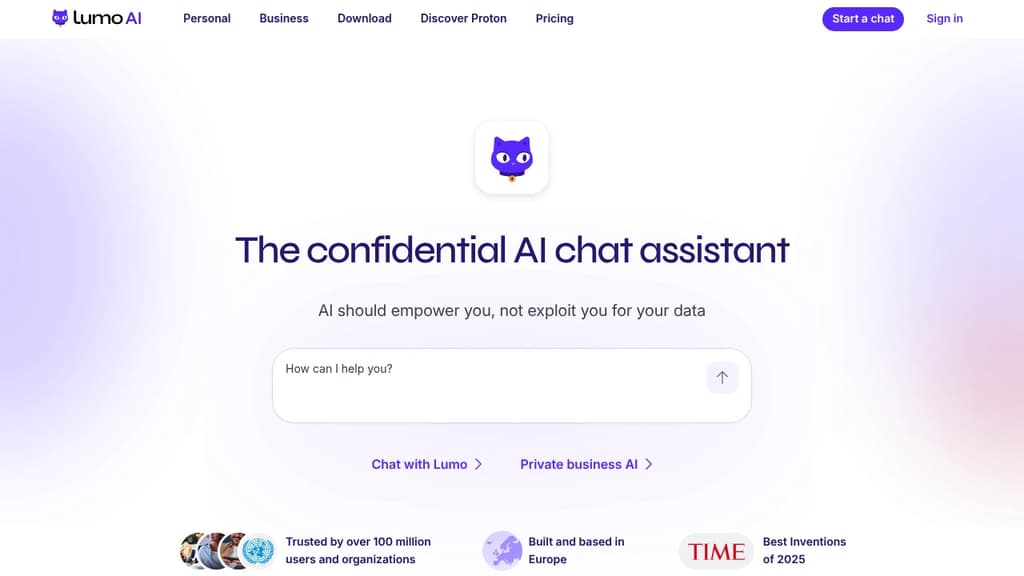

VT Chat
Last 30 days
Last commit
8 days agoRepository age
1 yearVersion
v3.16.14License
MITRepository
vinhnx/vtchat

Detailed Comparison
Both Proton Lumo and VT Chat have their unique strengths and serve similar purposes effectively. Consider your specific needs regarding popularity, activity, technology, maturity, licensing and features when making your decision.
Both Proton Lumo and VT Chat have their unique strengths and serve similar purposes effectively. Consider your specific needs regarding popularity, activity, technology, maturity, licensing and features when making your decision.
Community & Popularity
Proton Lumo significantly outpaces VT Chat in community adoption with 5,562 stars compared to 60 stars on GitHub. This 92.7x difference suggests Proton Lumo has a much larger and more active community. In terms of developer contributions, Proton Lumo has 705 forks, indicating moderate developer engagement.
Development Activity
Both projects show recent activity, with Proton Lumo last updated 6 hours ago and VT Chat 8 days ago.
Technology Stack
Both tools share common technology foundations, being built with JavaScript, CSS, Bash, Typescript, JSX. However, they differ in their additional technology choices: Proton Lumo uses Python, SCSS, Rust, C, Objective-C, Swift, Ruby, Tauri while VT Chat leverages Next.js.
Project Maturity
Proton Lumo has been in development longer, starting 10 years ago, compared to VT Chat which began 1 year ago. This 9.3-year head start suggests Proton Lumo may have more mature features and established processes.
Licensing
VT Chat uses the MIT license, which is more permissive than Proton Lumo's GPL-3.0 license, potentially offering greater flexibility for commercial use and integration.
Use Cases & Features
Both tools serve similar use cases in AI Chat Interfaces. However, they also have distinct specializations: Proton Lumo also focuses on AI Personal Assistants.
Other tool comparisons to consider
Proton Lumovs
 Open WebUIProton Lumo
vs
 LobeChatProton Lumo
vs
 AnythingLLMProton Lumo
vs
 Cherry StudioProton Lumo
vs
 LibreChatProton Lumo
vs
 JanProton Lumo
vs
 KhojProton Lumo
vs
 LeonProton Lumo
vs
 MorphicProton Lumo
vs
 5ireProton Lumo
vs
 FullmoonProton Lumo
vs
 ZolaVT Chat
vs
Open WebUIVT Chatvs
LobeChatVT Chatvs
AnythingLLMVT Chatvs
Cherry StudioVT Chatvs
LibreChatVT Chatvs
JanVT Chatvs
MorphicVT Chatvs
FullmoonVT Chatvs
Zola Sent – Messaging Infrastructure for Developers. One API for SMS, WhatsApp, and RCS across 190+ countries.