Helium vs Zen Browser
Learn how Helium and Zen Browser differ in their key features, development activity, technology
stack and community adoption, so you can decide which of these web browsers is best for you.
Learn how Helium and Zen Browser differ in their key features, development activity, technology stack and community adoption, so you can decide which of these web browsers is best for you.

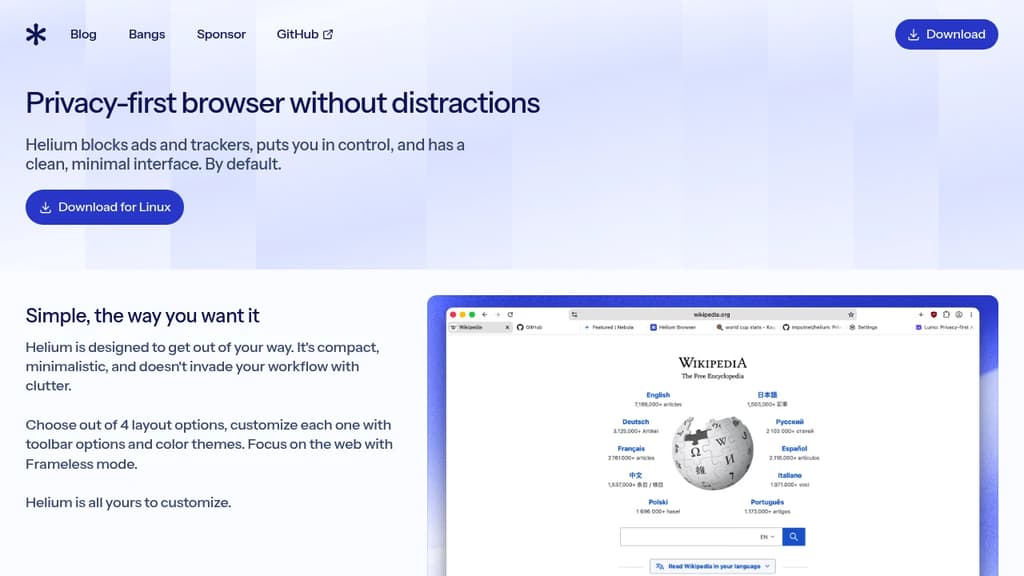
Helium
Last 30 days
Last commit
12 hours agoRepository age
2 yearsVersion
0.19.2License
GPL-3.0Repository
imputnet/helium

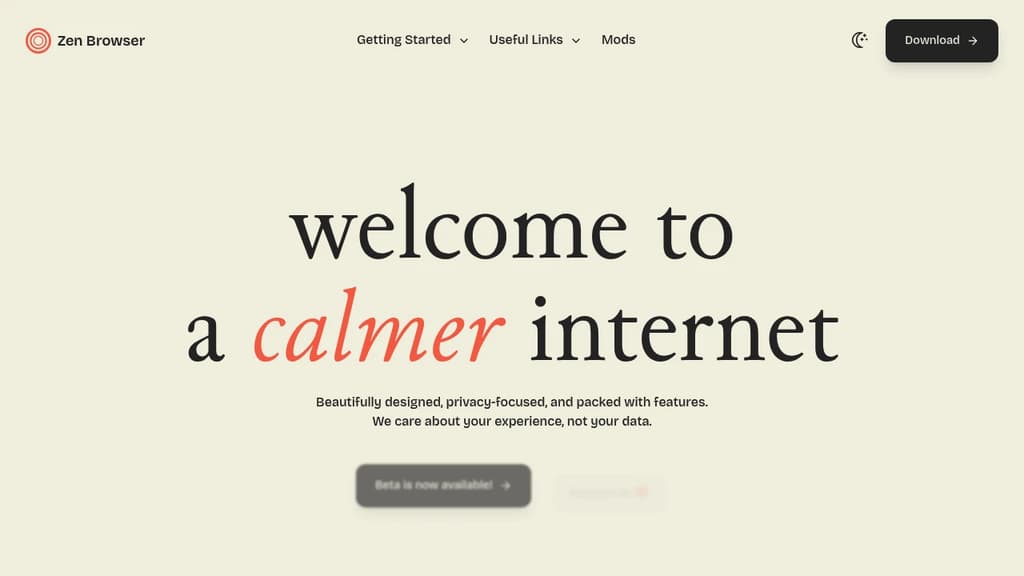
Zen Browser
Last 30 days
Last commit
14 hours agoRepository age
3 yearsVersion
1.23.2License
MPL-2.0Repository
zen-browser/desktop
Detailed Comparison
Both Helium and Zen Browser have their unique strengths and serve similar purposes effectively. Consider your specific needs regarding popularity, growth, activity, technology, maturity, licensing and features when making your decision.
Both Helium and Zen Browser have their unique strengths and serve similar purposes effectively. Consider your specific needs regarding popularity, growth, activity, technology, maturity, licensing and features when making your decision.
Community & Popularity
Zen Browser leads in popularity with 44,916 stars vs 21,548 stars for Helium. The 108% higher star count indicates stronger community adoption. In terms of developer contributions, Zen Browser has 1,831 forks, indicating strong developer engagement.
Growth Momentum
Helium is growing faster, adding 929 stars in the last 30 days (+4.5%) against adding 490 stars for Zen Browser (+1.1%). Helium is the smaller project of the two, so it is closing the gap rather than extending a lead.
Development Activity
Both projects show recent activity, with Helium last updated 12 hours ago and Zen Browser 14 hours ago.
Technology Stack
Both tools share common technology foundations, being built with JavaScript, Bash, Python. However, they differ in their additional technology choices: Zen Browser leverages CSS, Typescript, Rust, C, Objective-C, C++.
Project Maturity
Both projects started around the same time, with Helium beginning 2 years ago and Zen Browser 3 years ago.
Licensing
The projects use different licenses: Helium is licensed under GPL-3.0 while Zen Browser uses MPL-2.0. Consider the licensing requirements when choosing for your project.
Use Cases & Features
Both tools serve similar use cases in Web Browsers.
Other tool comparisons to consider
Heliumvs
 LadybirdHelium
vs
 ego liteHelium
vs
 BraveHelium
vs
 WaterfoxHelium
vs
 LibreWolfHelium
vs
 FlowHelium
vs
 Browser OperatorHelium
vs
 Midori BrowserZen Browser
vs
LadybirdZen Browservs
ego liteZen Browservs
BraveZen Browservs
WaterfoxZen Browservs
LibreWolfZen Browservs
FlowZen Browservs
Browser OperatorZen Browservs
Midori Browser Openlane – Open-source, developer-first platform for automated compliance, risk management, and built-in Trust Center.