Bytebase vs /dev/push
Learn how Bytebase and /dev/push differ in their key features, development activity, technology
stack and community adoption, so you can decide which of these ci/cd platforms is best for you.
Learn how Bytebase and /dev/push differ in their key features, development activity, technology stack and community adoption, so you can decide which of these ci/cd platforms is best for you.

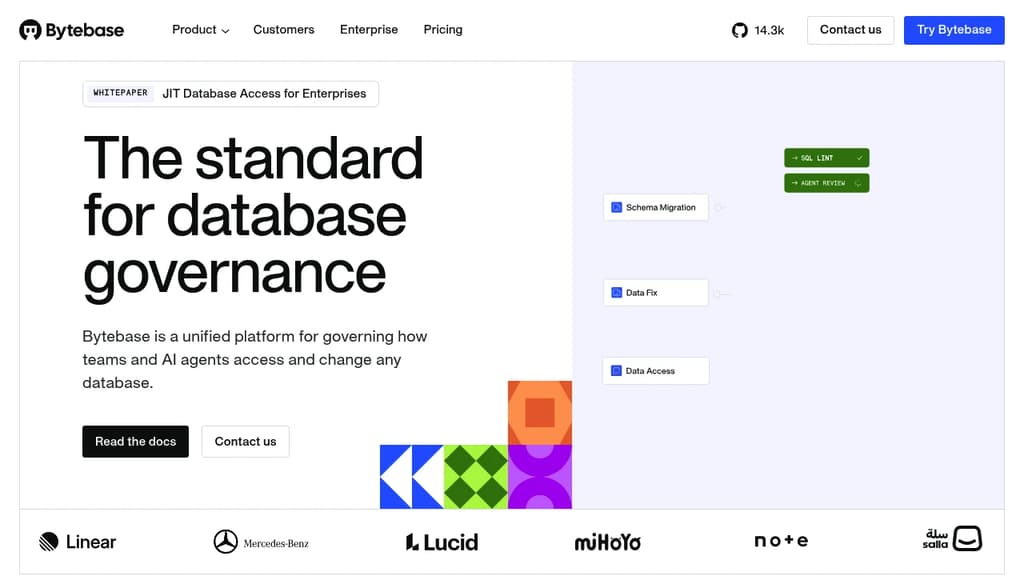
Bytebase
Last 30 days
Last commit
54 minutes agoRepository age
6 yearsVersion
3.24.1License
MITSelf-hosted
YesRepository
bytebase/bytebase

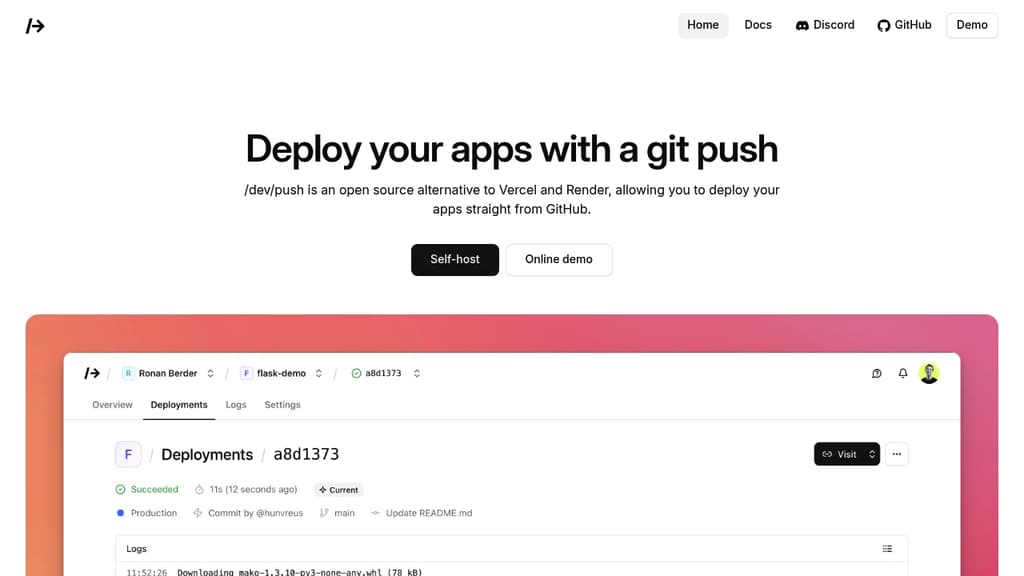
/dev/push
Last 30 days
Last commit
8 days agoRepository age
2 yearsVersion
v1.1.0License
MITRepository
hunvreus/devpush
Detailed Comparison
Bytebase appears to have several advantages over /dev/push, particularly in popularity, maturity and features. Consider your specific needs regarding popularity, growth, activity, technology, maturity, licensing and features when making your decision.
Bytebase appears to have several advantages over /dev/push, particularly in popularity, maturity and features. Consider your specific needs regarding popularity, growth, activity, technology, maturity, licensing and features when making your decision.
Community & Popularity
Bytebase significantly outpaces /dev/push in community adoption with 14,691 stars compared to 4,828 stars on GitHub. This 3.0x difference suggests Bytebase has a much larger and more active community. In terms of developer contributions, Bytebase has 1,010 forks, indicating strong developer engagement.
Growth Momentum
/dev/push is growing faster, adding 60 stars in the last 30 days (+1.3%) against adding 141 stars for Bytebase (+1%). /dev/push is the smaller project of the two, so it is closing the gap rather than extending a lead.
Development Activity
Both projects show recent activity, with Bytebase last updated 54 minutes ago and /dev/push 8 days ago.
Technology Stack
Both tools share common technology foundations, being built with JavaScript, CSS, Bash, Python. However, they differ in their additional technology choices: Bytebase uses Typescript, JSX, Golang, Vue.
Project Maturity
Bytebase has been in development longer, starting 6 years ago, compared to /dev/push which began 2 years ago. This 4.0-year head start suggests Bytebase may have more mature features and established processes.
Licensing
Both projects use the MIT license, providing identical terms for usage and distribution.
Use Cases & Features
Both tools serve similar use cases in CI/CD Platforms. However, they also have distinct specializations: Bytebase also focuses on Database Tools & GUIs while /dev/push extends into PaaS & Deployment Tools.
Hosting & Deployment
Bytebase provides self-hosting options for complete data control and customization, while /dev/push may be primarily cloud-based or require different deployment approaches.







 Docmost – Open-source wiki software with real-time collaboration, diagrams, AI, SSO, RBAC permissions and more.