Kanri vs Taiga
Learn how Kanri and Taiga differ in their key features, development activity, technology
stack and community adoption, so you can decide which of these agile project management tools is best for you.
Learn how Kanri and Taiga differ in their key features, development activity, technology stack and community adoption, so you can decide which of these agile project management tools is best for you.

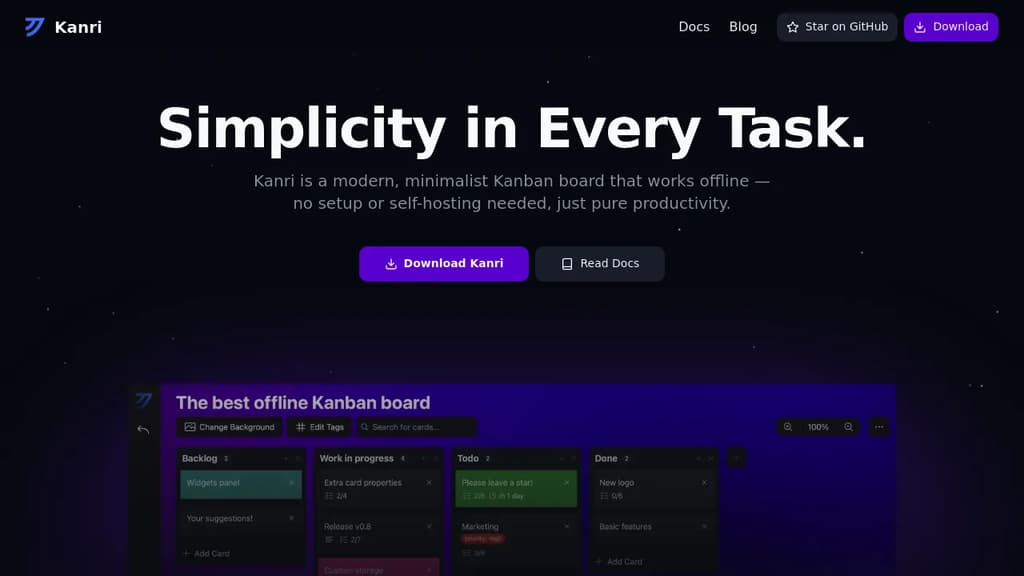
Kanri
Last 30 days
Last commit
16 hours agoRepository age
4 yearsVersion
v0.8.2License
GPL-3.0Repository
kanriapp/kanri

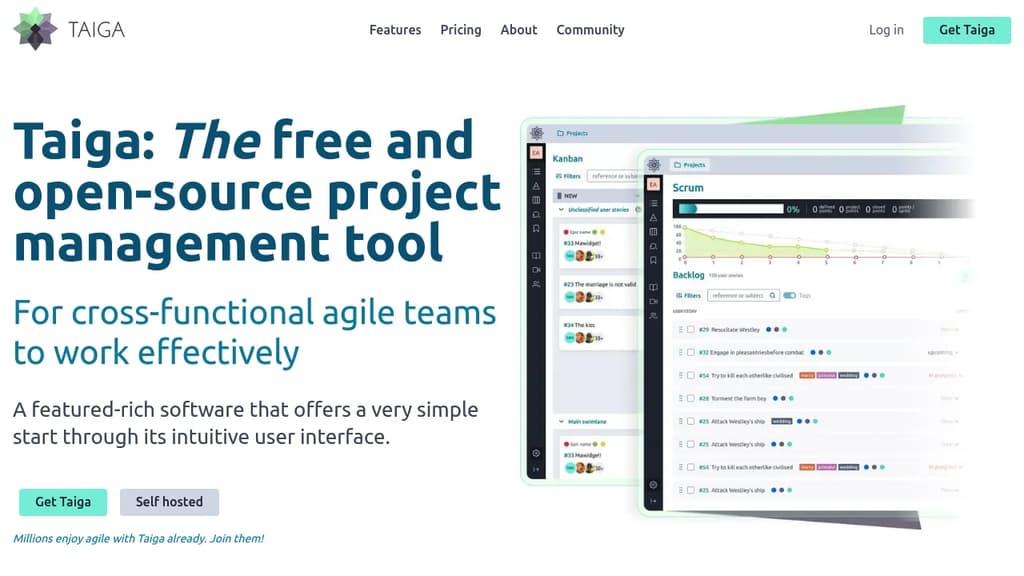
Taiga
Last 30 days
Last commit
1 day agoRepository age
6 yearsLicense
MPL-2.0Self-hosted
YesRepository
taigaio/taiga-back
Detailed Comparison
Both Kanri and Taiga have their unique strengths and serve similar purposes effectively. Consider your specific needs regarding popularity, growth, activity, technology, maturity, licensing and features when making your decision.
Both Kanri and Taiga have their unique strengths and serve similar purposes effectively. Consider your specific needs regarding popularity, growth, activity, technology, maturity, licensing and features when making your decision.
Community & Popularity
Kanri leads in popularity with 2,070 stars vs 859 stars for Taiga. The 141% higher star count indicates stronger community adoption. In terms of developer contributions, Taiga has 319 forks, indicating moderate developer engagement.
Growth Momentum
Kanri is growing faster, adding 31 stars in the last 30 days (+1.5%) against adding 6 stars for Taiga (+0.7%). Kanri is both larger and pulling further ahead.
Development Activity
Both projects show recent activity, with Kanri last updated 16 hours ago and Taiga 1 day ago.
Technology Stack
Both tools share common technology foundations, being built with CSS. However, they differ in their additional technology choices: Kanri uses JavaScript, Typescript, Rust, Vue, Tauri, Nuxt.js while Taiga leverages Bash, Python, Django.
Project Maturity
Taiga has been in development longer, starting 6 years ago, compared to Kanri which began 4 years ago. This 1.1-year head start suggests Taiga may have more mature features and established processes.
Licensing
The projects use different licenses: Kanri is licensed under GPL-3.0 while Taiga uses MPL-2.0. Consider the licensing requirements when choosing for your project.
Use Cases & Features
Both tools serve similar use cases in Agile Project Management. However, they also have distinct specializations: Kanri also focuses on Task Management while Taiga extends into Project Management Suites.
Hosting & Deployment
Taiga provides self-hosting options for complete data control and customization, while Kanri may be primarily cloud-based or require different deployment approaches.
Other tool comparisons to consider
Kanrivs
 Macro TasksKanri
vs
 PlaneKanri
vs
 Super ProductivityKanri
vs
 OpenProjectKanri
vs
 KaneoKanri
vs
 PlankaKanri
vs
 LeantimeKanri
vs
 FizzyKanri
vs
 KanKanri
vs
 VikunjaKanri
vs
 WorklenzKanri
vs
 OrgniseKanri
vs
 ManageKanri
vs
 MimraiTaiga
vs
PlaneTaigavs
 HulyTaiga
vs
 WekanTaiga
vs
OpenProjectTaigavs
PlankaTaigavs
LeantimeTaigavs
FizzyTaigavs
 RedmineTaiga
vs
KanTaigavs
VikunjaTaigavs
WorklenzTaigavs
 KanbaTaiga
vs
 OperatelyTaiga
vs
 Ever TeamsTaiga
vs
 WindshiftTaiga
vs
OrgniseTaigavs
ManageTaigavs
 SayrTaiga
vs
Mimrai Postiz – The All-in-One agentic social media scheduling tool