Browser Operator vs Midori Browser
Learn how Browser Operator and Midori Browser differ in their key features, development activity, technology
stack and community adoption, so you can decide which of these web browsers is best for you.
Learn how Browser Operator and Midori Browser differ in their key features, development activity, technology stack and community adoption, so you can decide which of these web browsers is best for you.

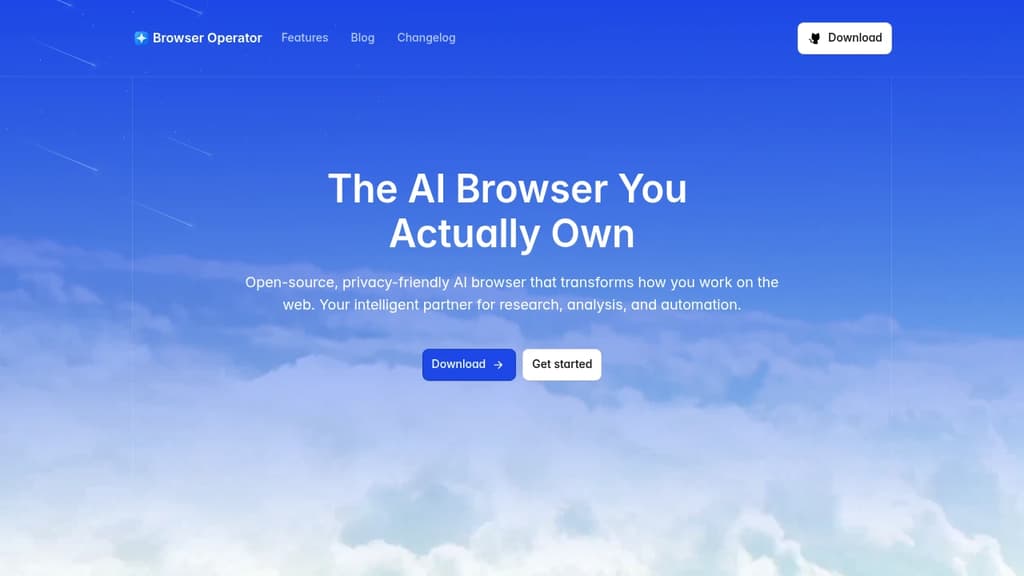
Browser Operator
Last 30 days
Last commit
7 months agoRepository age
1 yearVersion
v0.6.0License
BSD-3-ClauseRepository
browser-operator-core

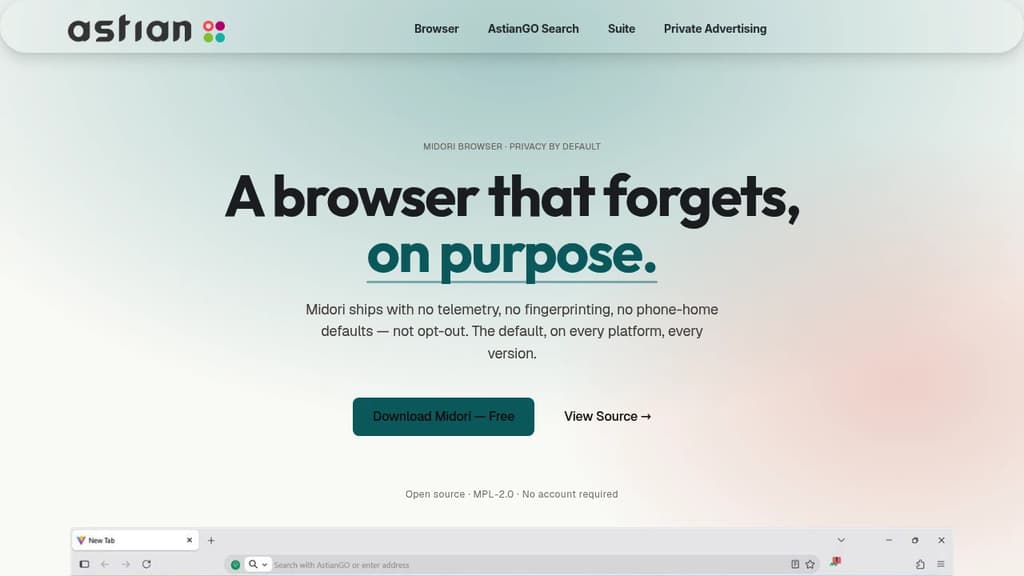
Midori Browser
Last 30 days
Last commit
1 day agoRepository age
3 yearsVersion
v11.9.1License
MPL-2.0Repository
midori-desktop
Detailed Comparison
Midori Browser appears to have several advantages over Browser Operator, particularly in growth, activity and maturity. Consider your specific needs regarding popularity, growth, activity, technology, maturity, licensing and features when making your decision.
Midori Browser appears to have several advantages over Browser Operator, particularly in growth, activity and maturity. Consider your specific needs regarding popularity, growth, activity, technology, maturity, licensing and features when making your decision.
Community & Popularity
Both tools have similar popularity levels, with Browser Operator having 515 stars and Midori Browser having 407 stars on GitHub. In terms of developer contributions, Browser Operator has 84 forks, indicating growing developer engagement.
Growth Momentum
Midori Browser is growing faster, adding 8 stars in the last 30 days (+2%) against adding 7 stars for Browser Operator (+1.4%). Midori Browser is the smaller project of the two, so it is closing the gap rather than extending a lead.
Development Activity
Midori Browser shows more recent development activity with its last commit 1 day ago, while Browser Operator was last updated 7 months ago. This suggests Midori Browser is being more actively maintained.
Technology Stack
Both tools share common technology foundations, being built with JavaScript, CSS, Bash, Typescript, Python, C, Objective-C, C++. However, they differ in their additional technology choices: Midori Browser leverages JSX, Next.js, Golang, SCSS, Rust, PHP, Vue, Java, Swift, Ruby, Kotlin, MATLAB, C#, Perl, Nuxt.js, Elixir, GLSL, CoffeeScript.
Project Maturity
Midori Browser has been in development longer, starting 3 years ago, compared to Browser Operator which began 1 year ago. This 1.6-year head start suggests Midori Browser may have more mature features and established processes.
Licensing
Browser Operator uses the BSD-3-Clause license, which is more permissive than Midori Browser's MPL-2.0 license, potentially offering greater flexibility for commercial use and integration.
Use Cases & Features
Both tools serve similar use cases in Web Browsers. However, they also have distinct specializations: Browser Operator also focuses on Browser Automation for AI.
Other tool comparisons to consider
Browser Operatorvs
 Browser UseBrowser Operator
vs
 LadybirdBrowser Operator
vs
 Zen BrowserBrowser Operator
vs
 LightpandaBrowser Operator
vs
 SkyvernBrowser Operator
vs
 HeliumBrowser Operator
vs
 ego liteBrowser Operator
vs
 SteelBrowser Operator
vs
 WaterfoxBrowser Operator
vs
 LibreWolfBrowser Operator
vs
 FlowMidori Browser
vs
LadybirdMidori Browservs
Zen BrowserMidori Browservs
HeliumMidori Browservs
ego liteMidori Browservs
 BraveMidori Browser
vs
WaterfoxMidori Browservs
LibreWolfMidori Browservs
Flow c15t – Open-source cookie banner, built for control and lightening fast modern web apps.