Browser Operator vs Ladybird
Learn how Browser Operator and Ladybird differ in their key features, development activity, technology
stack and community adoption, so you can decide which of these web browsers is best for you.
Learn how Browser Operator and Ladybird differ in their key features, development activity, technology stack and community adoption, so you can decide which of these web browsers is best for you.

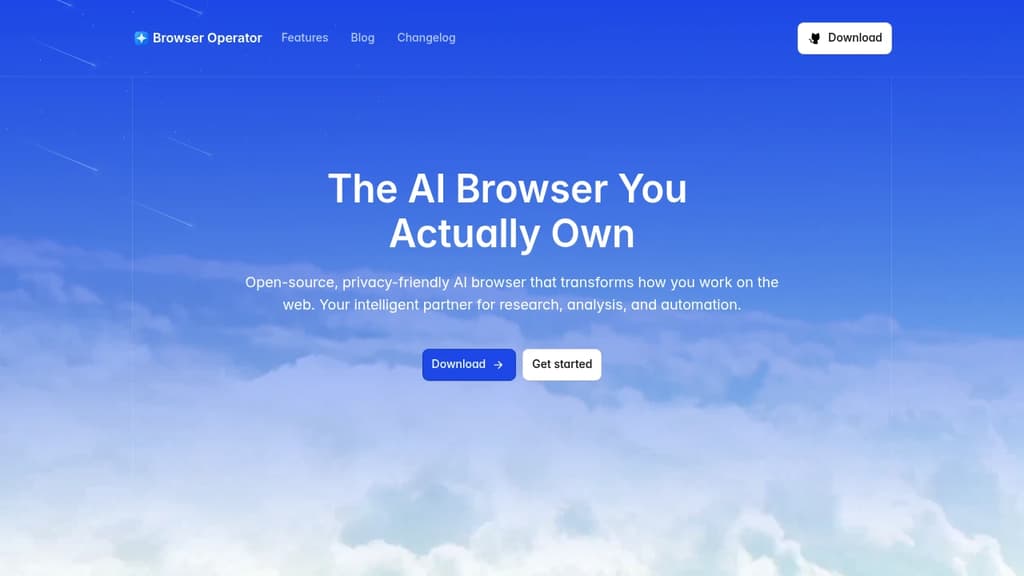
Browser Operator
Last 30 days
Last commit
7 months agoRepository age
1 yearVersion
v0.6.0License
BSD-3-ClauseRepository
browser-operator-core

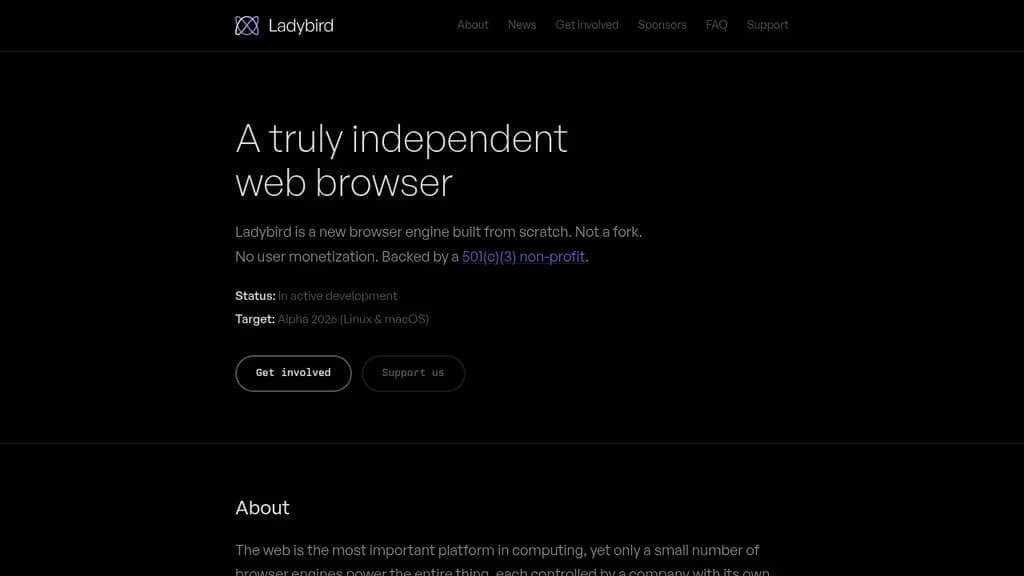
Ladybird
Last 30 days
Last commit
9 hours agoRepository age
2 yearsLicense
BSD-2-ClauseRepository
ladybird
Detailed Comparison
Both Browser Operator and Ladybird have their unique strengths and serve similar purposes effectively. Consider your specific needs regarding popularity, growth, activity, technology, maturity, licensing and features when making your decision.
Both Browser Operator and Ladybird have their unique strengths and serve similar purposes effectively. Consider your specific needs regarding popularity, growth, activity, technology, maturity, licensing and features when making your decision.
Community & Popularity
Ladybird significantly outpaces Browser Operator in community adoption with 66,571 stars compared to 515 stars on GitHub. This 129.3x difference suggests Ladybird has a much larger and more active community. In terms of developer contributions, Ladybird has 3,163 forks, indicating strong developer engagement.
Growth Momentum
Browser Operator is growing faster, adding 7 stars in the last 30 days (+1.4%) against adding 316 stars for Ladybird (+0.5%). Browser Operator is the smaller project of the two, so it is closing the gap rather than extending a lead.
Development Activity
Ladybird shows more recent development activity with its last commit 9 hours ago, while Browser Operator was last updated 7 months ago. This suggests Ladybird is being more actively maintained.
Technology Stack
Both tools share common technology foundations, being built with JavaScript, CSS, Bash, Python, C, Objective-C, C++. However, they differ in their additional technology choices: Browser Operator uses Typescript while Ladybird leverages Java, Swift, Kotlin.
Project Maturity
Both projects started around the same time, with Browser Operator beginning 1 year ago and Ladybird 2 years ago.
Licensing
The projects use different licenses: Browser Operator is licensed under BSD-3-Clause while Ladybird uses BSD-2-Clause. Consider the licensing requirements when choosing for your project.
Use Cases & Features
Both tools serve similar use cases in Web Browsers. However, they also have distinct specializations: Browser Operator also focuses on Browser Automation for AI.
Other tool comparisons to consider
Browser Operatorvs
 Browser UseBrowser Operator
vs
 Zen BrowserBrowser Operator
vs
 LightpandaBrowser Operator
vs
 SkyvernBrowser Operator
vs
 HeliumBrowser Operator
vs
 ego liteBrowser Operator
vs
 SteelBrowser Operator
vs
 WaterfoxBrowser Operator
vs
 LibreWolfBrowser Operator
vs
 FlowBrowser Operator
vs
 Midori BrowserLadybird
vs
Zen BrowserLadybirdvs
HeliumLadybirdvs
ego liteLadybirdvs
 BraveLadybird
vs
WaterfoxLadybirdvs
LibreWolfLadybirdvs
FlowLadybirdvs
Midori Browser c15t – Open-source cookie banner, built for control and lightening fast modern web apps.