Billion Mail vs Plunk
Learn how Billion Mail and Plunk differ in their key features, development activity, technology
stack and community adoption, so you can decide which of these email marketing & newsletter tools is best for you.
Learn how Billion Mail and Plunk differ in their key features, development activity, technology stack and community adoption, so you can decide which of these email marketing & newsletter tools is best for you.

Billion Mail
Last 30 days
Last commit
4 months agoRepository age
2 yearsVersion
v4.9License
AGPL-3.0Self-hosted
YesRepository
aapanel/billionmail


Plunk
Last 30 days
Last commit
1 day agoRepository age
2 yearsVersion
v0.16.0License
AGPL-3.0Repository
useplunk/plunk
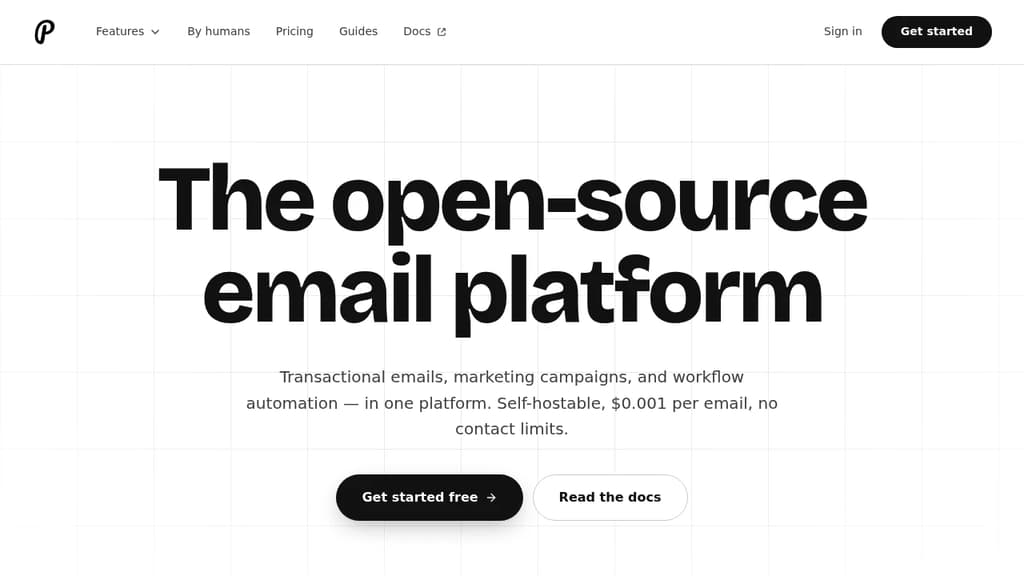
Detailed Comparison
Billion Mail appears to have several advantages over Plunk, particularly in popularity, growth and features. Consider your specific needs regarding popularity, growth, activity, technology, maturity, licensing and features when making your decision.
Billion Mail appears to have several advantages over Plunk, particularly in popularity, growth and features. Consider your specific needs regarding popularity, growth, activity, technology, maturity, licensing and features when making your decision.
Community & Popularity
Billion Mail leads in popularity with 15,925 stars vs 5,524 stars for Plunk. The 188% higher star count indicates stronger community adoption. In terms of developer contributions, Billion Mail has 1,753 forks, indicating strong developer engagement.
Growth Momentum
Billion Mail is growing faster, adding 306 stars in the last 30 days (+2%) against adding 41 stars for Plunk (+0.7%). Billion Mail is both larger and pulling further ahead.
Development Activity
Plunk shows more recent development activity with its last commit 1 day ago, while Billion Mail was last updated 4 months ago. This suggests Plunk is being more actively maintained.
Technology Stack
Both tools share common technology foundations, being built with JavaScript, CSS, Bash, Typescript, JSX. However, they differ in their additional technology choices: Billion Mail uses Golang, SCSS, PHP, Vue while Plunk leverages Next.js.
Project Maturity
Both projects started around the same time, with Billion Mail beginning 2 years ago and Plunk 2 years ago.
Licensing
Both projects use the AGPL-3.0 license, providing identical terms for usage and distribution.
Use Cases & Features
Both tools serve similar use cases in Email Marketing & Newsletters. However, they also have distinct specializations: Billion Mail also focuses on Mail Servers while Plunk extends into Customer Communication Platforms, Email Platforms.
Hosting & Deployment
Billion Mail provides self-hosting options for complete data control and customization, while Plunk may be primarily cloud-based or require different deployment approaches.
Other tool comparisons to consider
Billion Mailvs
 ListmonkBillion Mail
vs
 useSendBillion Mail
vs
 NotifuseBillion Mail
vs
 SendportalBillion Mail
vs
 KeilaBillion Mail
vs
 MailCheapBillion Mail
vs
 WrapsBillion Mail
vs
 Hyvor PostPlunk
vs
ListmonkPlunkvs
useSendPlunkvs
NotifusePlunkvs
SendportalPlunkvs
KeilaPlunkvs
MailCheapPlunkvs
 SessyPlunk
vs
 Hyvor RelayPlunk
vs
WrapsPlunkvs
Hyvor Post c15t – Open-source cookie banner, built for control and lightening fast modern web apps.