Open Source Vvveb CMS Alternatives
A curated collection of the 13 best open source alternatives to Vvveb CMS.
The best open source alternative to Vvveb CMS is Directus. If that doesn't suit you, we've compiled a ranked list of other open source Vvveb CMS alternatives to help you find a suitable replacement. Other interesting open source alternatives to Vvveb CMS are: WebStudio, Builder, Plasmic, and Drupal.
Vvveb CMS alternatives are mainly Low-Code/No-Code Platforms but may also be Website Builders or Traditional & Flat-File CMS Tools. Browse these if you want a narrower list of alternatives or looking for a specific functionality of Vvveb CMS.

Written by Piotr Kulpinski


A versatile headless CMS and API engine that simplifies data management, content creation, and application development.
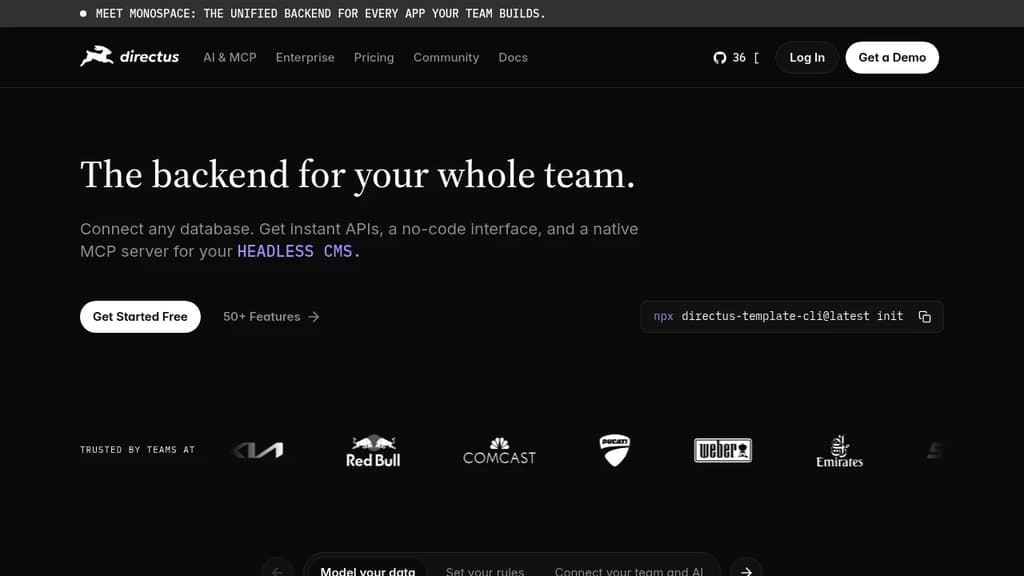
Directus is a powerful, flexible, and user-friendly data platform that revolutionizes the way organizations manage and deliver content. Built on a foundation of openness and extensibility, Directus offers a comprehensive solution for businesses of all sizes.
Key benefits of Directus include:
- Headless Architecture: Deliver content to any platform or device with a robust API-first approach.
- Intuitive Interface: Manage your data and content through a sleek, customizable admin app that requires no technical expertise.
- Flexible Data Model: Adapt to your unique needs with a schema-agnostic system that can handle any data structure.
- Powerful Permissions: Implement granular access control to ensure data security and team collaboration.
- Extensible Ecosystem: Enhance functionality with custom modules, hooks, and integrations.
- Version Control: Track changes and revert to previous states with built-in data versioning.
- Multi-language Support: Manage content in multiple languages effortlessly.
- Self-hosted or Cloud: Choose between self-hosting for complete control or Directus Cloud for hassle-free deployment.
Whether you're building a complex enterprise application or a simple website, Directus provides the tools and flexibility to bring your vision to life. Experience the freedom of open-source with the power of a fully-featured data platform.

Powerful no-code platform for building responsive websites. Combines visual editing with full HTML/CSS customization.
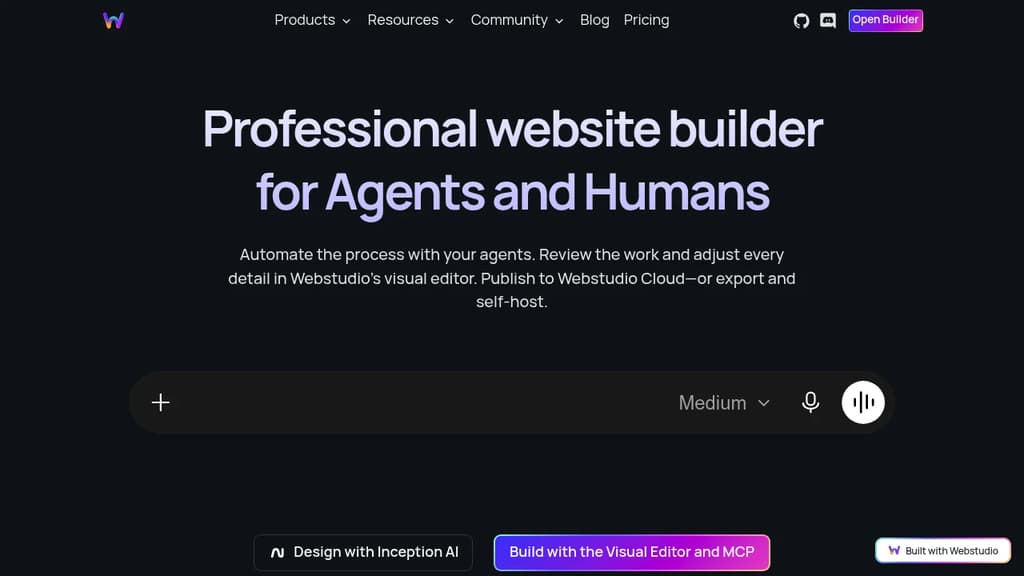
WebStudio revolutionizes web development by bridging the gap between visual design and code-level control. This innovative platform empowers both designers and developers to create stunning, responsive websites without compromising on flexibility or performance.
Key benefits of WebStudio include:
- Intuitive Visual Editor: Drag-and-drop interface for rapid prototyping and design.
- Code-Level Control: Seamlessly switch between visual editing and direct HTML/CSS manipulation.
- Responsive Design: Built-in tools for creating mobile-friendly layouts.
- Component Library: Extensive collection of pre-built, customizable components.
- Real-time Collaboration: Work together with team members in real-time.
- Version Control: Built-in versioning system for easy tracking and rollbacks.
- Export Options: Generate clean, optimized code for various hosting platforms.
- Performance Optimization: Automated tools for improving website speed and efficiency.
WebStudio is perfect for freelancers, agencies, and in-house teams looking to streamline their web development process. Whether you're building a simple landing page or a complex web application, WebStudio provides the tools and flexibility to bring your vision to life efficiently and professionally.

Drag-and-drop interface for creating and optimizing digital experiences, with headless CMS and powerful integrations.
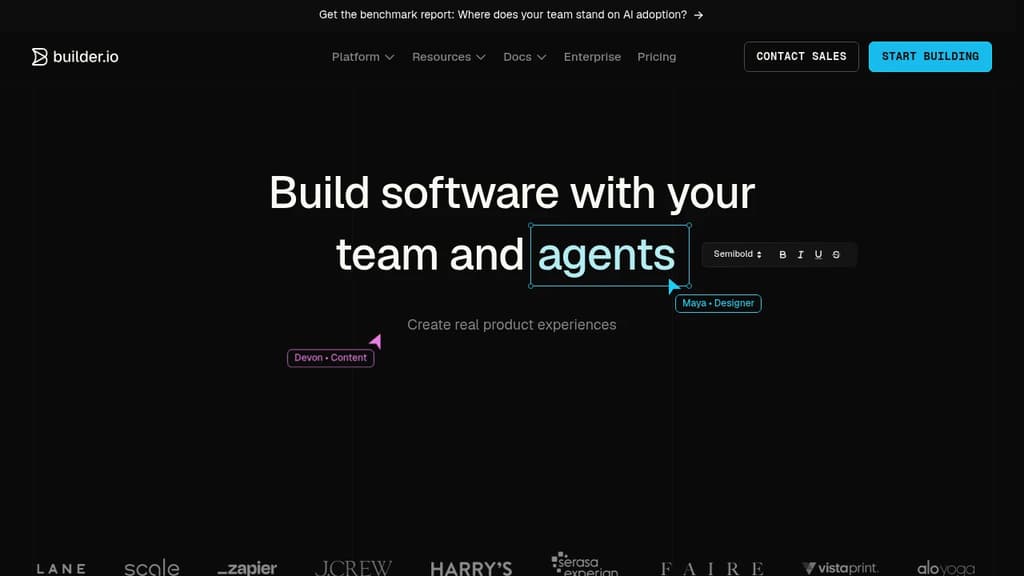
Builder is a revolutionary visual development platform that empowers teams to create, optimize, and deliver exceptional digital experiences without the need for extensive coding knowledge.
Key benefits of Builder include:
- Visual Editing: Intuitive drag-and-drop interface for effortless content creation and layout design.
- Headless CMS: Flexible content management system that separates content from presentation, enabling omnichannel delivery.
- A/B Testing and Optimization: Built-in tools for experimenting with different designs and content variations to maximize engagement.
- Developer-Friendly: Seamless integration with popular frameworks and technologies, allowing developers to extend functionality.
- Performance-Focused: Optimized output for fast-loading, responsive experiences across all devices.
- Collaborative Workflow: Team-oriented features for smooth collaboration between designers, developers, and content creators.
- AI-Powered Insights: Leverage artificial intelligence to gain valuable insights and improve user experiences.
Builder's versatile platform caters to businesses of all sizes, from startups to enterprises, enabling them to create stunning websites, landing pages, e-commerce stores, and more. By bridging the gap between design and development, Builder accelerates the creation process and helps teams deliver exceptional digital experiences that drive results.

Open-source visual editor for building websites and web apps. Connect to any data source, design custom UIs, and ship production React code without leaving your stack.
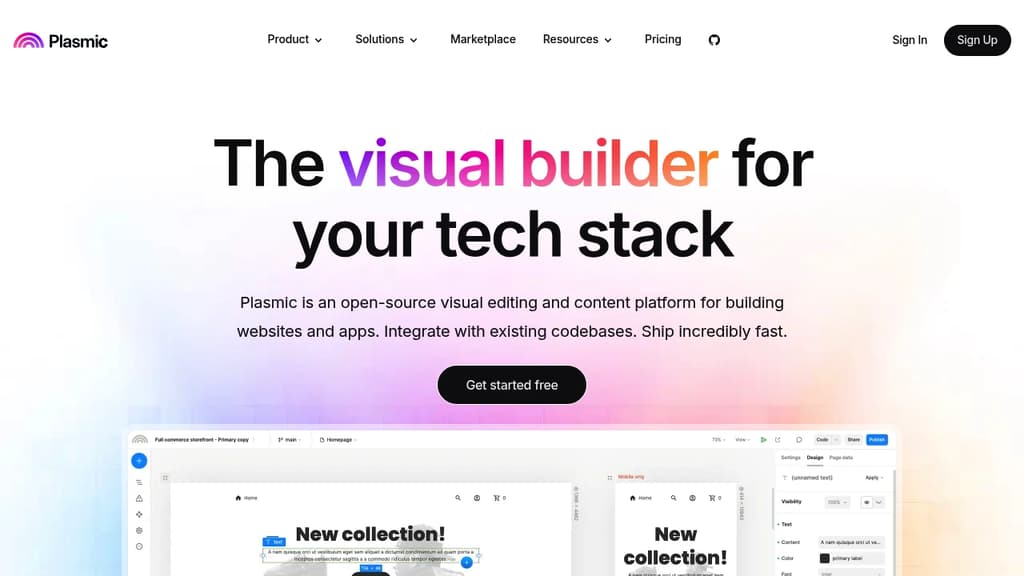
Plasmic is a visual builder and content platform for teams that want to move fast without abandoning their existing codebase. Unlike tools such as Softr or Glide that keep you inside a walled garden, Plasmic generates real React code and integrates directly into your current applications. No iframes, no lock-in.
It's built for mixed teams. Developers can register their own components as drag-and-drop building blocks, then hand the canvas over to designers, marketers, or product managers who can build and publish without filing a ticket. The result is fewer bottlenecks and a smaller backlog.
Key capabilities include:
- Data connectors for Supabase, Contentful, Shopify, and any HTTP or GraphQL API endpoint
- Figma import to turn designs into production React components without manual translation
- Custom component library so your design system stays consistent across every project
- Branching and multiplayer for teams working in parallel without stepping on each other
- Fine-grained permissions to control who can view, edit, or publish within Plasmic and inside your app
- On-premise deployment for organizations that need to keep everything behind a firewall
- SOC 2 compliance and SSO support for enterprise security requirements
Plasmic covers a wide range of use cases: internal tools, customer portals, SaaS products, storefronts, and content-heavy marketing sites. Tools like AppSmith and Builder overlap on internal tools, but Plasmic's Figma-to-code workflow and deep React integration make it a stronger fit for teams that also ship public-facing products.
The free plan has no time limit, and self-hosting is available for teams that need full infrastructure control.

A flexible and extensible content management system for creating dynamic websites and digital experiences
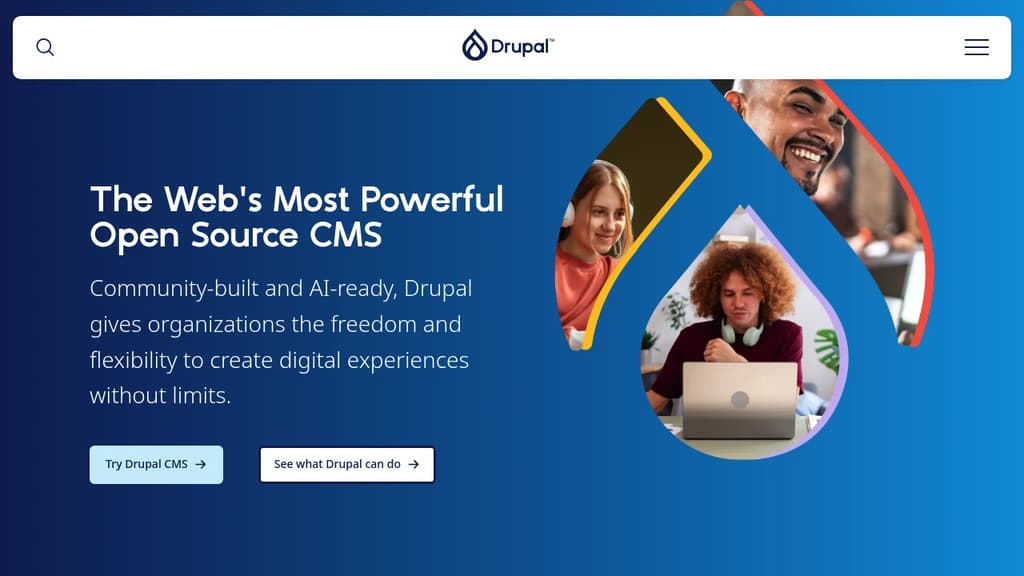
Drupal is a powerful open-source content management system (CMS) that enables you to build flexible and scalable websites. With its modular architecture and extensive ecosystem of contributed modules, Drupal offers unparalleled customization options for creating complex digital experiences.
Some key benefits of Drupal include:
- Flexibility: Build anything from simple blogs to enterprise-grade applications
- Scalability: Handles high-traffic sites and large amounts of content with ease
- Security: Regular updates and a dedicated security team keep your site protected
- Multilingual: Built-in translation tools for creating global websites
- Accessibility: Adheres to WCAG guidelines for inclusive web experiences
- API-first: Headless CMS capabilities for decoupled architectures
Drupal's active open-source community continuously improves the platform, ensuring it stays at the forefront of web technologies. Whether you're a developer, content editor, or site builder, Drupal provides the tools you need to create ambitious digital experiences.

A flat-file CMS that combines simplicity and flexibility, empowering developers to build custom websites without database complexity.
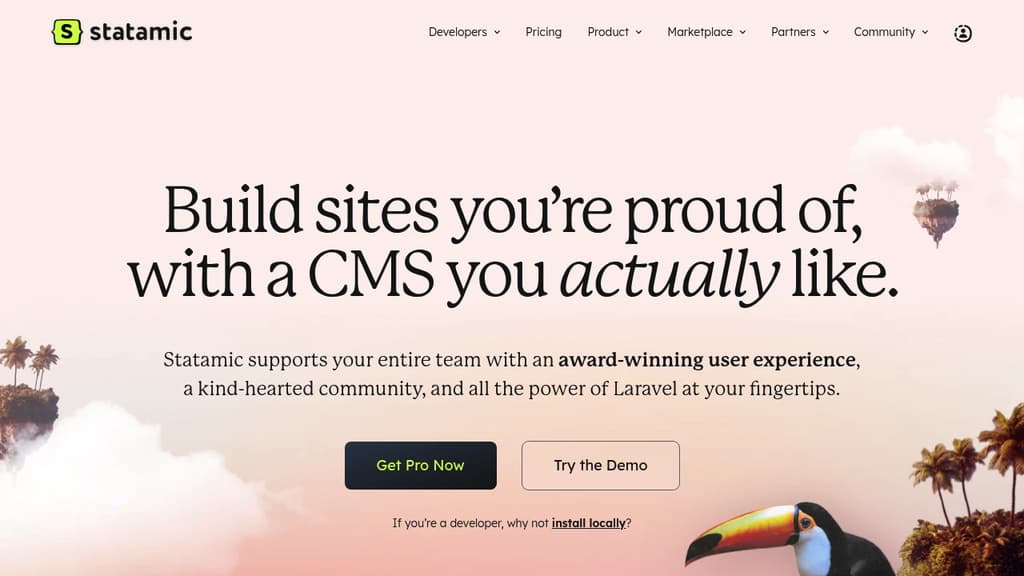
Statamic is a modern, flat-file content management system that revolutionizes the way developers build and manage websites. By eliminating the need for traditional databases, Statamic offers a refreshing approach to web development that prioritizes simplicity, speed, and flexibility.
Key benefits of Statamic include:
- Flat-file architecture: Store your content in simple text files, making version control and backups a breeze.
- Powerful templating: Use the intuitive Antlers templating language to create dynamic, responsive layouts with ease.
- Custom fields and fieldsets: Design your own content structures to fit any project requirements.
- Built-in asset management: Organize and optimize your images, documents, and other media effortlessly.
- Robust user management: Set up roles and permissions to control access and collaboration.
- Extensible plugin system: Enhance functionality with a wide range of add-ons and integrations.
- SEO-friendly: Optimize your content for search engines out of the box.
- Multi-site capabilities: Manage multiple websites from a single installation.
- Live Preview: See changes in real-time as you edit content.
- GraphQL API: Build headless applications with Statamic as your backend.
Whether you're a solo developer or part of a large team, Statamic adapts to your workflow, allowing you to create anything from simple landing pages to complex, content-rich websites. Experience the freedom of a database-free CMS without sacrificing power or flexibility.

A powerful, open-source CMS for Laravel that simplifies content management with a modular approach and intuitive admin panel.
Twill CMS is a game-changer for developers and content creators alike. Built on Laravel, this open-source content management system offers a perfect blend of flexibility and simplicity.
Key benefits of Twill CMS include:
- Modular Architecture: Easily extend and customize your CMS to fit your project's unique needs.
- Intuitive Admin Panel: A clean, user-friendly interface that makes content management a breeze for editors.
- CRUD Module Generator: Quickly create content types with a powerful command-line tool, saving development time.
- Media Library: Effortlessly manage and organize your digital assets with built-in media handling capabilities.
- Powerful Block Editor: Create dynamic, visually appealing layouts using a flexible block-based content editor.
- Multi-language Support: Build multilingual websites with ease, thanks to robust localization features.
- SEO-friendly: Optimize your content for search engines with built-in SEO tools and customizable metadata.
- Developer-friendly: Leverage Laravel's ecosystem and Twill's extensive documentation to build scalable applications.
Whether you're creating a simple blog or a complex digital platform, Twill CMS provides the tools and flexibility to bring your vision to life. Its focus on developer experience and content editor usability makes it an excellent choice for teams looking to streamline their workflow and create outstanding digital experiences.

Frappe Builder is an open-source, low-code website builder that enables users to create beautiful, responsive websites with an intuitive visual interface.
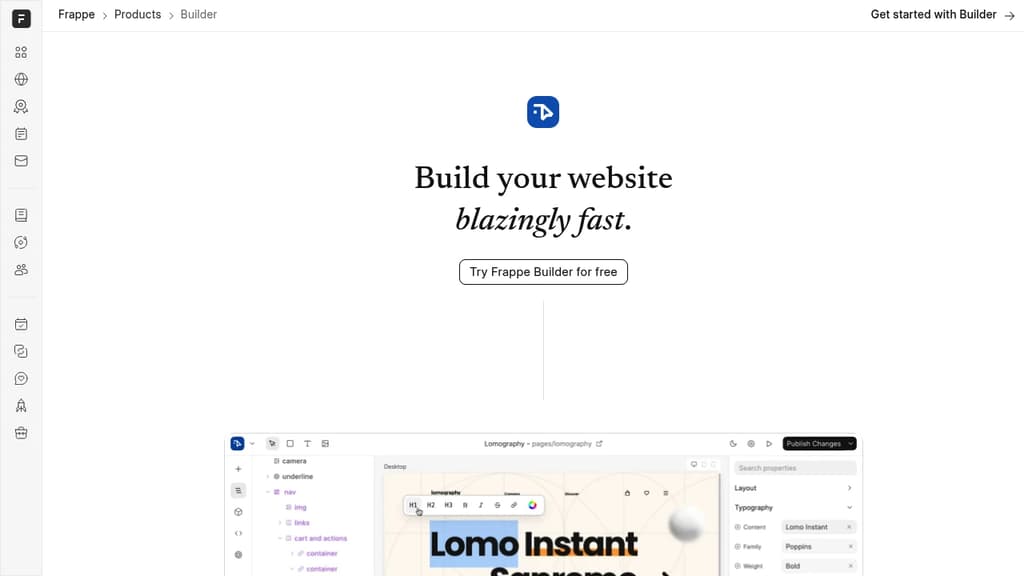
Frappe Builder is an innovative open-source website builder designed for simplicity, speed, and flexibility. It empowers users to craft beautiful websites effortlessly using an intuitive visual interface.
Key features of Frappe Builder include:
- Low-code approach: Create stunning websites without extensive coding knowledge
- Intuitive visual builder: Drag-and-drop interface for easy design and layout
- Responsive designs: Automatically optimized for various screen sizes and devices
- Component system: Reusable and customizable components for consistent design
- Dynamic content: Generate blocks from backend data for versatile page creation
- Performance-focused: Lightweight pages with minimal dependencies for fast loading
- One-click publishing: Streamlined process from design to live website
Frappe Builder bridges the gap between design and publishing, offering a seamless experience for both designers seeking ease of use and developers requiring customization. Whether you're creating a simple landing page or a complex website, Frappe Builder provides the tools to bring your vision to life quickly and efficiently.
Built on the Frappe Framework, this tool combines the power of a full-stack low-code framework with an accessible website creation process. It's ideal for businesses, developers, and individuals looking to establish a professional web presence without the complexity of traditional web development.

An online tool for visually creating static sites with dynamic data. With the free/libre spirit of internet, together.
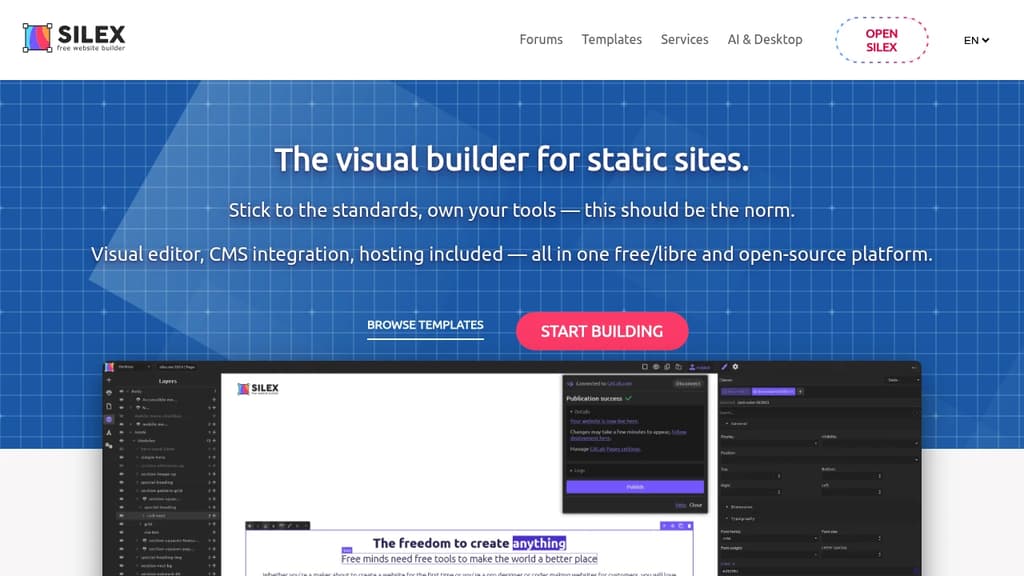
Silex is a powerful open-source website builder that enables designers and no-code developers to create stunning responsive websites visually, without writing code.
Key features:
- Visual drag-and-drop editor for designing websites intuitively
- Responsive design capabilities to ensure sites look great on all devices
- Integration with headless CMS tools for dynamic content
- Free and open-source with no vendor lock-in
- Hosting flexibility - publish to any web host
- Developer-friendly with access to HTML/CSS, custom build pipelines, generates 11ty static sites
Silex stands out by combining the ease of no-code tools with the flexibility and control of open-source software. Designers can create custom, professional-quality websites efficiently, while developers can extend functionality as needed.
The platform embraces modern web standards and static site generation for fast, SEO-friendly websites. With its focus on freedom and customization, Silex is an excellent choice for agencies, freelancers and businesses who want full control over their web projects without sacrificing ease of use.

A versatile, open-source content management system with a powerful API, modular architecture, and intuitive interface for seamless web development.
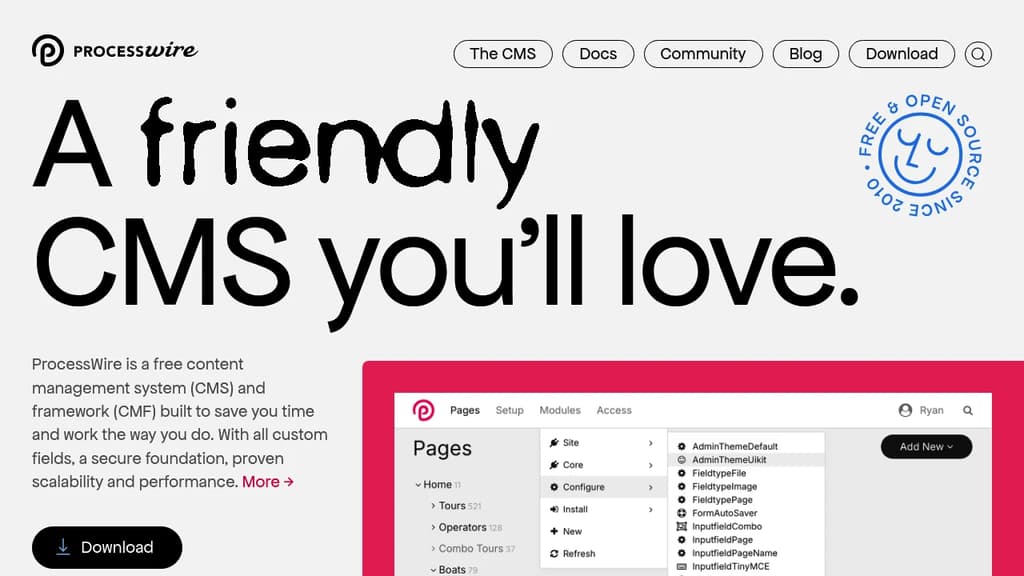
ProcessWire is a robust and flexible content management system (CMS) that combines the power of a comprehensive API with the simplicity of an intuitive interface. It offers developers unparalleled control and customization options while providing content editors with a user-friendly experience.
Key benefits of ProcessWire include:
- Powerful API: Access and manipulate content programmatically with ease, allowing for complex data structures and relationships.
- Modular architecture: Extend functionality through a vast library of modules or create custom ones to suit specific project needs.
- Scalability: Handle small websites to large, complex applications with equal efficiency and performance.
- Security-focused: Built-in security features and regular updates ensure your website remains protected.
- Multi-language support: Create multilingual websites effortlessly with built-in language tools.
- Custom fields and templates: Design your content structure with a flexible system of fields and templates.
- Version control: Track changes and revert to previous versions of your content when needed.
- Responsive admin interface: Manage your website from any device with a mobile-friendly backend.
- Active community: Benefit from a supportive ecosystem of developers and users for assistance and resources.
Whether you're building a simple blog or a complex web application, ProcessWire provides the tools and flexibility to bring your vision to life while maintaining a clean, efficient codebase.

Build, manage, and host custom websites with a visual drag-and-drop builder and CMS. Self-host free or use managed cloud hosting.

Ycode is a visual website builder and CMS that gives you full control over your site's design, content, and infrastructure. It's aimed at designers, founders, and agencies who want the polish of a tool like Webflow without being locked into a closed platform.
The self-hosted version is completely free and open source. You get full code access, custom domains, unlimited pages, unlimited CMS items, unlimited users, and unlimited form entries. No usage caps, no vendor lock-in. If you'd rather skip the infrastructure work, a managed cloud option handles hosting, CDN delivery, and updates automatically.
Key capabilities include:
- Visual builder for designing pages without writing code, with animation support and gradient tools built in
- Built-in CMS with collection filtering, dynamic sorting, and pagination for content-heavy sites
- Multilingual support with unlimited languages on every plan
- Form handling with unlimited entries, no third-party service required
- Rich-text editor for managing content directly within the builder
- Custom domains supported across both self-hosted and cloud plans
For agencies, a white-label workspace lets you run Ycode under your own domain with multi-user access and unlimited cloud projects bundled in.
Compared to other open source website builders or headless CMS tools, Ycode stands out by combining the visual design layer and content management in one place, rather than splitting them across separate tools. Users migrating from closed platforms cite GDPR compliance and community responsiveness as practical reasons for switching.
The self-hosted path deploys to Vercel with Supabase as the database backend, keeping your stack on infrastructure you already control.

Visual web development engine combining design and development tools. Build immersive, interactive web experiences with component-based framework, real-time collaboration, and powerful visual editor.
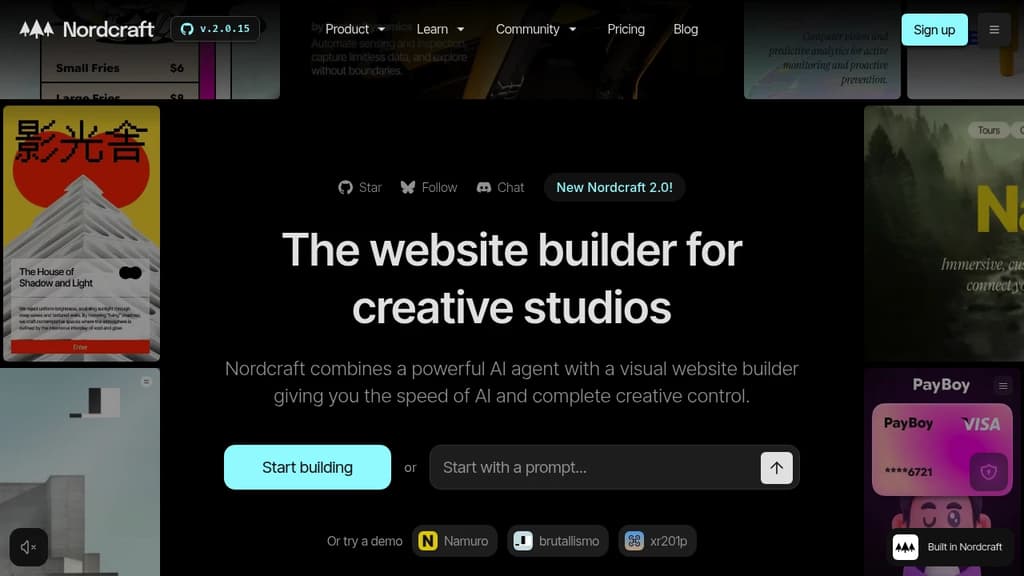
The world's first Web Development Engine - Nordcraft brings game development quality tooling to web development. Just as game studios rely on Unreal Engine to create AAA games, web teams can now use Nordcraft to build exceptional web applications.
Visual tools meet powerful framework - Built on web standards with a component-based architecture familiar to React, Vue, and Svelte developers. Features a lightweight 24kb runtime, server-side rendering, and a fast reactive core based on signals.
End the assembly line workflow - Skip the traditional Figma-to-Jira-to-code handoffs. Designers and developers collaborate directly in one tool, building with live data and seeing changes in real-time.
Complete development suite includes:
- Visual editor and scripting tools
- API connections and database integration
- Cloudflare hosting with 285 global edge locations
- Built-in version control and branching
- Component libraries and design systems
- AI assistant for development support
- SEO optimization and web components export
Open source and self-hostable - Released under Apache License 2.0, giving you full control over deployment and customization. Enterprise support available with onboarding workshops and dedicated channels.

Create manuals, documentation, and websites with this markdown-based content management system, with options for ebook conversion.
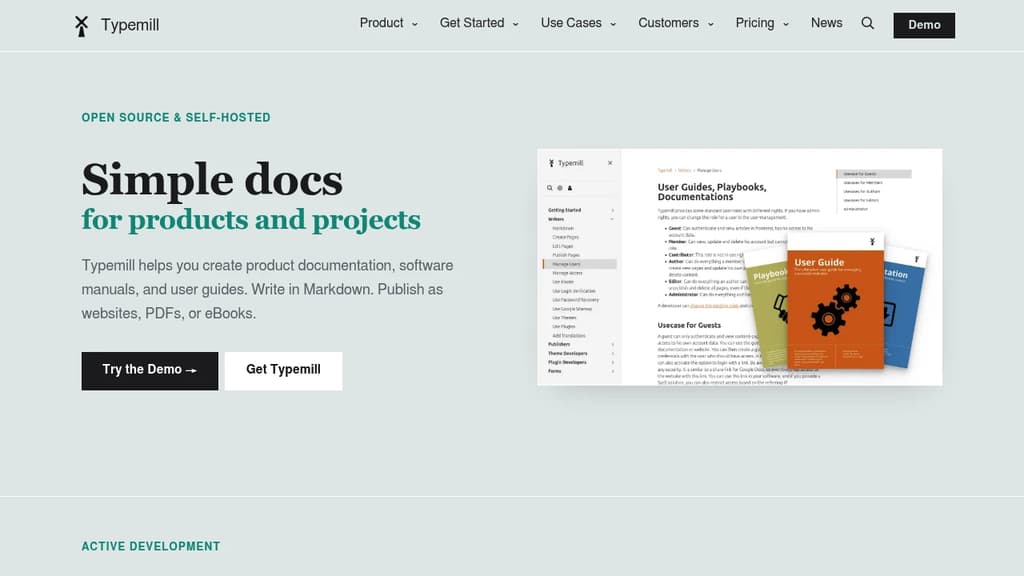
Typemill is an open-source content management system (CMS) designed for text-driven websites. It offers a powerful platform for creating and managing various types of content, including:
- Documentation: Easily create and organize technical documentation for your products or services.
- Manuals: Craft comprehensive user manuals with a structured, easy-to-navigate format.
- Websites: Build traditional websites with a focus on content-rich pages.
- eBooks: Transform your content into downloadable ebooks for wider distribution.
- Handbooks: Develop internal or external handbooks for processes and procedures.
- Reports: Generate professional reports with a clean, organized layout.
- Wikis: Establish collaborative knowledge bases for teams or communities.
- Knowledge Bases: Create searchable repositories of information for customer support or internal use.
Key Features:
- Markdown Support: Write content using the popular Markdown syntax for easy formatting.
- Visual Editor: A user-friendly interface for those who prefer WYSIWYG editing.
- Flexible Navigation: Organize your content with an intuitive drag-and-drop navigation system.
- Customizable Themes: Choose from various themes or create your own to match your brand.
- Plugin Ecosystem: Extend functionality with a range of plugins for added features.
- Multi-Format Output: Publish your content as websites, PDFs, or ePubs.
- Version Control: Track changes and manage revisions of your content.
- SEO Optimization: Built-in tools to help improve your content's search engine visibility.
Typemill is ideal for small enterprises looking to create professional documentation, knowledge bases, and content-rich websites without the complexity of larger CMS platforms. Its focus on simplicity and text-first approach makes it an excellent choice for projects where content clarity and organization are paramount.

People are looking for alternatives to...
View all alternatives
Spotify

Claude Code

CapCut

Claude
Notion

Lovable
 InfluxDB – The purpose-built time series platform for high-velocity ingestion and real-time queries at scale.


 Docmost