Gigapipe vs GreptimeDB
Learn how Gigapipe and GreptimeDB differ in their key features, development activity, technology
stack and community adoption, so you can decide which of these log management tools is best for you.
Learn how Gigapipe and GreptimeDB differ in their key features, development activity, technology stack and community adoption, so you can decide which of these log management tools is best for you.

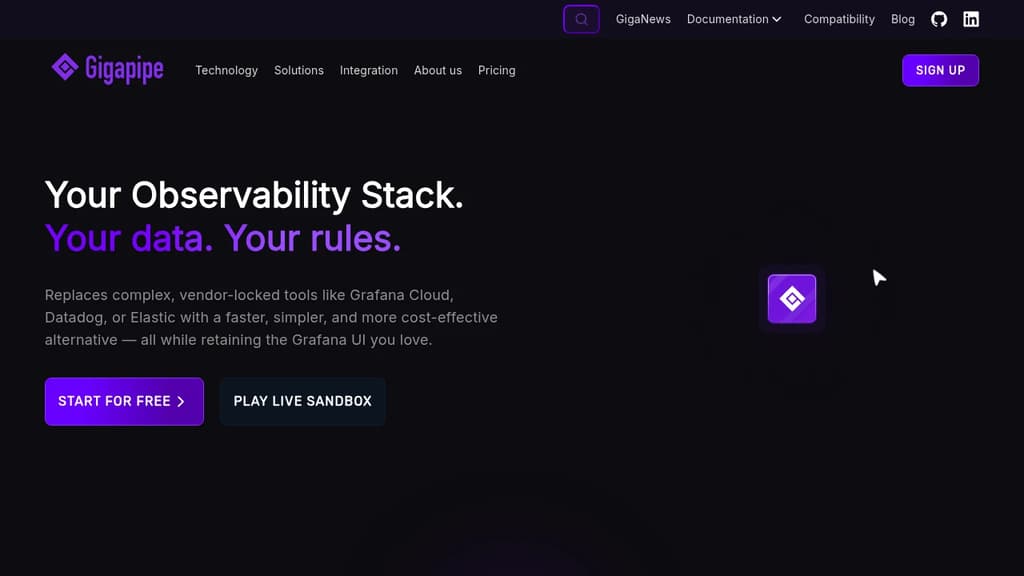
Gigapipe
Last 30 days
Last commit
5 days agoRepository age
8 yearsVersion
v5.5.3License
AGPL-3.0Repository
metrico/gigapipe

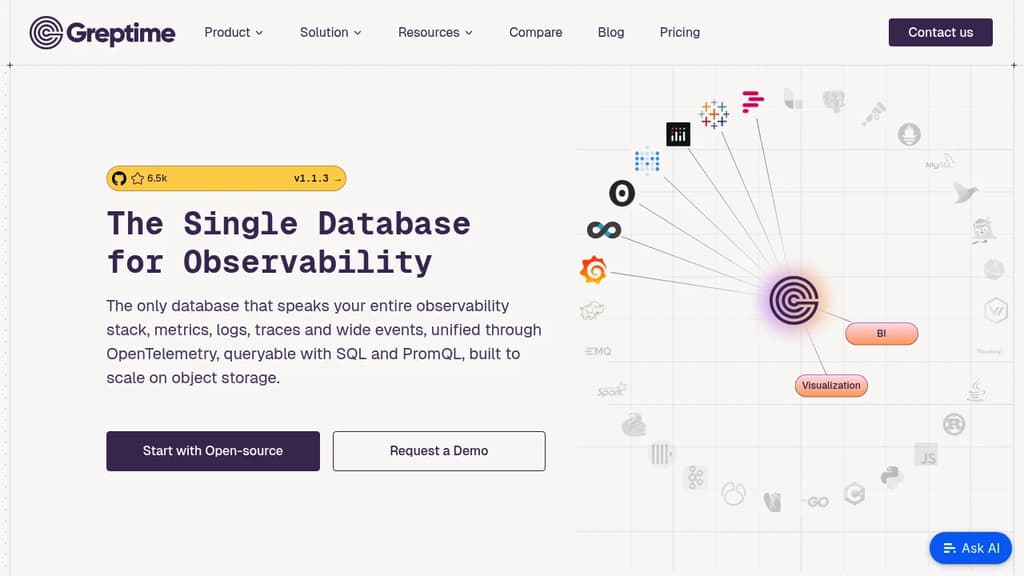
GreptimeDB
Last 30 days
Last commit
7 hours agoRepository age
5 yearsVersion
v1.2.1License
Apache-2.0Self-hosted
YesRepository
greptimedb
Detailed Comparison
GreptimeDB appears to have several advantages over Gigapipe, particularly in popularity, growth and features. Consider your specific needs regarding popularity, growth, activity, technology, maturity, licensing and features when making your decision.
GreptimeDB appears to have several advantages over Gigapipe, particularly in popularity, growth and features. Consider your specific needs regarding popularity, growth, activity, technology, maturity, licensing and features when making your decision.
Community & Popularity
GreptimeDB significantly outpaces Gigapipe in community adoption with 6,745 stars compared to 1,714 stars on GitHub. This 3.9x difference suggests GreptimeDB has a much larger and more active community. In terms of developer contributions, GreptimeDB has 566 forks, indicating moderate developer engagement.
Growth Momentum
GreptimeDB is growing faster, adding 62 stars in the last 30 days (+0.9%) against adding 8 stars for Gigapipe (+0.5%). GreptimeDB is both larger and pulling further ahead.
Development Activity
Both projects show recent activity, with Gigapipe last updated 5 days ago and GreptimeDB 7 hours ago.
Technology Stack
Gigapipe uses Golang while GreptimeDB leverages JavaScript, Bash, Typescript, Python, Rust.
Project Maturity
Gigapipe has been in development longer, starting 8 years ago, compared to GreptimeDB which began 5 years ago. This 3.3-year head start suggests Gigapipe may have more mature features and established processes.
Licensing
The projects use different licenses: Gigapipe is licensed under AGPL-3.0 while GreptimeDB uses Apache-2.0. Consider the licensing requirements when choosing for your project.
Use Cases & Features
Both tools serve similar use cases in Log Management. However, they also have distinct specializations: Gigapipe also focuses on Infrastructure Monitoring while GreptimeDB extends into Time Series Databases.
Hosting & Deployment
GreptimeDB provides self-hosting options for complete data control and customization, while Gigapipe may be primarily cloud-based or require different deployment approaches.
Other tool comparisons to consider
Gigapipevs
 GrafanaGigapipe
vs
 ProjectDiscoveryGigapipe
vs
 SigNozGigapipe
vs
 Grafana LokiGigapipe
vs
 Apache SkyWalkingGigapipe
vs
 OpenObserveGigapipe
vs
 VectorGigapipe
vs
 LogstashGigapipe
vs
 HyperDXGigapipe
vs
 LogfireGigapipe
vs
 UptraceGigapipe
vs
 MapleGreptimeDB
vs
 PrometheusGreptimeDB
vs
SigNozGreptimeDBvs
Grafana LokiGreptimeDBvs
Apache SkyWalkingGreptimeDBvs
OpenObserveGreptimeDBvs
VectorGreptimeDBvs
 VictoriaMetricsGreptimeDB
vs
LogstashGreptimeDBvs
HyperDXGreptimeDBvs
 CorootGreptimeDB
vs
LogfireGreptimeDBvs
Maple Bright Data – Web data for AI agents and apps. Built-in unblocking, proxies, and ready-made APIs.