Open Source ZeroClaw Alternatives
A curated collection of the 8 best open source alternatives to ZeroClaw.
The best open source alternative to ZeroClaw is OpenClaw. If that doesn't suit you, we've compiled a ranked list of other open source ZeroClaw alternatives to help you find a suitable replacement. Other interesting open source alternatives to ZeroClaw are: Hermes Agent, nanobot, NanoClaw, and Agent Zero.
ZeroClaw alternatives are mainly AI Personal Assistants but may also be AI Agent Platforms. Browse these if you want a narrower list of alternatives or looking for a specific functionality of ZeroClaw.

Written by Piotr Kulpinski


A personal AI assistant that connects to your existing chat apps and handles real tasks like email, calendar, and flight check-ins on your behalf.
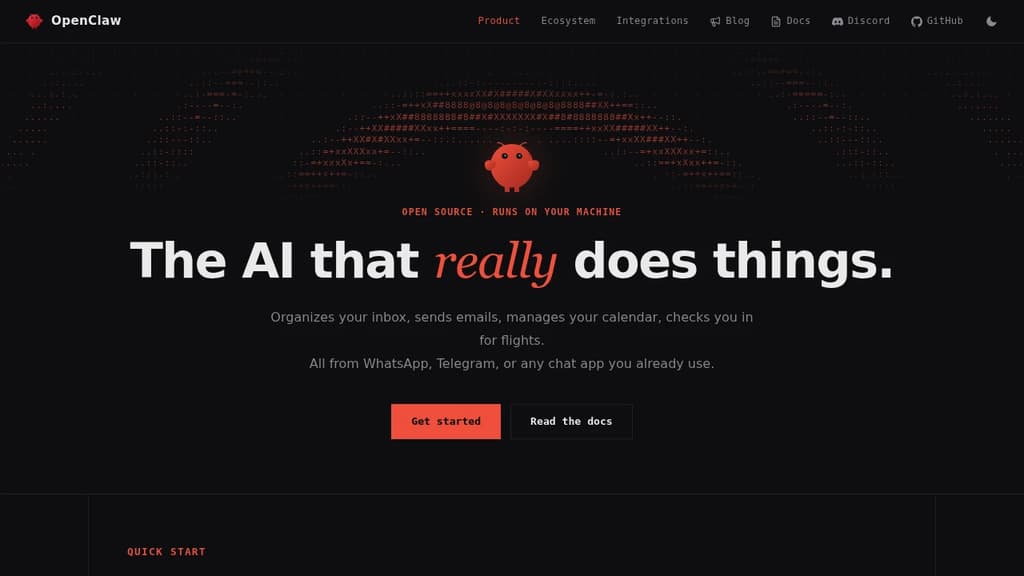
OpenClaw is a personal AI assistant built to take action. It doesn't just answer questions. It clears your inbox, sends emails, manages your calendar, and handles tasks like flight check-ins, all triggered through chat apps you already use every day.
The core idea is that you shouldn't need a new app to talk to your assistant. OpenClaw works through WhatsApp, Telegram, Discord, Slack, Signal, and iMessage, so you interact with it wherever you already spend time. No dashboard to open, no new habit to build.
It connects to a wide range of services out of the box:
- Email and calendar via Gmail and similar tools, handling real actions, not just summaries
- AI models including Claude and GPT, so you can route requests through your preferred backend
- Productivity tools like Obsidian and GitHub for note-taking and code workflows
- Smart home and media through Philips Hue and Spotify
- Social and browser via Twitter and direct browser control
What sets it apart from most chat-based AI tools is the action layer. Many assistants can tell you what to do. OpenClaw does it. The integrations aren't read-only; it can send, create, update, and automate across connected services.
The project is open source and self-hostable, which matters if you're handing an assistant access to your email and calendar. You control where it runs and what it can reach. A companion menubar app is available for macOS users who want quick access without switching windows.
It's an independent project, not affiliated with Anthropic or any of the AI providers it connects to. That independence shows in the breadth of integrations rather than a walled ecosystem.

Cross-platform desktop agent from Nous Research that connects to Telegram, Discord, Slack, WhatsApp, and more, with persistent memory, scheduling, and isolated sandboxing.
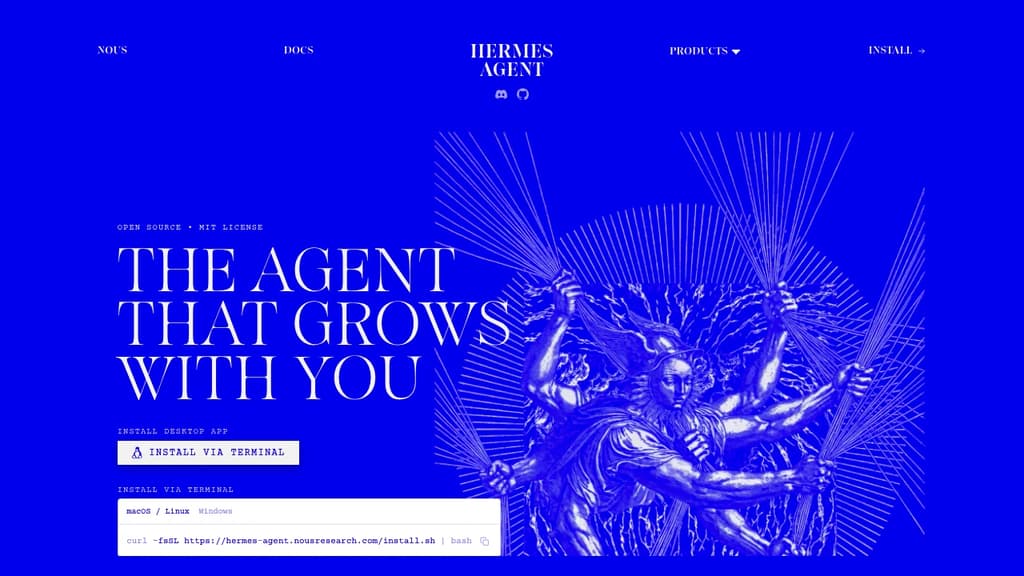
Hermes Agent is a desktop AI agent built by Nous Research that runs natively on macOS, Windows, and Linux. It's designed for people who want a single agent that works across their communication tools, handles recurring tasks, and actually remembers what it's done before.
The core idea is persistence. Most agents start fresh every session. Hermes maintains memory across conversations, auto-generates skills from past interactions, and builds up context about your projects over time. You don't have to re-explain things.
Where it connects:
- Telegram, Discord, Slack, WhatsApp, Signal, and email are all supported natively, so the agent meets you where you already work
- A CLI interface is also available for terminal-first workflows
What it can do:
- Natural-language scheduling for reports, backups, and briefings that run unattended
- Web search and browser automation with vision, image generation, and text-to-speech
- Subagents that run in isolated conversations with their own terminals and Python RPC scripts, useful for parallel pipelines without ballooning context costs
- Multi-model reasoning with access to 300+ models through the Nous Portal
Sandboxing is a genuine differentiator. Five execution backends (local, Docker, SSH, Singularity, and Modal) give you control over where code actually runs, with container hardening and namespace isolation. That matters if you're running automated tasks or untrusted scripts.
For teams or individuals already using LobeChat or similar multi-surface chat interfaces, Hermes takes a different angle: it's less about chat UI and more about an agent that operates autonomously across surfaces. Think of it as closer to an AgentOS approach, where the agent itself is the persistent layer.
It's free to use under the MIT license, with paid tiers through the Nous Portal for higher model access and monthly credits.

Lightweight, self-hosted AI agent that runs in a web UI, terminal, or chat app, handling long-running workflows with controlled token budgets.
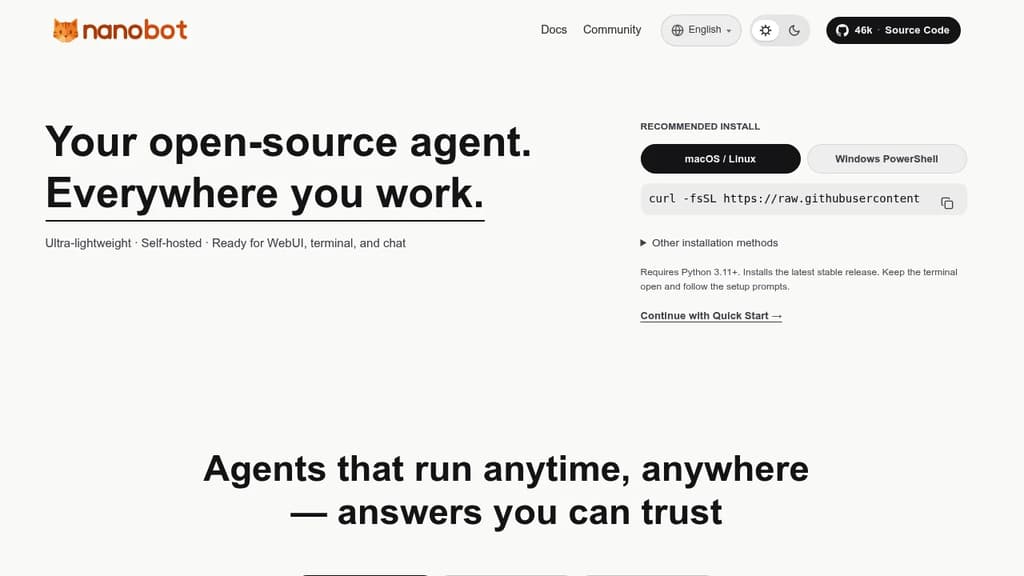
nanobot is a minimal, self-hosted AI agent designed to run wherever you work: a web UI, your terminal, or a chat interface. It's built for people who want a personal AI agent they control, without the overhead of bloated frameworks or cloud-locked platforms.
The core design philosophy is lean execution. Rather than consuming tokens without restraint, nanobot applies sensible context management and explicit token budgets, so your costs stay predictable. That matters especially for long-horizon tasks, where the agent needs to sustain coherent reasoning across tens or even hundreds of steps without losing the thread.
Key capabilities:
- Multi-surface operation: runs in a browser-based web UI, a terminal, or directly inside chat apps, so you're not locked into one interface
- Long-running workflows: maintains steady execution across complex, multi-step tasks without context drift
- Token budgeting: built-in controls keep spending predictable, unlike agents that leave cost management entirely to the user
- Embeddable runtime kernel: the agent core is portable, so you can drop it into a business workflow or a personal automation setup without rewiring everything around it
- Self-hosted: your data stays on your infrastructure; no third-party service holds your conversations or task history
Compared to heavier agent frameworks or fully managed platforms like Agenta, nanobot stays deliberately small. The codebase is compact, the runtime is portable, and the architecture doesn't assume you want a full orchestration platform. It suits developers and technically minded individuals who want an agent they can embed, extend, or just run locally without a lot of ceremony.
It supports automation tasks, developer integrations, and conversational use cases through the same core runtime. The MIT license means you can adapt it freely for personal or commercial use.

Self-hosted AI agent that connects to WhatsApp, Telegram, Slack, and a dozen more messaging apps, running each agent in an isolated Docker container with credential injection via a secure vault.
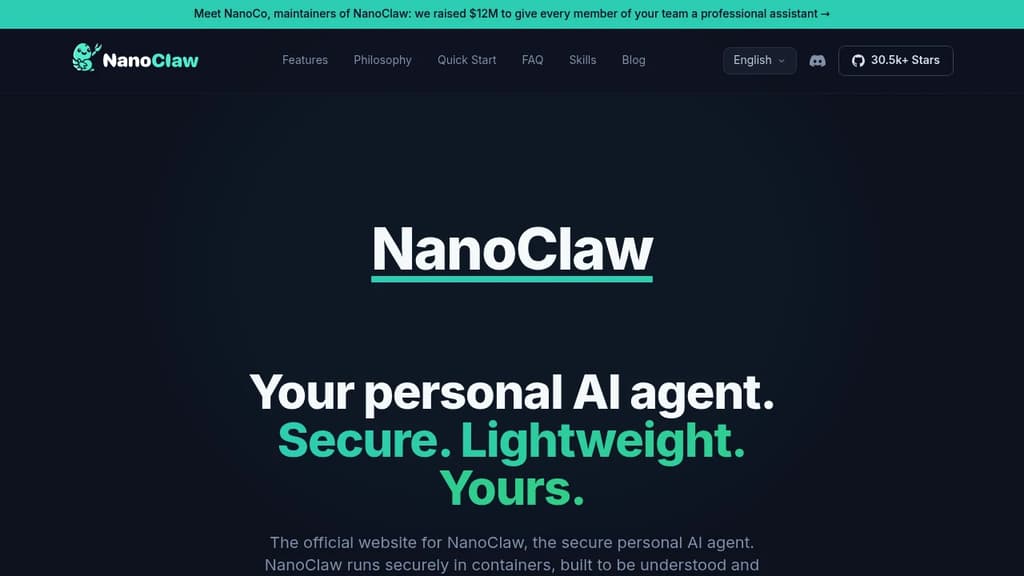
NanoClaw is a self-hosted personal AI agent built for individuals who want full control over their AI assistant. It connects to messaging apps including WhatsApp, Telegram, Discord, Slack, Microsoft Teams, iMessage, Matrix, Google Chat, Webex, WeChat, and email, then routes every conversation through isolated Docker containers. The codebase is intentionally small: 132 source files, roughly 17,500 lines of code, and fewer than 10 dependencies. You can read the whole thing in an afternoon.
It positions itself as a lightweight alternative to OpenClaw, which ships 3,680 source files and 70 dependencies. That size difference isn't cosmetic. It shapes whether you can audit what your agent actually does, customize it without fear, and trust its security model.
Security is structural, not policy-based. Each agent group runs in its own Linux container with its own filesystem. It can only see directories you explicitly mount. Credentials never enter the container at all. Outbound API requests route through OneCLI's Agent Vault, which injects authentication at the proxy level and enforces per-agent rate limits and policies.
Key capabilities:
- Multi-channel messaging – WhatsApp, Telegram, Slack, Discord, Teams, iMessage, Matrix, and more, installed on demand with
/add-<channel>skills - Flexible agent wiring – give each channel its own isolated agent, share one agent across channels for unified memory, or fold channels into a shared session
- Per-agent workspaces – each agent group has its own memory, its own
CLAUDE.md, and its own container boundary - Scheduled tasks – recurring jobs that run Claude and message you back (morning briefings, weekly reviews)
- Multiple AI providers – runs Claude Code natively via the Claude Agent SDK; drop-in options for OpenAI Codex, OpenRouter, Google, DeepSeek, and local models via Ollama
- Skills over features – install only the adapters you need; nothing is bundled that you didn't ask for
The architecture is a single Node.js host process that routes inbound messages through an entity model, writes to SQLite, and wakes per-session containers. No microservices, no message brokers, no shared memory across agent boundaries.
NanoClaw is MIT-licensed and designed to be forked. The philosophy is that your personal AI agent should be working software shaped to your exact needs, not a generic framework you configure around.

Autonomous AI agent framework that operates on its own sandboxed computer, creates tools dynamically, manages memory, and executes multi-step workflows with full transparency.
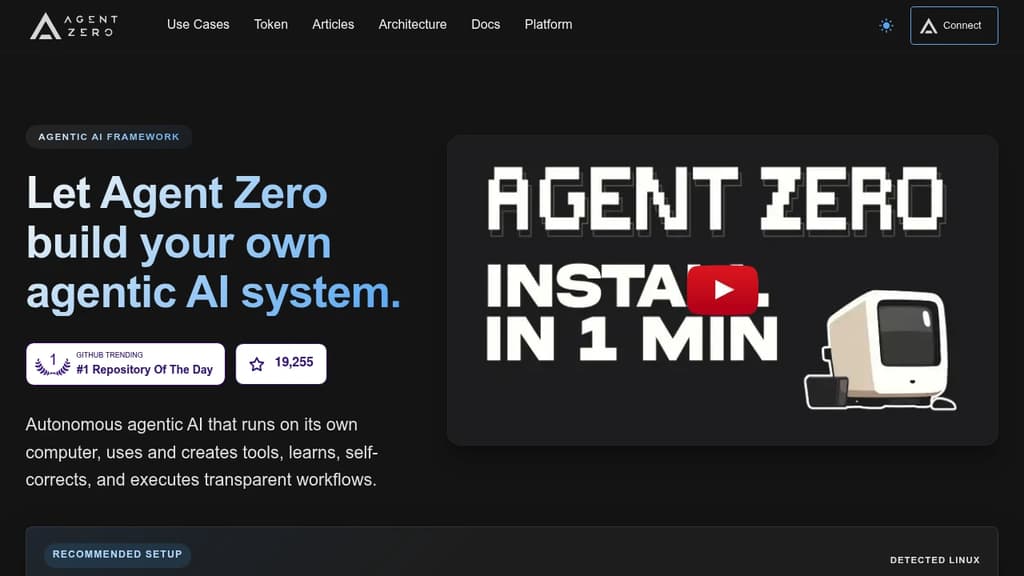
Agent Zero is an agentic AI framework built for people who want autonomous AI that actually does work, not just answers questions. It runs inside a sandboxed Docker environment with its own terminal, file system, and browser, so agents can execute real tasks end-to-end without touching your local machine unless you explicitly connect them.
The core idea is that agents shouldn't need pre-built tools for every situation. Agent Zero creates tools on the fly as tasks demand them, learns from past runs, and self-corrects when something goes wrong. Workflows are fully transparent: you can see what the agent is doing, why, and what it's executing at every step.
Key capabilities:
- Multi-provider support: Connect any LLM provider without exposing API keys to the agent itself.
- Dynamic tool creation: Agents write and reuse tools as needed rather than relying on a fixed library.
- Agentic memory and RAG: Persistent knowledge management lets agents recall context across sessions and build on prior work.
- Subordinate agents: Spawn specialized sub-agents to handle parallel or delegated tasks within a single workflow.
- Plugin Hub: Browse, install, and update community plugins directly from the UI, with built-in AI-driven security scanning before deployment.
- A0 CLI Connector: Bridge the sandboxed agent to your local terminal and project files when you need it.
- Context engineering: Prompt structure is tuned to stay efficient on local models and scale to larger ones without bloat.
Agent Zero suits developers and power users who want a self-hostable AI personal assistant they can extend, audit, and fully control. Unlike closed systems such as ChatGPT or Manus, every layer is inspectable and modifiable.
The project also has a community governance layer backed by the A0T token on Ethereum BASE L2, letting token holders vote on feature priorities and development allocation. Venice AI integration gives community members access to private AI API keys at no cost.

Leon is an AI-powered virtual assistant that lives on your server, automating tasks and managing your digital life with privacy and customization.
Leon is your open-source personal assistant designed to live on your server and automate your digital life. Built on Node.js, Python, and AI concepts, Leon offers a privacy-focused alternative to commercial virtual assistants.
Key features of Leon include:
- Privacy-first: Leon runs on your own server, giving you full control over your data and interactions.
- Modular architecture: Easily extend Leon's capabilities with custom packages and modules to fit your specific needs.
- AI-powered: Leveraging natural language processing (NLP), text-to-speech (TTS), and speech-to-text (STT) technologies for intuitive interactions.
- Multi-platform support: Interact with Leon through various interfaces, including web, mobile, and command-line.
- Customizable voice: Choose from multiple TTS and STT options, including offline solutions for enhanced privacy.
- Open-source community: Benefit from continuous improvements and contributions from a passionate developer community.
Leon empowers you to automate your virtual life by handling tasks, managing information, and providing assistance across various domains. Whether you need help with scheduling, information retrieval, or custom automation workflows, Leon can be tailored to your specific requirements.
Getting started with Leon is easy:
- Install Leon on your server using the provided CLI tool.
- Customize Leon's modules and skills to suit your needs.
- Interact with Leon through your preferred interface.
- Enjoy a personalized, privacy-respecting virtual assistant experience.
Join the Leon community today and take control of your digital life with an open-source assistant that puts you in charge.

Personal agent that chases invoices, preps client calls and cancels trials on real websites. Runs on your own computer with the AI provider you pick.
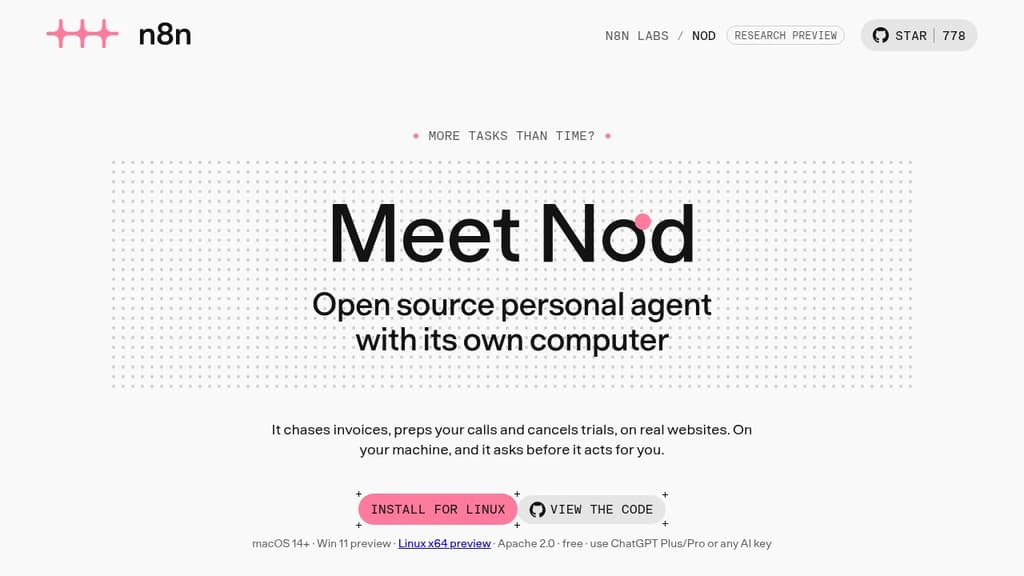
Nod is a personal agent with its own computer. It does errands on real websites and in your connected apps, and it asks before it acts for you. It's built for people who run their own work: client calls, follow-ups, invoices, supplier portals. Life admin like refunds and bookings works too.
It comes from the team behind n8n, but it's a separate app and doesn't require n8n.
- Call briefs: each morning it reads your threads, calendar and the client's latest news, then writes a one-page brief.
- Unanswered questions: it finds what you never replied to and drafts an answer from your own pricing sheet.
- Monitoring: ask it to watch a pricing page. It checks on a schedule and speaks up only when something changes.
- Errands: chasing invoices, filing month-end statements, turning client requests into Linear tasks, comparing and booking offsite venues.
- Memory: every note is visible, editable and can be forgotten. It learns your writing style from sent emails and reuses steps it has learned, fixing them when a site changes.
Permissions are the core idea. Nod checks each action against your request and your rules, and asks when they don't cover it. Its safety check is a model's judgement, so it can make mistakes. A Usage view shows recorded app actions, sign-ins and estimated model costs.
It runs on macOS, with Windows 11 and Linux x64 in preview, or on your own server. Bring OpenAI, Anthropic, Google or OpenRouter keys, a ChatGPT Plus or Pro plan, or a local model through Ollama, LM Studio, vLLM or llama.cpp. Nod is free under Apache 2.0; you pay only your model provider.

Connect all your apps through Pearl, an AI assistant that automates workflows directly in Slack. No coding required - save 10+ hours weekly with intelligent task automation.
Pearl transforms your Slack into a powerful automation hub that connects your entire tool stack without requiring any coding skills. This AI-powered assistant learns your preferences and handles complex workflows across Gmail, Jira, Notion, GitHub, and 25+ other integrations.
Key benefits include:
- Instant setup in under 1 minute - Deploy Pearl directly to your Slack workspace with zero engineering required
- Intelligent learning capabilities - Pearl remembers your tone, preferences, and shortcuts, becoming smarter with every interaction
- Enterprise-grade security - SOC 2 certified with end-to-end encryption and Tier 2 CASA verification
- Massive time savings - Teams report saving 10-40+ hours weekly on repetitive operational tasks
What makes Pearl different: Unlike basic chatbots, Pearl actually takes action. It creates tickets, sends emails, queries databases, and runs multi-step workflows autonomously. You can promote frequently used tasks into permanent workflows that run 10x faster and cost 90% less than one-time actions.
Perfect for: Operations teams, founders, and business professionals who want to automate standup summaries, report generation, lead enrichment, and other routine tasks without leaving Slack. Trusted by 4,000+ professionals and backed by Y Combinator.

People are looking for alternatives to...
View all alternatives
Spotify

Claude

Claude Code

CapCut

Lovable

Amazon Prime
 Openlane – Open-source, developer-first platform for automated compliance, risk management, and built-in Trust Center.


 Openlane