Open Source Suna Alternatives
A curated collection of the 2 best open source alternatives to Suna.
The best open source alternative to Suna is Hermes Agent. If that doesn't suit you, we've compiled a ranked list of other open source Suna alternatives to help you find a suitable replacement. Other interesting open source alternative to Suna is LobeChat.
Suna alternatives are mainly AI Agent Platforms but may also be AI Personal Assistants or AI Chat Interfaces. Browse these if you want a narrower list of alternatives or looking for a specific functionality of Suna.

Written by Piotr Kulpinski


Cross-platform desktop agent from Nous Research that connects to Telegram, Discord, Slack, WhatsApp, and more, with persistent memory, scheduling, and isolated sandboxing.
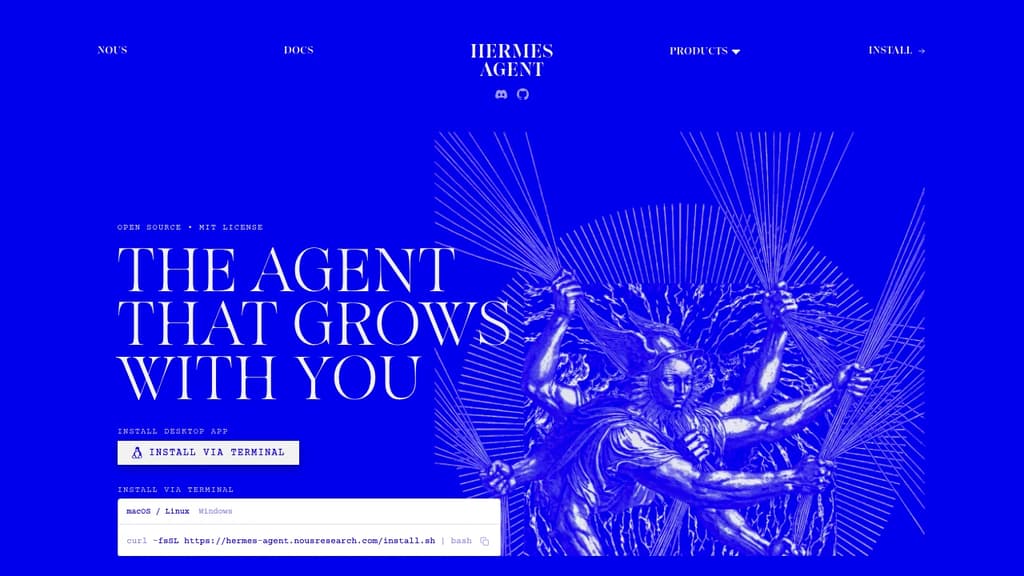
Hermes Agent is a desktop AI agent built by Nous Research that runs natively on macOS, Windows, and Linux. It's designed for people who want a single agent that works across their communication tools, handles recurring tasks, and actually remembers what it's done before.
The core idea is persistence. Most agents start fresh every session. Hermes maintains memory across conversations, auto-generates skills from past interactions, and builds up context about your projects over time. You don't have to re-explain things.
Where it connects:
- Telegram, Discord, Slack, WhatsApp, Signal, and email are all supported natively, so the agent meets you where you already work
- A CLI interface is also available for terminal-first workflows
What it can do:
- Natural-language scheduling for reports, backups, and briefings that run unattended
- Web search and browser automation with vision, image generation, and text-to-speech
- Subagents that run in isolated conversations with their own terminals and Python RPC scripts, useful for parallel pipelines without ballooning context costs
- Multi-model reasoning with access to 300+ models through the Nous Portal
Sandboxing is a genuine differentiator. Five execution backends (local, Docker, SSH, Singularity, and Modal) give you control over where code actually runs, with container hardening and namespace isolation. That matters if you're running automated tasks or untrusted scripts.
For teams or individuals already using LobeChat or similar multi-surface chat interfaces, Hermes takes a different angle: it's less about chat UI and more about an agent that operates autonomously across surfaces. Think of it as closer to an AgentOS approach, where the agent itself is the persistent layer.
It's free to use under the MIT license, with paid tiers through the Nous Portal for higher model access and monthly credits.

A collaborative platform to create, schedule, and operate AI agents that handle long-running tasks, team workflows, and automated jobs without constant oversight.
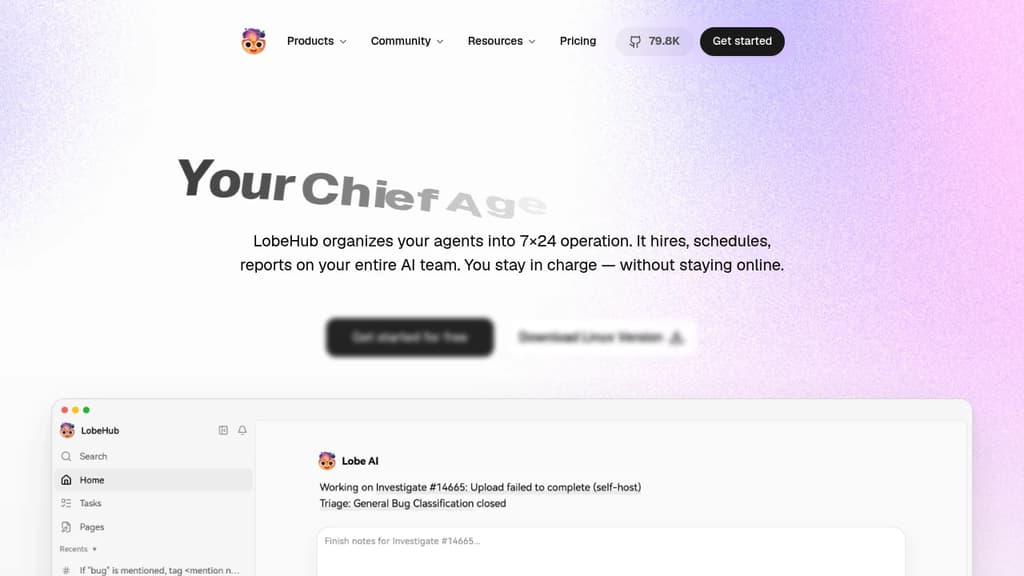
LobeHub is a platform for building and operating teams of AI agents. Rather than managing individual AI tools one at a time, it lets you assemble agents into coordinated groups, assign them tasks, and let them run. Agents report back on progress while you focus on higher-level decisions.
The agent builder starts from a single sentence. From that, LobeHub automatically configures names, roles, skills, and behaviors. Agents connect to a library of over 312,000 skills, and you can attach any model or modality you want. It works with providers like OpenAI and Anthropic, so you're not locked into one AI backend.
For longer or more complex work, LobeHub supports agent groups that self-assemble based on the task at hand. Multiple agents can work in parallel, iterate on each other's output, and handle multi-step jobs. This matters most for things like large-scale issue triage, content workflows, or anything that would otherwise require constant human coordination. Among AI agent platforms, that kind of parallel execution is still relatively rare.
The platform includes several workspace-style features: Pages for writing and refining documents with multiple agents sharing context, Projects for organizing work, Schedules for time-based task automation, and a shared Workspace with visibility controls for teams. There's also an IM Gateway that connects agents to messaging platforms where your team already communicates.
Agents are designed to improve over time. Personal Memory builds a structured, editable model of how you work. Continual Learning adjusts agent behavior based on patterns it observes. Memory is white-box, meaning you can inspect and edit what the system knows about you rather than treating it as a black box. That's a meaningful difference from tools like Khoj, where memory handling is less transparent.
LobeHub is open source and has a community component where agents and skills can be shared. It's built for individuals and teams who want AI to handle ongoing, multi-step work rather than single-turn interactions. If you're already using a knowledge management platform like Pipeshub or a multi-agent framework like Agno, LobeHub sits closer to the operational end of that spectrum, focused on running work rather than just organizing it.

People are looking for alternatives to...
View all alternatives
Claude Code

Spotify

Notion

Lovable

CapCut

Wispr Flow
 Sevalla – Deploy your app before your coffee gets cold. It’s that easy. Try Sevalla with $50 free credit.
 Openlane