Open Source Perplexity Alternatives
A curated collection of the 5 best open source alternatives to Perplexity.
The best open source alternative to Perplexity is Open WebUI. If that doesn't suit you, we've compiled a ranked list of other open source Perplexity alternatives to help you find a suitable replacement. Other interesting open source alternatives to Perplexity are: Khoj, SurfSense, Scira, and Morphic.
Perplexity alternatives are mainly AI Search Tools but may also be AI Chat Interfaces or Personal Knowledge Management (PKM) Tools. Browse these if you want a narrower list of alternatives or looking for a specific functionality of Perplexity.

Written by Piotr Kulpinski


Self-hosted AI platform that connects local and cloud models, extends with Python, and keeps your data under your control.
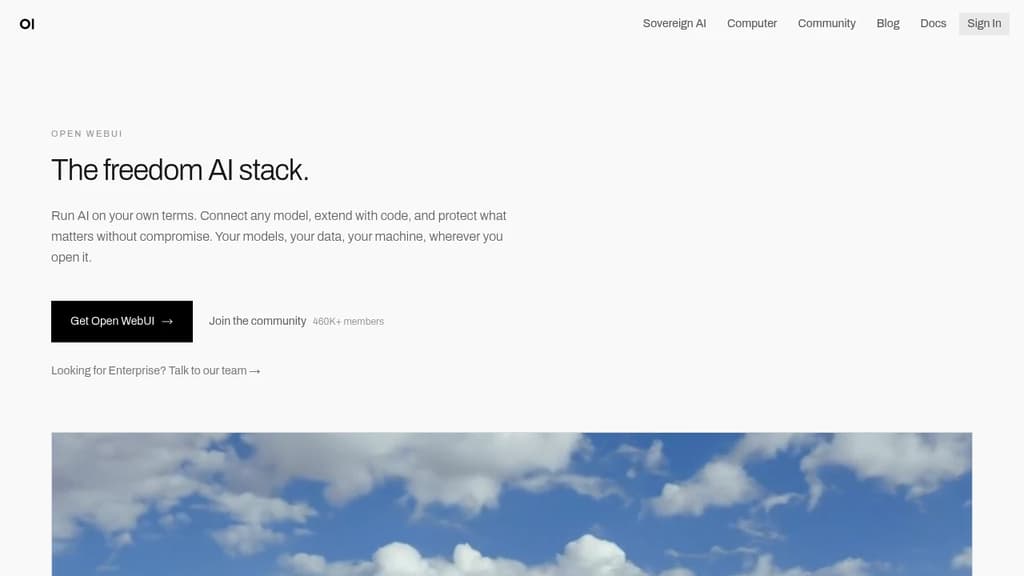
Open WebUI is a self-hosted platform for running AI models without depending on a vendor's infrastructure. It works with local models via Ollama and cloud providers like OpenAI and Anthropic, all through a single interface. Your data stays where you put it.
It's built for people who want real control. That means no accounts required to get started, no third-party data handling, and no lock-in to a single model provider. It fits as well on a personal laptop as it does inside an enterprise network.
What you can connect and do:
- Model flexibility: Connect Ollama, OpenAI, Anthropic, or any OpenAI-compatible API. Mix local and cloud models in the same workspace.
- Voice, vision, and retrieval: Multimodal capabilities are included out of the box, not bolted on later.
- Python extensions: Write custom tools and functions to extend behavior beyond what the default interface offers.
- Web search integration: Pull live information into conversations without leaving the platform.
- Enterprise controls: SSO, role-based access control, and audit logs for teams operating in regulated environments.
The community platform hosts over 410,000 members sharing prompts, models, tools, and functions. You can install what others have built or publish your own. It's a meaningful accelerator if you're experimenting or building on top of Open WebUI for others.
For teams evaluating AI interaction interfaces, Open WebUI sits in a different position than most. Tools like LLMChat or Dyad offer focused experiences for specific use cases, while Open WebUI is designed to be the central hub for everything AI-related in an organization. The scale backs that up: 290 million downloads and 139,000 GitHub stars point to broad, sustained adoption across individual users and large deployments alike.

Self-hostable AI assistant that connects to your docs and the web, lets you build agents, schedule automations, and run research with verifiable citations.
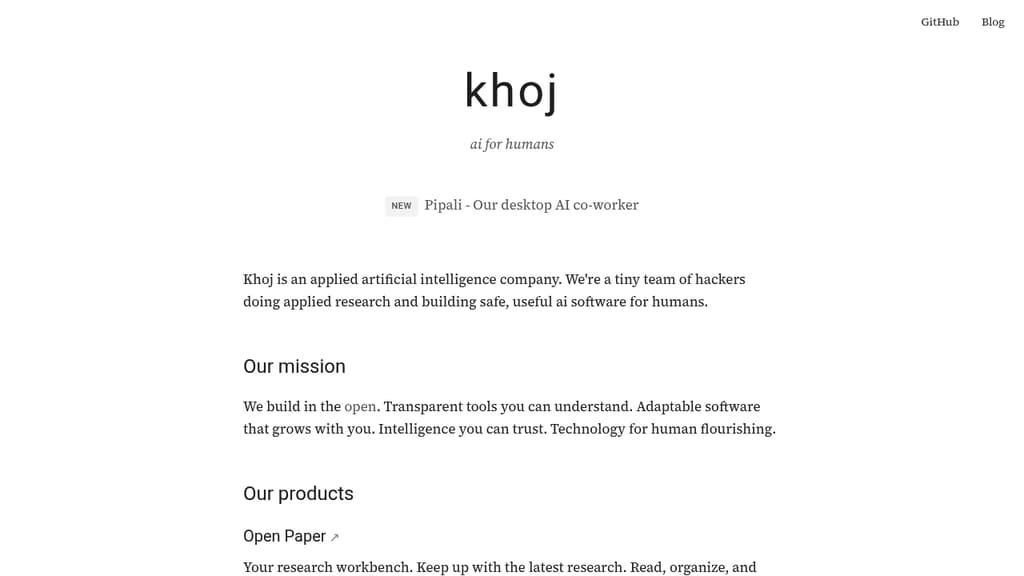
Khoj is a personal AI platform built for people who want a capable assistant they can actually trust. It connects to your documents and the web, turning any supported AI model into a research partner, automation engine, and second brain. The focus is transparency: citations are verifiable, behavior is inspectable, and you stay in control of what it accesses.
At its core, Khoj is designed around three distinct use cases:
- AI second brain: Ingest your own documents, then ask questions, get summaries, or run research across both your files and live web sources. Agents can be built on top to handle recurring tasks.
- Research workbench: Read and organize academic papers with citations you can check. Useful for anyone tracking a field or doing structured literature review.
- AI co-worker (beta): Assign multi-step tasks, track their progress, and receive polished outputs. This runs locally on your machine, keeping sensitive work off third-party servers.
Because it's open source and self-hostable, you're not locked into a single model or vendor. Swap the underlying model, run it on your own infrastructure, and keep your data private. That's a real distinction from closed alternatives like Humanloop or proprietary chat tools.
Khoj sits in similar territory to LobeChat and LLMChat, but leans harder into autonomous agents and scheduled automations rather than pure conversational UI. The scheduled automation feature means Khoj can run tasks on a cadence without you initiating each one manually.
It's a good fit for researchers, knowledge workers, and developers who want an AI assistant with genuine depth rather than a thin chat wrapper.

Self-hostable NotebookLM alternative that lets teams build searchable knowledge bases from diverse sources, with support for any LLM and no data limits.
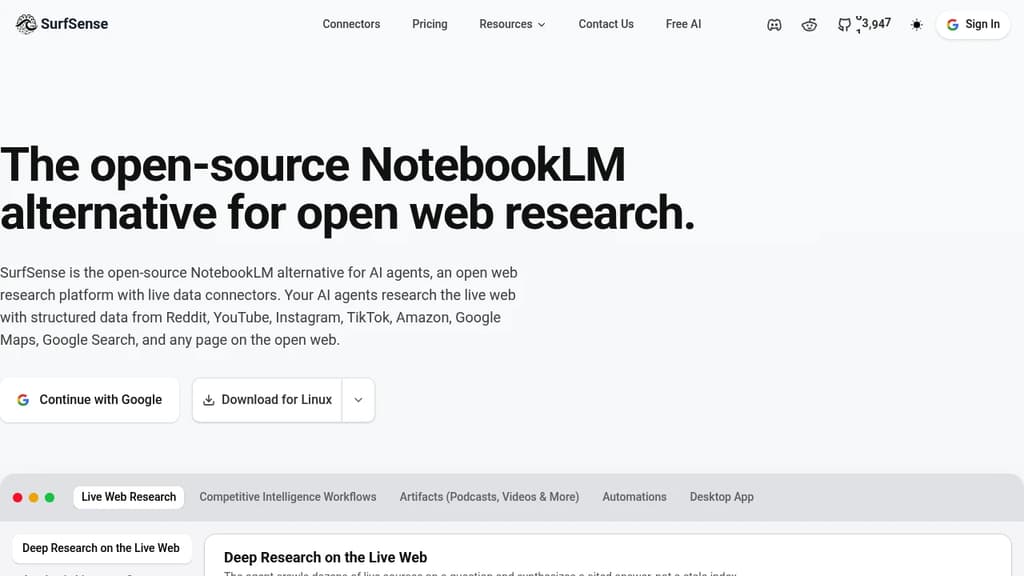
SurfSense is a self-hostable knowledge management tool built for teams who want the core appeal of NotebookLM – asking questions across a collection of documents – without handing their data to a third party or hitting usage caps.
The core idea is straightforward. You connect sources, and SurfSense builds a searchable knowledge base you can query through a chat interface. What sets it apart is the breadth of what counts as a source:
- Web content via a browser extension that saves pages directly to your knowledge base
- Documents including PDFs, slides, and text files
- YouTube videos with transcript ingestion
- Notion, OneDrive, and other integrations for pulling in existing work
- Podcast and audio files with automatic transcription
On the AI side, SurfSense doesn't lock you to one provider. You can point it at OpenAI, Anthropic, or any compatible model, including locally hosted ones. Teams that already use AnythingLLM or similar tools for document chat will recognize the pattern, but SurfSense leans harder into multi-source ingestion and team sharing rather than single-user document Q&A.
Because it's self-hosted, your documents stay on your infrastructure. There are no per-query fees tied to the platform itself, though you'll still pay your chosen LLM provider for API calls. That trade-off suits teams handling sensitive internal knowledge – legal, research, product documentation – where cloud-based tools create compliance friction.
The interface supports organized spaces, so different teams or projects can maintain separate knowledge bases without everything collapsing into one pile. Search pulls from across all ingested content, and responses cite their sources so you can trace answers back to the original material.

Scira delivers concise, AI-generated responses to queries using a clean interface and powerful search capabilities.
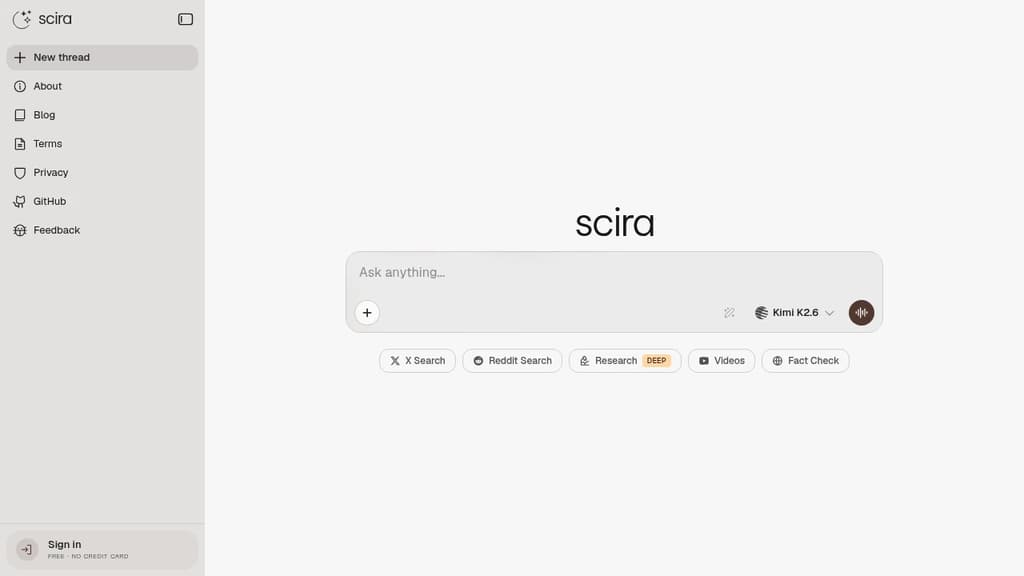
Scira is a cutting-edge, minimalist AI search engine designed to provide instant answers with elegance and simplicity. By leveraging advanced AI technology, Scira strips away clutter to focus on delivering accurate and relevant results quickly.
Key Features:
- Clean Interface: A distraction-free design that puts the focus on your search results.
- AI-Powered Responses: Utilizes cutting-edge AI to understand context and provide precise answers.
- Web Search: Comprehensive web results powered by Tavily AI.
- Code Interpreter: Advanced code interpretation and execution via e2b.dev.
- Weather Forecast: Accurate weather information through OpenWeatherMap.
- URL Summary: Quick web content summarization using FireCrawl's Scrape API.
- Location Search: Find places and nearby locations with Google Maps API integration.
- Translation & TTS: Translate text and convert to speech using OpenAI TTS.
Scira combines the power of various AI services and APIs to create a versatile search experience. Whether you're looking for quick facts, code solutions, or in-depth analysis, Scira adapts to your needs.
Experience the future of search with Scira - where minimalism meets AI power to transform how you find and process information.

Open-source answer engine that dynamically generates UI components while providing AI-powered responses, combining conversational AI with interactive interfaces.
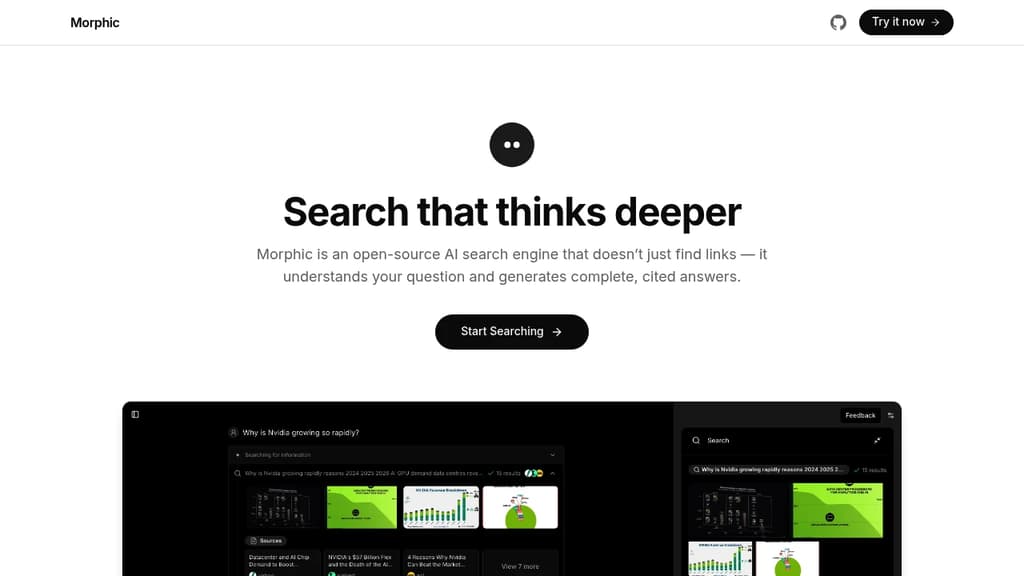
Morphic revolutionizes the way users interact with AI systems by dynamically generating user interfaces as part of its response mechanism. This open-source answer engine goes beyond traditional chatbot interactions by creating contextual UI elements that enhance the user experience.
Key capabilities:
- Generates custom UI components on-the-fly based on user queries
- Provides AI-powered responses with interactive elements
- Handles diverse query types from quick searches to complex analysis
- Creates visual summaries and interactive displays
- Supports both conversational and structured data interactions
The system excels at adapting its interface to match user needs, whether it's displaying comparative analyses, generating charts, or presenting document summaries. Its open-source nature allows for community contributions and customizations, making it a versatile tool for developers and end-users alike.

People are looking for alternatives to...
View all alternatives
Claude Code

Spotify

CapCut

Claude

Notion

Lovable
 Sent – A unified API for sending messages across SMS, RCS, and apps like WhatsApp.
 Sent
Sent