Open Source MongoDB Alternatives
A curated collection of the 8 best open source alternatives to MongoDB.
The best open source alternative to MongoDB is TiDB. If that doesn't suit you, we've compiled a ranked list of other open source MongoDB alternatives to help you find a suitable replacement. Other interesting open source alternatives to MongoDB are: Turso, Convex, Instant, and OceanBase.
MongoDB alternatives are mainly Relational Databases (SQL) but may also be Backend-as-a-Service (BaaS) Tools or NoSQL & Document Databases. Browse these if you want a narrower list of alternatives or looking for a specific functionality of MongoDB.

Written by Piotr Kulpinski


Distributed SQL database combining OLTP and OLAP capabilities, offering horizontal scalability, high availability, and real-time analytics.
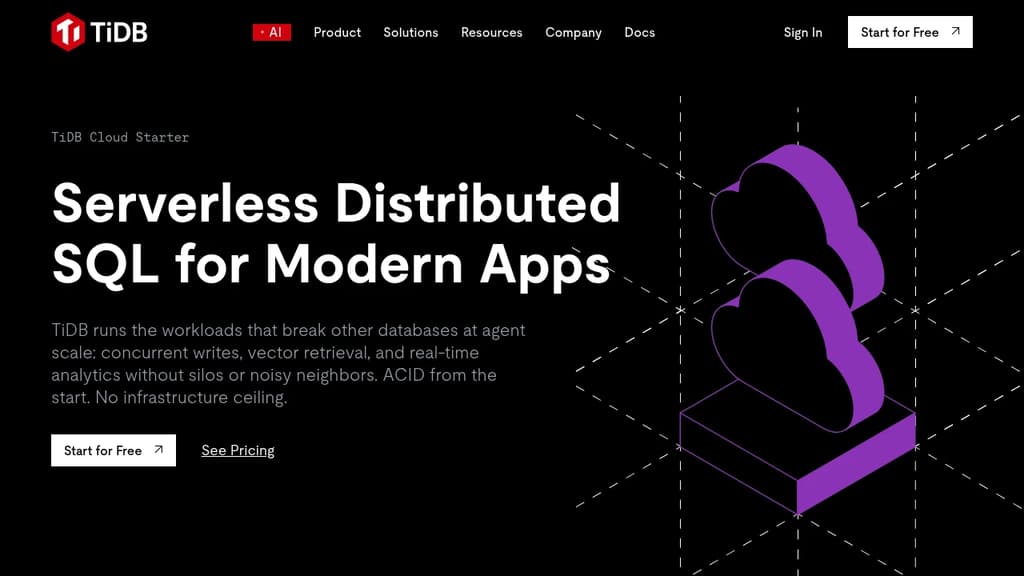
TiDB is a powerful, open-source distributed SQL database that seamlessly combines online transactional processing (OLTP) with online analytical processing (OLAP) workloads. This innovative database solution offers:
- Horizontal Scalability: Easily scale out to handle growing data volumes and user requests without sacrificing performance.
- High Availability: Built-in fault tolerance and automatic failover ensure your data is always accessible.
- Real-Time Analytics: Perform complex queries on fresh transactional data without impacting OLTP performance.
- MySQL Compatibility: Leverage existing MySQL ecosystems and skills with minimal migration effort.
- Cloud-Native Architecture: Designed for modern cloud environments, supporting containerization and orchestration.
- HTAP Capabilities: Handle both transactional and analytical workloads in a single system, eliminating data silos.
- Strong Consistency: Ensure data integrity with distributed transactions and ACID compliance.
- Flexible Deployment: Run on-premises, in the cloud, or in hybrid environments to suit your needs.
TiDB empowers businesses to make data-driven decisions faster, simplify their database infrastructure, and reduce operational costs. Whether you're dealing with large-scale e-commerce, financial services, or IoT data, TiDB provides the performance, scalability, and reliability needed for modern applications.

Turso provides a simple developer experience with SQLite compatibility, allowing you to build and scale multi-tenant applications with unlimited databases.
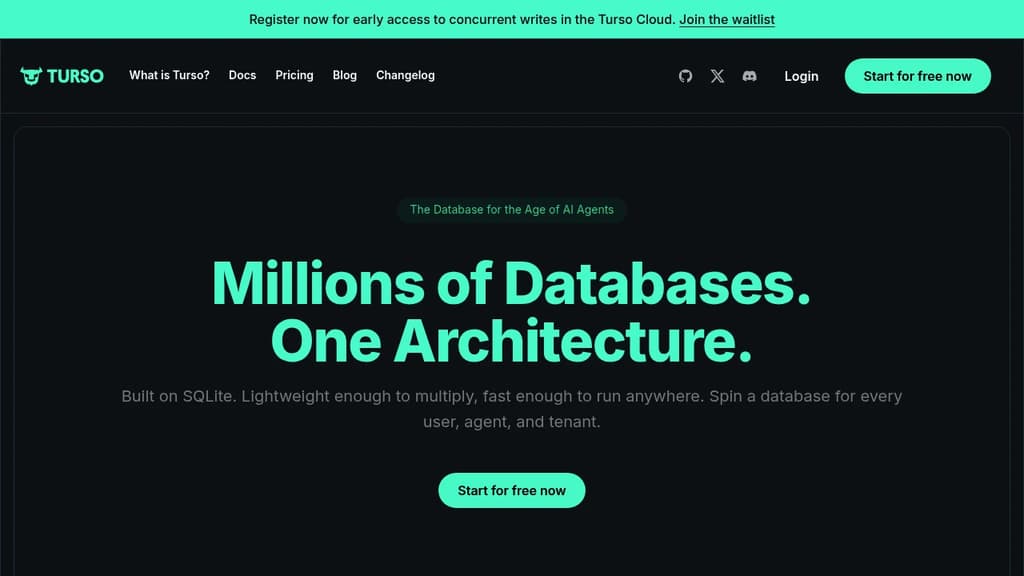
Turso is a powerful database solution designed for developers who want the simplicity of SQLite with the scalability needed for production environments.
Here's why Turso stands out:
-
Multi-tenant AI Applications: Turso enables you to create personalized LLM instances with infinite context windows using unlimited databases. This feature is perfect for building AI-powered applications that require separate data stores for each user or context.
-
On-Device Capabilities: Turso offers SDKs for mobile and on-device AI, allowing you to build powerful offline-capable apps across major platforms. You can optimize LLMs locally using Turso's SQLite-based database within your application, ensuring data privacy and reducing network latency.
-
Vector Search Integration: Seamlessly integrate Vector Embeddings with relational data in single transactions. This feature is crucial for AI and machine learning applications that require efficient similarity searches.
-
Open Source and Secure: Built on libSQL, an open-source SQLite-compatible database engine, Turso ensures your data is always portable. It offers encryption at rest and in transit, with SOC2 and HIPAA compliance available out of the box.
-
Developer-Friendly Experience: Enjoy a simple developer experience that feels like working with SQLite. Turso provides flexible development options, allowing you to work locally or remotely and deploy globally when ready.
-
Scalability and Performance: With features like automatic sync and programmable conflict resolution, Turso keeps your app data fresh and consistent across multiple instances. Its API-first approach and platform API enable efficient, programmatic database management at scale.
Whether you're building a complex AI application, a mobile app with offline capabilities, or a scalable multi-tenant system, Turso provides the tools and flexibility to meet your database needs while maintaining the simplicity developers love about SQLite.

Open-source reactive database that keeps your web and mobile apps in sync. Write everything in TypeScript with built-in auth, cron jobs, and AI integration.
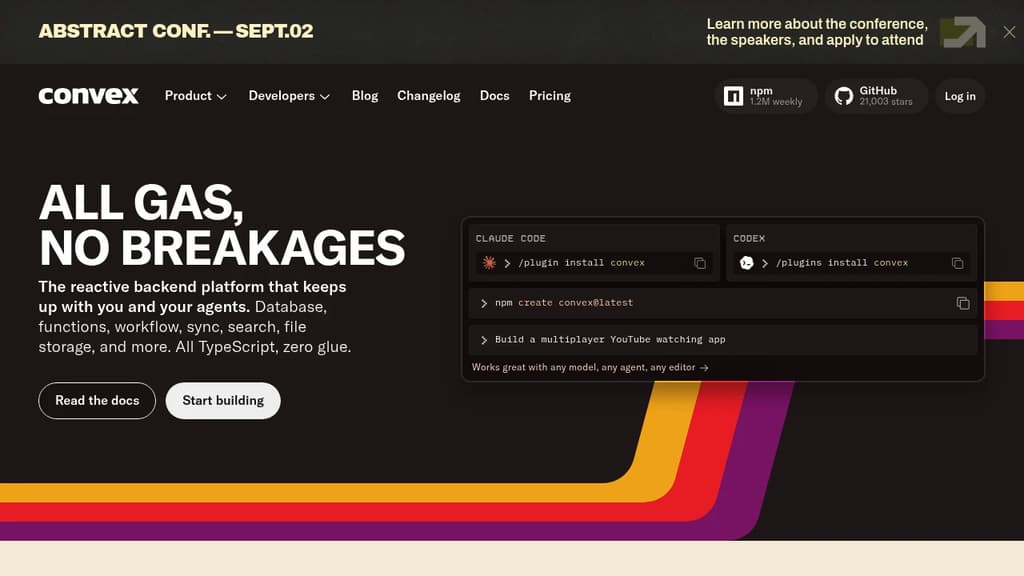
Build your entire backend in pure TypeScript - from database schemas to queries, authentication to APIs. Your backend code lives alongside your frontend code with full type safety and AI-powered code generation.
Real-time synchronization guaranteed - your app automatically reflects changes to frontend code, backend code, and database state instantly. No need for complex state managers, cache invalidation policies, or manual websocket setup.
Backend essentials built-in - create cron jobs, trigger AI workflows, leverage built-in authentication, and access a growing ecosystem of components that solve common backend needs with simple npm installs.
Developer-friendly features:
- End-to-end TypeScript with full autocomplete and type checking
- Reactive queries that update your UI automatically
- Built-in authentication and user management
- Scheduled functions and background jobs
- AI tool integration for enhanced code generation
- Framework agnostic - works with React, Next.js, and more
Enterprise-ready security with SOC 2 Type II compliance, HIPAA compliance, and GDPR verification. Trusted by developers who want the simplicity of Firebase with the power and flexibility of a modern TypeScript-first platform.

Instant is a database solution for building real-time and offline-enabled applications, simplifying the development of collaborative products.
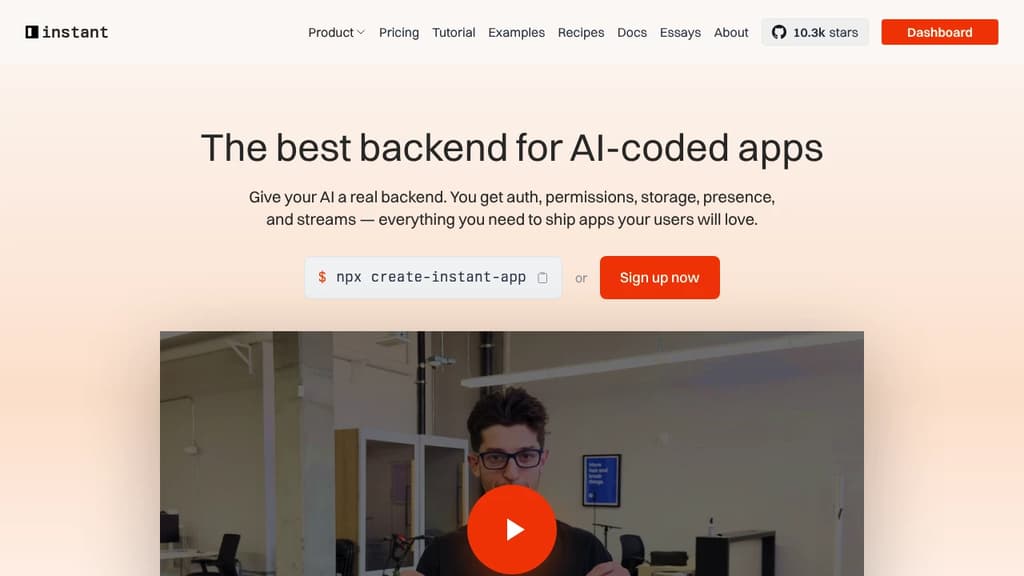
Instant is a revolutionary database solution designed for developers building real-time and offline-enabled applications. It simplifies the process of creating collaborative products like Notion or Figma by providing a database that can be subscribed to directly in the browser.
Key features and benefits:
-
Realtime Updates: Instant handles optimistic updates and rollbacks automatically, allowing developers to focus on writing frontend code without worrying about complex backend logic.
-
Multiplayer Support: Built-in infrastructure for collaborative experiences, including live updates across devices and user accounts.
-
Offline Mode: Applications built with Instant work seamlessly offline, with local caching and automatic reconciliation when users come back online.
-
Easy Integration: Developers can write relational queries directly in their app, and Instant takes care of the rest, including servers, auth, permissions, and endpoints.
-
Scalability: Start without a backend and scale to complex use cases as needed. Instant provides an admin SDK for custom backend logic when required.
-
Enhanced User Experience: Easily implement features like shared cursors, typing indicators, and presence information with minimal code.
-
Cross-Platform Compatibility: Works across web and mobile platforms, allowing developers to reuse data logic across different environments.
Instant is backed by Y Combinator and has received praise from industry leaders, including the co-founder of Firebase and engineers from Meta, Stripe, and OpenAI. The team behind Instant consists of senior and staff engineers from Facebook and Airbnb, bringing deep expertise to solve one of the largest problems in frontend development today.
By using Instant, developers can significantly reduce development time and complexity, focusing on building great user experiences rather than dealing with the intricacies of real-time data synchronization and offline support.
Scalable, high-availability database system supporting OLTP, OLAP, and hybrid transactional/analytical processing workloads.
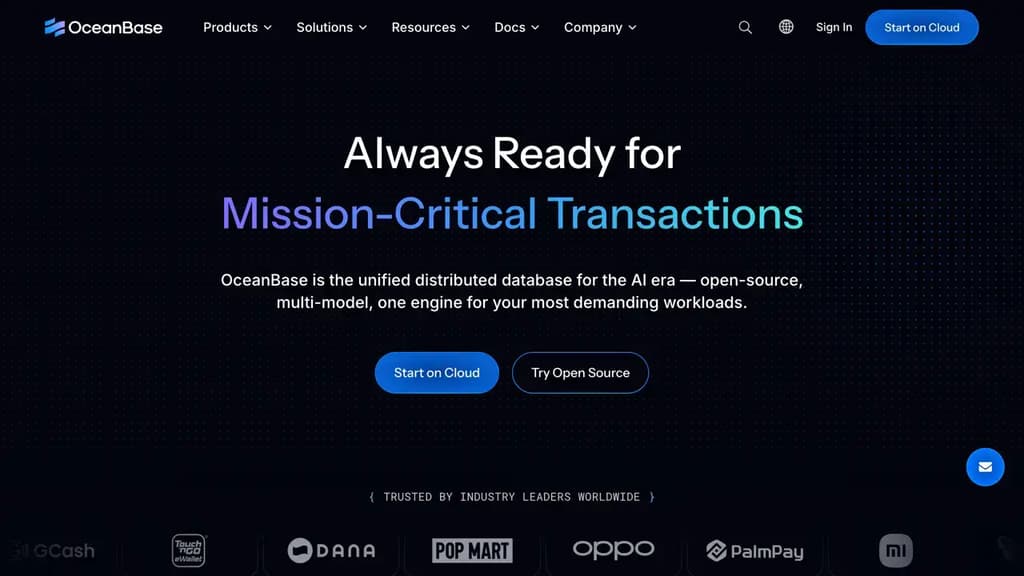
OceanBase is a cutting-edge distributed relational database management system designed to handle massive-scale data processing with unparalleled performance and reliability. Built to meet the demands of modern enterprises, OceanBase offers:
- Scalability: Easily scale out to handle petabytes of data and millions of transactions per second.
- High Availability: Multi-paxos consensus algorithm ensures 99.999% uptime and strong data consistency.
- Versatility: Supports OLTP, OLAP, and HTAP workloads, eliminating the need for separate systems.
- Cost-Effective: Significantly reduces hardware costs and operational complexity compared to traditional databases.
- Compatibility: Supports MySQL and Oracle protocols, facilitating seamless migration and integration.
- Real-Time Analytics: Perform complex queries on live transactional data without impacting performance.
- Multi-Tenancy: Efficiently isolate and manage multiple database instances within a single cluster.
OceanBase's innovative architecture combines the benefits of distributed systems with the familiarity of traditional relational databases, making it an ideal choice for organizations seeking to modernize their data infrastructure while maintaining operational continuity.

Deep Lake is an open-source database for storing, querying and managing complex AI data like images, audio, and embeddings.
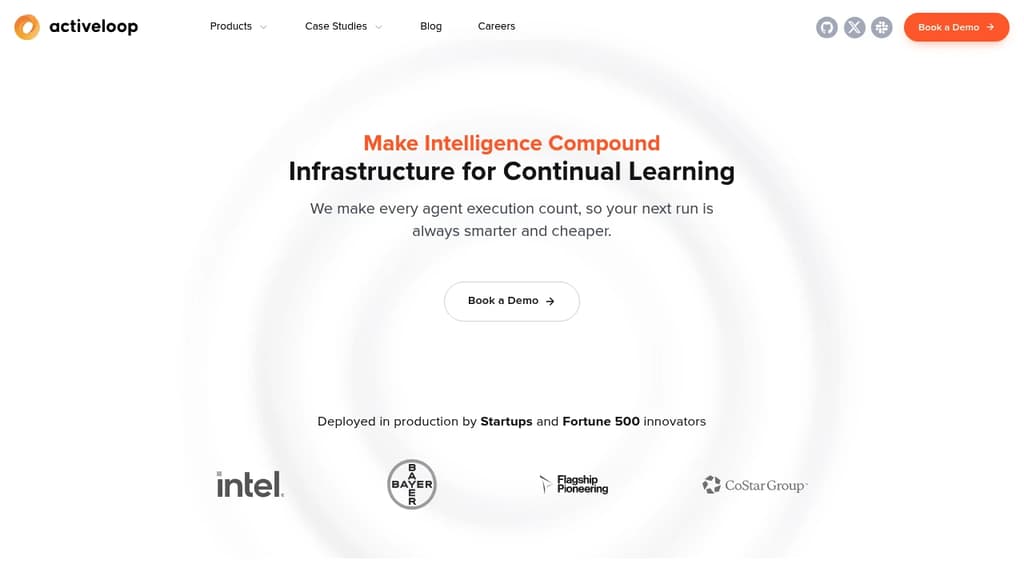
Deep Lake is an open-source tensor database designed specifically for AI and machine learning workflows. It allows you to efficiently store, query, and manage complex unstructured data like images, audio, video, and embeddings.
Some key features of Deep Lake:
- Tensor storage: Store data as tensors for fast streaming to ML models
- Vector search: Built-in vector similarity search for embeddings and other high-dimensional data
- Querying: SQL-like querying capabilities for complex data filtering
- Versioning: Git-like versioning to track changes to datasets over time
- Visualization: Visualize datasets and embeddings directly in notebooks or browser
- Streaming: Stream data directly to ML frameworks like PyTorch and TensorFlow
- Cloud integration: Seamlessly work with data stored in cloud object stores
Deep Lake aims to simplify ML data management and accelerate the development of AI applications. It provides a standardized way to work with unstructured data across the ML lifecycle - from data preparation to model training to deployment.
The open-source nature allows for customization and integration into existing ML workflows. Deep Lake can significantly reduce data preparation time and enable faster experimentation and iteration on ML models.

Memgraph is a scalable, in-memory graph database solution offering high-performance computing and Neo4j compatibility.
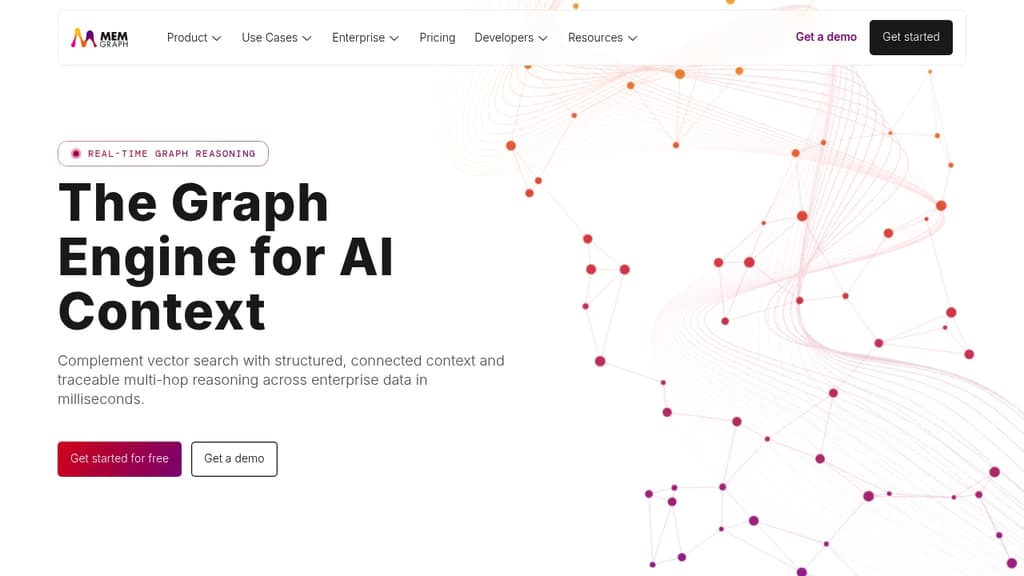
Memgraph is a powerful, in-memory graph database designed for high-performance computing and scalable data analysis. It offers seamless Neo4j compatibility, allowing users to easily transition existing projects or leverage familiar query languages.
Key benefits of Memgraph include:
- Lightning-fast performance: Optimized for in-memory operations, enabling rapid querying and analysis of large-scale graph data.
- Scalability: Designed to handle growing datasets and complex relationships efficiently.
- Real-time analytics: Ideal for mission-critical environments processing over 1,000 transactions per second on both reads and writes.
- Developer-friendly: Supports popular graph query languages and provides extensive documentation and tools.
- Flexible deployment: Can be used on-premises or in cloud environments to suit various infrastructure needs.
Memgraph excels in use cases such as fraud detection, recommendation engines, network analysis, and knowledge graphs. Its ability to handle graph sizes from 100 GB to 4 TB makes it suitable for a wide range of applications.
With a strong focus on performance and scalability, Memgraph empowers organizations to unlock the full potential of their connected data, enabling deeper insights and more efficient decision-making processes.

SlateDB is an embedded storage engine that leverages object storage for durability, scalability, and simplified replication without the need for disk management.
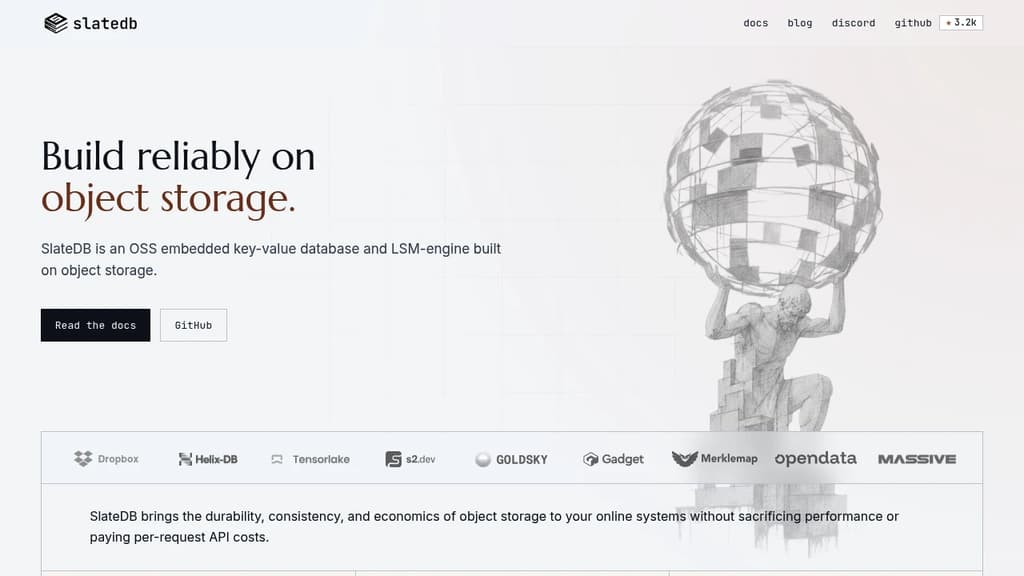
SlateDB is an innovative embedded storage engine that revolutionizes data management by building on top of object storage.
Here are its key features and benefits:
- Object Store Durability: SlateDB inherits the exceptional durability of your chosen object store, offering up to 99.999999999% durability. This ensures your data remains safe and accessible.
- Zero-Disk Architecture: By running without disks, SlateDB eliminates common issues like disk failures and corruption. This design simplifies infrastructure management and reduces hardware-related concerns.
- Simple Replication: SlateDB leverages the underlying object store's replication capabilities, removing the need for complex custom replication protocols. This approach streamlines data distribution and backup.
- Tunable Performance: Configure SlateDB to optimize for your specific needs, whether it's low latency, cost-efficiency, or high durability. This flexibility allows you to balance performance and resources effectively.
- Scalable Readers: Supporting a single writer and multiple readers, SlateDB is designed for concurrent access. It also includes built-in detection and fencing of zombie writers, ensuring data consistency.
- Built in Rust: As an embeddable library written in Rust, SlateDB offers performance, safety, and cross-language compatibility. Use it with your preferred programming language for seamless integration.
SlateDB simplifies database management by abstracting away many low-level concerns, allowing developers to focus on building their applications rather than managing infrastructure. Its design makes it particularly suitable for cloud-native applications, distributed systems, and scenarios where durability and scalability are crucial.

People are looking for alternatives to...
View all alternatives
Claude Code

Spotify

CapCut

Claude
Notion

Lovable
 Docmost – Open-source wiki software with real-time collaboration, diagrams, AI, SSO, RBAC permissions and more.

 c15t
c15t