Open Source ClearFlask Alternatives
A curated collection of the 4 best open source alternatives to ClearFlask.
The best open source alternative to ClearFlask is Fider. If that doesn't suit you, we've compiled a ranked list of other open source ClearFlask alternatives to help you find a suitable replacement. Other interesting open source alternatives to ClearFlask are: LogChimp, Quackback, and Reflet.
ClearFlask alternatives are mainly Feedback & Feature Request Management Tools. Browse these if you want a narrower list of alternatives or looking for a specific functionality of ClearFlask.

Written by Piotr Kulpinski


A self-hosted community feedback tool that helps organizations gather, discuss, and prioritize user suggestions and feature requests.
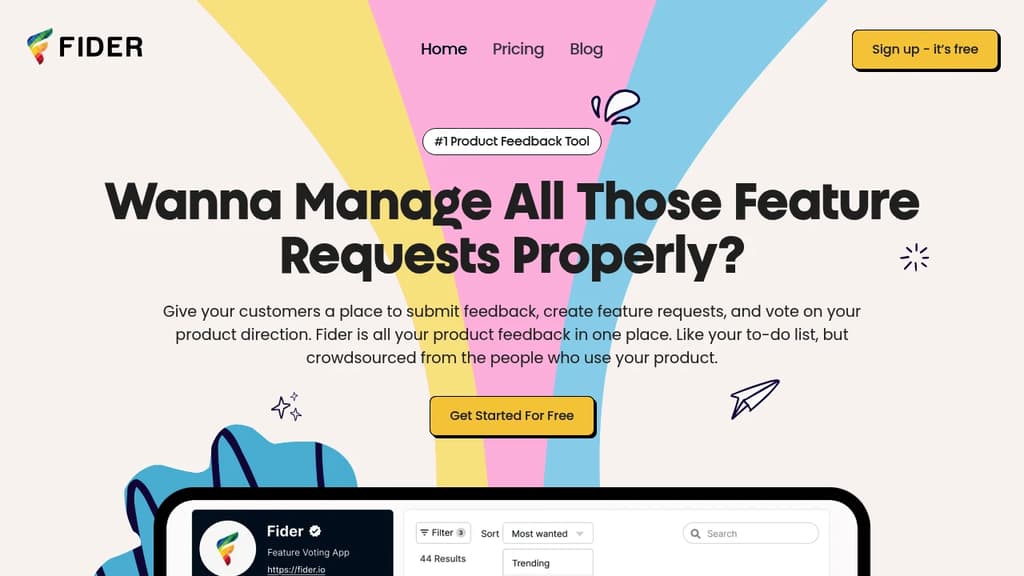
Fider is an open-source feedback management platform designed to bridge the gap between organizations and their users. It provides a centralized space for collecting, discussing, and prioritizing ideas, feature requests, and suggestions.
Key benefits of Fider include:
- User-friendly interface: Intuitive design makes it easy for users to submit, vote on, and discuss ideas.
- Customizable: Tailor the platform to match your brand and specific needs.
- Self-hosted: Maintain full control over your data and infrastructure.
- Multilingual support: Engage with users in their preferred language.
- Voting system: Prioritize features based on user votes and feedback.
- Admin tools: Manage ideas, moderate discussions, and track progress efficiently.
- Integration-ready: API support for seamless integration with existing workflows.
- Open-source community: Benefit from continuous improvements and contributions.
Fider empowers organizations to make data-driven decisions by fostering direct communication with their user base. Whether you're a startup gathering initial product feedback or an established company refining your offerings, Fider provides the tools to turn user insights into actionable improvements.

Collect, organize, and prioritize user feedback to build better products. Self-hosted solution for seamless feature request management.
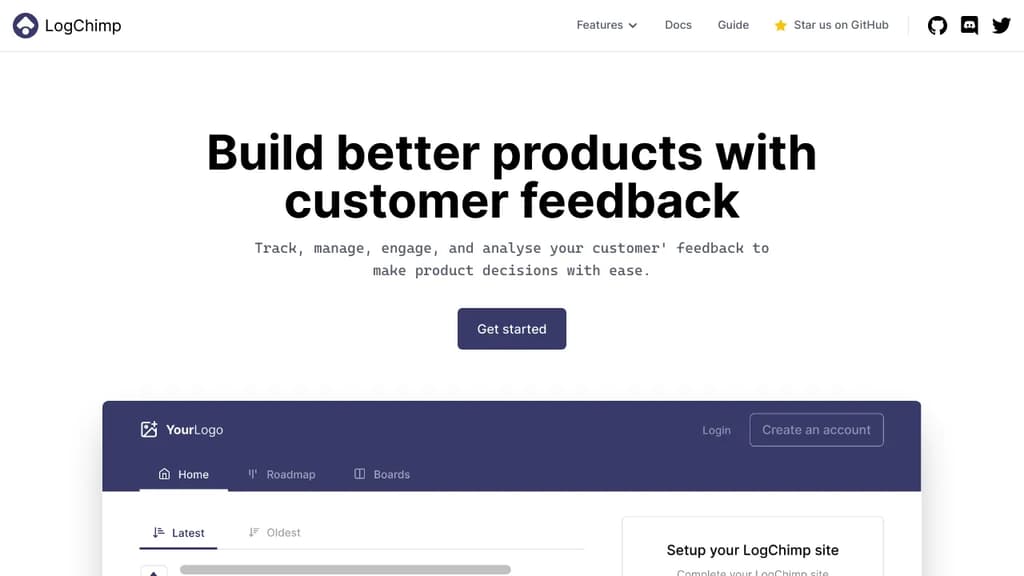
LogChimp is a powerful, open-source feedback management platform designed to help product teams make data-driven decisions. By facilitating seamless communication between users and developers, LogChimp enables organizations to build products that truly resonate with their audience.
Key benefits of LogChimp include:
- User-Centric Feedback Collection: Easily gather feature requests and ideas from your users through a clean, intuitive interface.
- Efficient Organization: Categorize and tag feedback to maintain a structured database of user input.
- Community Engagement: Allow users to vote on feature requests, fostering a sense of community and involvement.
- Prioritization Tools: Utilize built-in analytics to identify high-impact features and allocate resources effectively.
- Customizable Workflows: Adapt LogChimp to your team's unique processes with flexible status management.
- Self-Hosted Solution: Maintain full control over your data and infrastructure with easy deployment options.
- Open-Source Advantage: Benefit from community contributions and customize the platform to fit your specific needs.
LogChimp streamlines the entire feedback loop, from collection to implementation, ensuring that your product roadmap aligns perfectly with user expectations. By leveraging this powerful tool, product teams can make informed decisions, reduce development waste, and create products that users love.

Collect, prioritize and act on user feedback. Public boards, roadmaps and changelogs show users what you're planning and what has shipped.
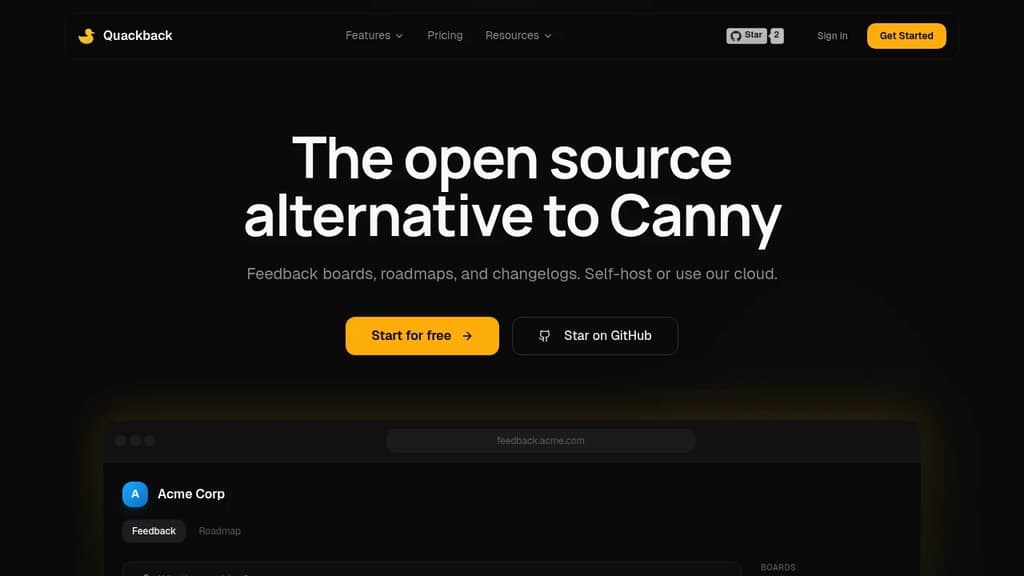
Quackback is an open-source platform for handling customer feedback. Collect, organize, and act on user requests with public boards, roadmaps, and changelogs. You can self-host it under AGPL-3.0 or use the hosted cloud service.
- Community input: Users submit ideas, vote on priorities, and discuss requests in comments.
- Transparency: Share your roadmap so users can see what's planned, in progress, and shipped.
- Feedback to feature: Capture what users want, prioritize it, and close the loop with a changelog entry when you deliver.
- Integrations and AI: Connects to Slack, Linear, Jira, GitHub, and more, with automatic duplicate detection and AI summaries.
The cloud service has a free plan for one seat. Paid cloud plans come with a 14-day free trial, no credit card required.

Collect feedback, prioritize with AI-powered voting, and share transparent roadmaps. Build products users love with automated triage and seamless integration.
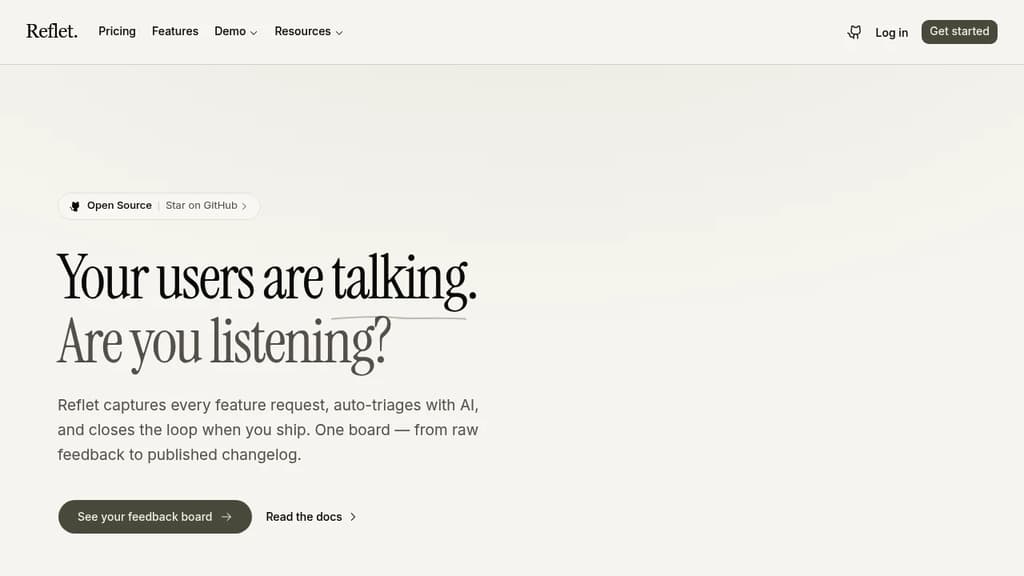
Transform scattered user feedback into actionable product decisions with AI-powered triage that automatically tags, scores, and detects duplicates with 91% accuracy. The platform creates a complete feedback loop - from collection to shipped features - with 3.2x faster prioritization and 47% fewer duplicate reports.
Key features include:
- Embeddable widget that integrates with two lines of code
- Real-time voting system to surface the most requested features
- Automatic AI analysis for priority scoring and complexity estimation
- Two-way GitHub sync that links feedback to issues and PRs
- Public roadmaps and changelogs that keep users informed
- REST API and webhooks for seamless workflow integration
The platform offers three pricing tiers: a free Starter plan for open source projects, Growth at $13/month with private boards and integrations, and Business at $40/month with enterprise features like SSO and unlimited seats.
Built for product teams who want to stop guessing what to build next, Reflet captures every feature request, automatically triages with AI, and closes the loop when features ship - ensuring no user voice gets lost in the process.

People are looking for alternatives to...
View all alternatives
Spotify

Claude

Claude Code

CapCut

Lovable

Notion
 Bright Data – Web data for AI agents and apps. Built-in unblocking, proxies, and ready-made APIs.

 Openlane