Kortix vs Sim
Learn how Kortix and Sim differ in their key features, development activity, technology
stack and community adoption, so you can decide which of these ai agent platforms is best for you.
Learn how Kortix and Sim differ in their key features, development activity, technology stack and community adoption, so you can decide which of these ai agent platforms is best for you.

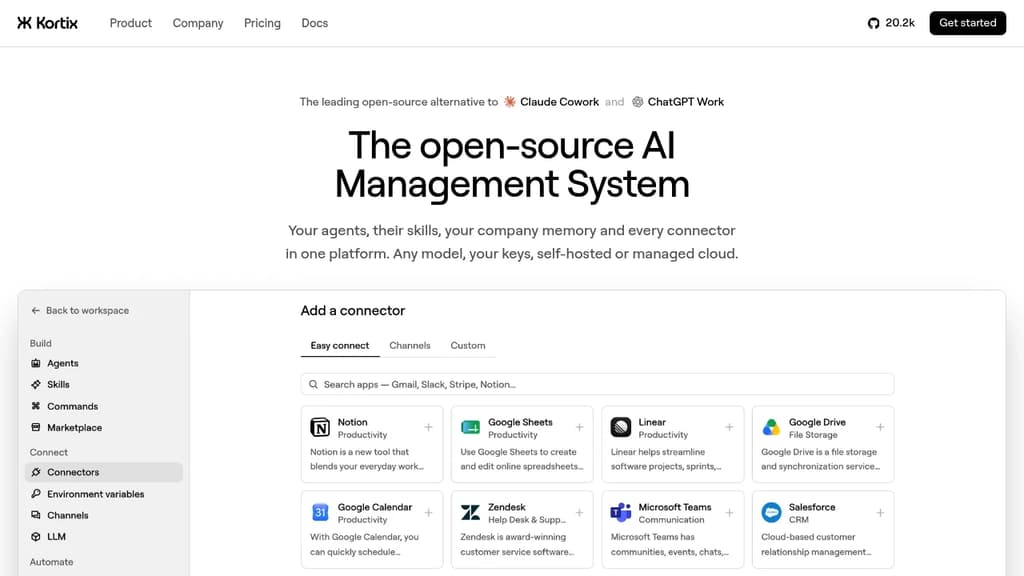
Kortix
Last 30 days
Last commit
11 hours agoRepository age
2 yearsVersion
v0.16.7License
Elastic-2.0Self-hosted
YesRepository
kortix-ai/suna

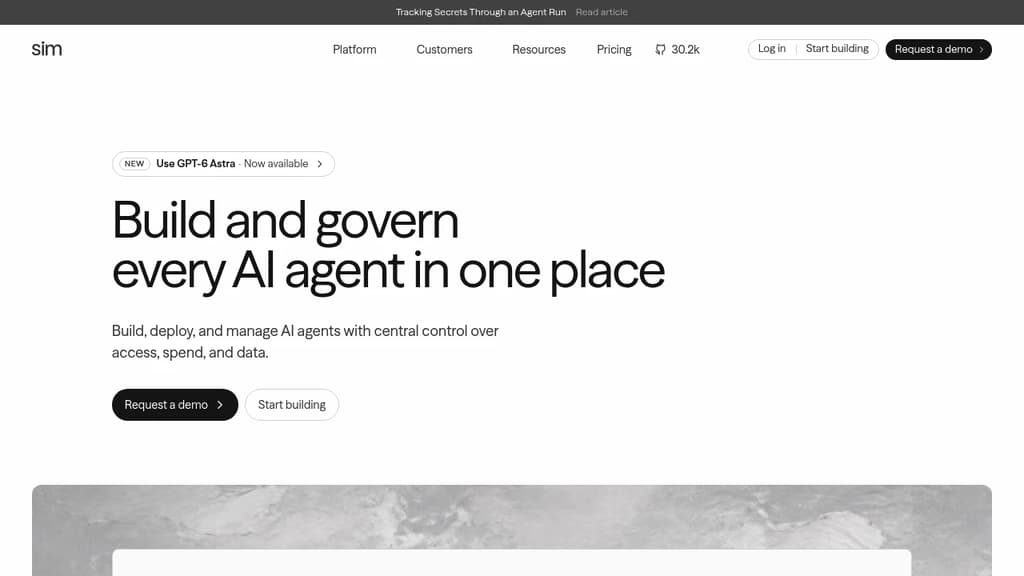
Sim
Stars
30,226Last commit
18 hours agoRepository age
2 yearsVersion
v0.9.67License
Apache-2.0Self-hosted
YesRepository
simstudioai/sim
Detailed Comparison
Both Kortix and Sim have their unique strengths and serve similar purposes effectively. Consider your specific needs regarding popularity, growth, activity, maturity, licensing and features when making your decision.
Both Kortix and Sim have their unique strengths and serve similar purposes effectively. Consider your specific needs regarding popularity, growth, activity, maturity, licensing and features when making your decision.
Community & Popularity
Both tools have similar popularity levels, with Kortix having 20,814 stars and Sim having 30,226 stars on GitHub. In terms of developer contributions, Sim has 3,922 forks, indicating strong developer engagement.
Growth Momentum
Kortix is growing faster, adding 481 stars in the last 30 days (+2.4%) against adding 0 stars for Sim (0%). Kortix is the smaller project of the two, so it is closing the gap rather than extending a lead.
Development Activity
Both projects show recent activity, with Kortix last updated 11 hours ago and Sim 18 hours ago.
Project Maturity
Both projects started around the same time, with Kortix beginning 2 years ago and Sim 2 years ago.
Licensing
The projects use different licenses: Kortix is licensed under Elastic-2.0 while Sim uses Apache-2.0. Consider the licensing requirements when choosing for your project.
Use Cases & Features
Both tools serve similar use cases in AI Agent Platforms. However, they also have distinct specializations: Sim extends into Workflow Automation.
Hosting & Deployment
Both Kortix and Sim offer self-hosting capabilities, giving you full control over your data and infrastructure.














 Postiz – The All-in-One agentic social media scheduling tool