Goose vs Grok Build
Learn how Goose and Grok Build differ in their key features, development activity, technology
stack and community adoption, so you can decide which of these ai coding agents is best for you.
Learn how Goose and Grok Build differ in their key features, development activity, technology stack and community adoption, so you can decide which of these ai coding agents is best for you.

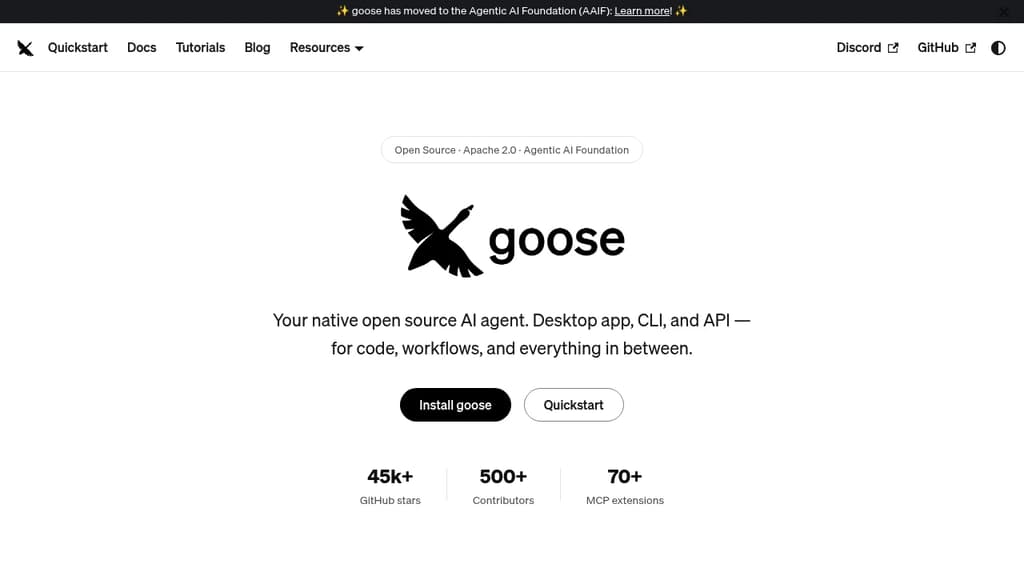
Goose
Last 30 days
Last commit
11 hours agoRepository age
2 yearsVersion
v1.55.0License
Apache-2.0Self-hosted
YesRepository
aaif-goose/goose

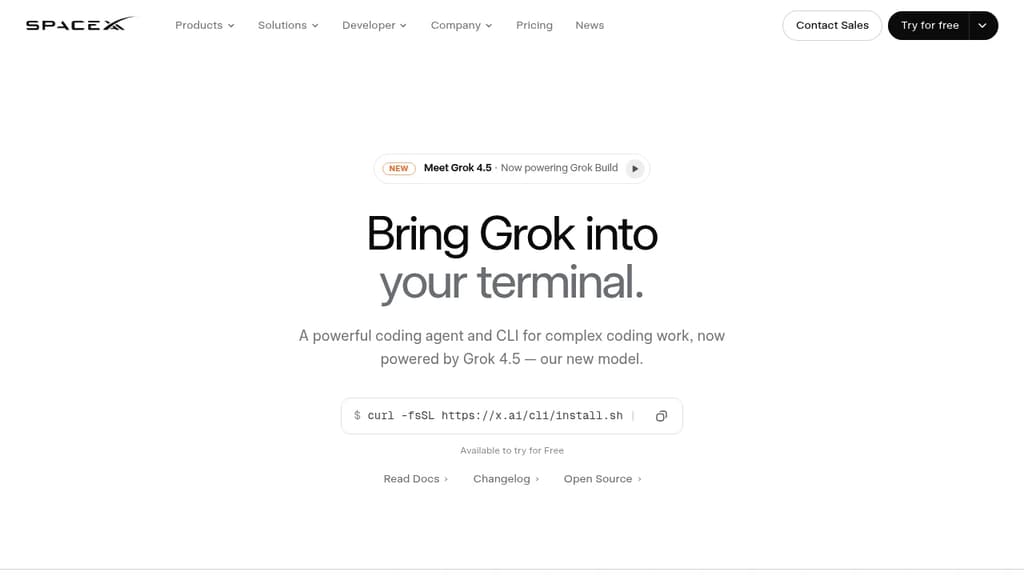
Grok Build
Last 30 days
Last commit
20 days agoRepository age
3 monthsLicense
Apache-2.0Repository
xai-org/grok-build
Detailed Comparison
Goose appears to have several advantages over Grok Build, particularly in popularity, maturity and features. Consider your specific needs regarding popularity, growth, activity, technology, maturity, licensing and features when making your decision.
Goose appears to have several advantages over Grok Build, particularly in popularity, maturity and features. Consider your specific needs regarding popularity, growth, activity, technology, maturity, licensing and features when making your decision.
Community & Popularity
Goose leads in popularity with 55,427 stars vs 27,453 stars for Grok Build. The 102% higher star count indicates stronger community adoption. In terms of developer contributions, Goose has 6,462 forks, indicating strong developer engagement.
Growth Momentum
Grok Build is growing faster, adding 562 stars in the last 30 days (+2.1%) against adding 808 stars for Goose (+1.5%). Grok Build is the smaller project of the two, so it is closing the gap rather than extending a lead.
Development Activity
Both projects show recent activity, with Goose last updated 11 hours ago and Grok Build 20 days ago.
Technology Stack
Both tools share common technology foundations, being built with JavaScript, Bash, Python, Rust. However, they differ in their additional technology choices: Goose uses CSS, Typescript, JSX, Kotlin.
Project Maturity
Goose has been in development longer, starting 2 years ago, compared to Grok Build which began 3 months ago. This 1.9-year head start suggests Goose may have more mature features and established processes.
Licensing
Both projects use the Apache-2.0 license, providing identical terms for usage and distribution.
Use Cases & Features
Both tools serve similar use cases in AI Coding Agents. However, they also have distinct specializations: Goose also focuses on AI Agent Platforms.
Hosting & Deployment
Goose provides self-hosting options for complete data control and customization, while Grok Build may be primarily cloud-based or require different deployment approaches.
Other tool comparisons to consider
Goosevs
 OpenCodeGoose
vs
 Codex CLIGoose
vs
 piGoose
vs
 OpenHandsGoose
vs
 ClineGoose
vs
 Open InterpreterGoose
vs
 KiloGoose
vs
 Qwen CodeGoose
vs
 ZeroGoose
vs
 RoomoteGrok Build
vs
OpenCodeGrok Buildvs
piGrok Buildvs
OpenHandsGrok Buildvs
ClineGrok Buildvs
Open InterpreterGrok Buildvs
KiloGrok Buildvs
Qwen CodeGrok Buildvs
 SWE-agentGrok Build
vs
ZeroGrok Buildvs
Roomote Capture – Capture screenshots, generate PDFs, scrape content, extract metadata, and automate browsers with one API.