Ad
 
Learn more

Open Source Rootly Alternatives

A curated collection of the 11 best open source alternatives to Rootly.

The best open source alternative to Rootly is Uptime Kuma. If that doesn't suit you, we've compiled a ranked list of other open source Rootly alternatives to help you find a suitable replacement. Other interesting open source alternatives to Rootly are: Cachet, Keep, Checkmate, and Gatus.

Rootly alternatives are mainly Status Pages but may also be Uptime Monitoring Tools or Infrastructure Monitoring Tools. Browse these if you want a narrower list of alternatives or looking for a specific functionality of Rootly.

Piotr Kulpinski's profile

Written by Piotr Kulpinski

A user-friendly, open-source uptime monitoring solution for tracking website and service availability

Screenshot of Uptime Kuma website

Uptime Kuma is a powerful, self-hosted monitoring tool designed to help you keep track of your websites and services. With its intuitive interface and robust features, it's an excellent choice for both individuals and businesses looking to ensure their online presence remains reliable.

Key features:

  • Real-time monitoring: Get instant alerts when your services go down
  • Flexible notifications: Receive alerts via various channels, including email, Telegram, and Discord
  • Status page: Create a public status page to keep your users informed
  • Docker support: Easy deployment using Docker containers
  • Customizable checks: Monitor HTTP(s), TCP, DNS, and more
  • Open-source: Benefit from community contributions and transparency

Uptime Kuma is easy to set up and can be running in minutes using Docker. Its clean, modern interface makes it simple to manage your monitors and view detailed uptime statistics. Whether you're a small website owner or managing a large infrastructure, Uptime Kuma provides the tools you need to stay on top of your services' health.

Looking for open source alternatives to other popular services? Check out other posts in the alternatives series and openalternative.co, a directory of open source software with filters for tags and alternatives for easy browsing and discovery.

Open-source status page platform that helps organizations communicate system status and incidents effectively with customizable components and metrics tracking

Screenshot of Cachet website

Cachet is a powerful open-source status page system that enables organizations to maintain transparent communication during outages and maintenance. With features like component status tracking, metric visualization, and incident management, teams can keep stakeholders informed in real-time.

Key benefits include:

  • Beautiful, responsive design that works seamlessly across all devices
  • Multilingual support with over 10 languages available
  • Powerful JSON API for automation and integration
  • Proactive maintenance scheduling to plan and communicate upcoming work
  • Flexible metrics for tracking custom indicators and data points
  • Enhanced security with two-factor authentication support

Used by major organizations like Boeing, Siemens, and GNOME, Cachet helps streamline downtime communication while building trust through transparency. The system is highly customizable and can be self-hosted, giving organizations complete control over their status page infrastructure.

Open-source platform for centralizing alerts, automating responses, and enhancing incident management across your tech stack.
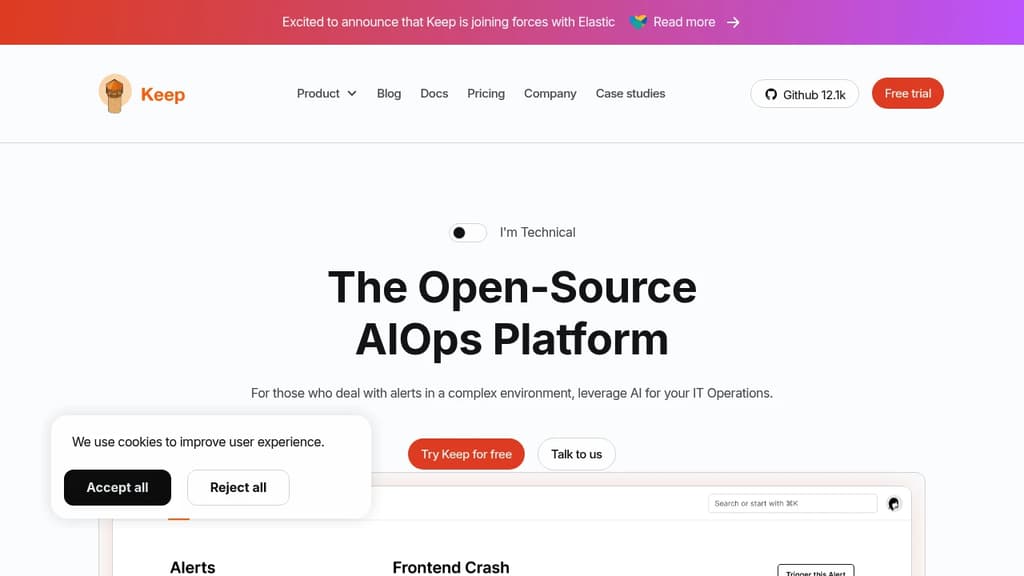
Screenshot of Keep website

Keep is an innovative open-source solution designed to revolutionize how teams handle monitoring, alerting, and incident response. By centralizing alerts from various sources and providing powerful automation capabilities, Keep significantly enhances operational efficiency and reduces mean time to resolution (MTTR).

Key benefits of Keep include:

  • Centralized Alert Management: Aggregate alerts from multiple monitoring tools, providing a single source of truth for your entire infrastructure.
  • Powerful Automation: Create custom workflows to automate repetitive tasks, reducing manual intervention and human error.
  • Flexible Integration: Seamlessly connect with popular monitoring tools, ticketing systems, and communication platforms.
  • Advanced Filtering and Routing: Intelligently categorize and route alerts based on predefined rules, ensuring the right team members are notified.
  • Customizable Dashboards: Gain instant visibility into your system's health with tailored, real-time dashboards.
  • Collaborative Incident Response: Facilitate team collaboration during incidents with integrated communication tools and shared context.
  • Open-Source Advantage: Benefit from community-driven development, transparency, and the ability to customize the platform to your specific needs.

By adopting Keep, organizations can streamline their monitoring processes, reduce alert fatigue, and respond to incidents more efficiently. This powerful tool empowers teams to focus on what matters most: maintaining system reliability and delivering exceptional user experiences.

Monitor servers, websites, Docker containers, and infrastructure with real-time insights, instant alerts, and powerful analytics. Self-hosted solution.

Screenshot of Checkmate website

Comprehensive monitoring made simple - Get real-time insights into your entire infrastructure with powerful analytics and instant alerts. Track everything from website uptime to Docker container health in one unified platform.

Key monitoring capabilities:

  • Website monitoring - Track uptime, performance, and availability across multiple locations
  • Infrastructure monitoring - Monitor CPU, memory, disk usage, and system performance
  • Docker monitoring - Real-time container health and resource usage tracking
  • Page speed insights - Detailed performance metrics and optimization recommendations
  • Network monitoring - Ping checks for latency and availability monitoring

Built for modern teams with incident management, email notifications, maintenance windows, and self-hosted deployment options. Say goodbye to complex enterprise platforms - Checkmate delivers powerful monitoring with simplicity at its core.

Flexible deployment options - Start with the free open-source version (AGPL-3.0 licensed) or scale with enterprise features including dedicated support, custom branding, and high availability deployments. Feature sponsorship available at $190/day to accelerate development of specific capabilities.

A highly customizable monitoring solution that provides automated status pages, extensive alerting options, and detailed testing capabilities for your services and infrastructure

Screenshot of Gatus website

Gatus is a powerful monitoring solution that helps you keep track of your infrastructure's health in real-time. The platform offers comprehensive monitoring capabilities for HTTP, GraphQL, DNS, ICMP/PING, TCP, and certificate expiration checks.

Key features include:

  • Highly customizable monitoring with conditions for response time, body content, and IP addresses
  • Extensive alerting system supporting Email, Slack, PagerDuty, Teams, Twilio, Discord, and more
  • Developer-focused approach with detailed insights and automated user acceptance testing
  • Real-time status updates that automatically reflect your services' current state
  • Customer-centric design providing clear, accurate information about ongoing issues

The platform stands out by being completely open source, allowing for community contributions and custom feature development. Unlike traditional status pages that only show historical uptime, Gatus focuses on providing immediate, actionable information about current service status.

Open-source uptime monitoring platform for seamless service management, real-time alerts, and comprehensive status pages

Screenshot of OpenStatus website

OpenStatus is a powerful, open-source solution for monitoring your services and keeping your users informed. With its comprehensive feature set, OpenStatus empowers developers and businesses to maintain high availability and transparency.

Key benefits of OpenStatus include:

  • Real-time monitoring: Keep a constant eye on your services' health and performance.
  • Instant alerts: Receive immediate notifications when issues arise, allowing for quick response times.
  • Custom status pages: Create beautiful, informative status pages to keep your users updated.
  • Open-source flexibility: Adapt and extend the platform to fit your specific needs.
  • Easy integration: Seamlessly incorporate OpenStatus into your existing workflow.
  • Community-driven: Benefit from continuous improvements and support from a passionate developer community.

Whether you're managing a small project or a large-scale application, OpenStatus provides the tools you need to ensure reliability and maintain user trust. With its intuitive interface and powerful features, you can focus on building great services while OpenStatus takes care of keeping them running smoothly.

Looking for open source alternatives to other popular services? Check out other posts in the alternatives series and openalternative.co, a directory of open source software with filters for tags and alternatives for easy browsing and discovery.

All-in-one solution for uptime monitoring, incident management, and status pages to keep your services running smoothly
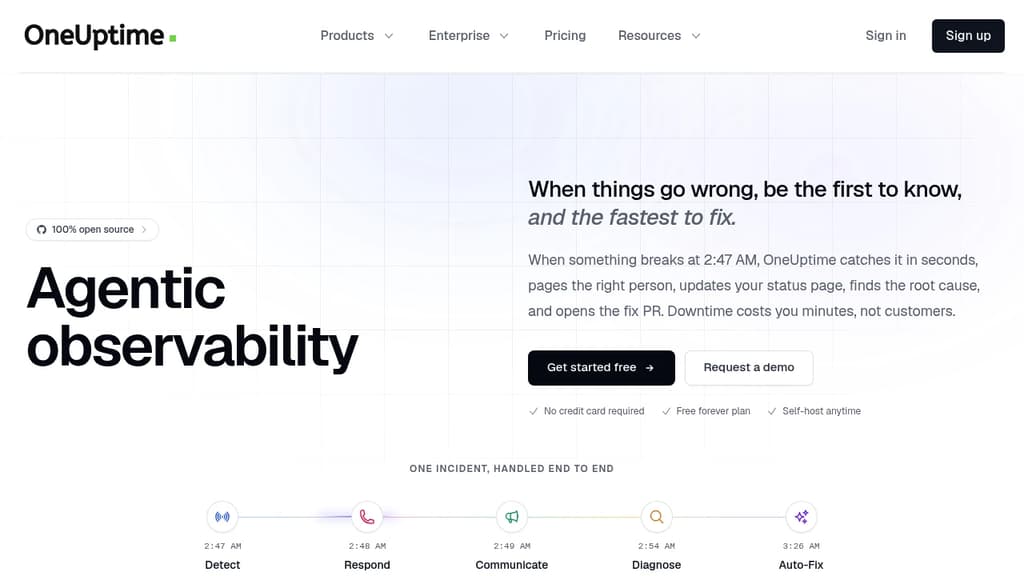
Screenshot of OneUptime website

OneUptime is a powerful, open-source platform designed to help businesses maintain optimal service reliability and performance. By combining essential features into a single, intuitive solution, OneUptime streamlines your operations and enhances your ability to respond to issues quickly and effectively.

Key benefits of OneUptime include:

  • Unified Monitoring: Keep track of your entire infrastructure with comprehensive uptime monitoring for websites, APIs, and servers.
  • Proactive Alerts: Receive instant notifications through various channels when issues arise, allowing for rapid response and minimized downtime.
  • Incident Management: Efficiently handle and resolve incidents with built-in tools for team collaboration, task assignment, and progress tracking.
  • Custom Status Pages: Create branded, real-time status pages to keep your customers informed about service availability and ongoing incidents.
  • Performance Insights: Gain valuable insights into your system's performance with detailed metrics and analytics.
  • Flexible Integrations: Seamlessly integrate with popular tools and services to enhance your existing workflow.
  • Open-Source Advantage: Benefit from community-driven development, transparency, and the ability to customize the platform to your specific needs.

With OneUptime, you can ensure your services remain reliable, your team stays informed, and your customers experience minimal disruption. Whether you're a small startup or a large enterprise, OneUptime provides the tools you need to maintain high availability and build trust with your users.

Kener is an open-source status page tool that simplifies service monitoring and incident communication with a sleek interface and GitHub integration.

Screenshot of Kener website

Kener is a modern, open-source status page system built with Node.js, designed to streamline incident management and service monitoring. With its sleek and user-friendly interface, Kener makes it easy for teams to track service outages and communicate effectively during incidents.

Key features:

  • Elegant Design: Kener's modern interface provides a clear overview of service status, making it easy for users to quickly assess system health.

  • GitHub Integration: Seamlessly integrate with GitHub for collaborative incident management, allowing teams to track and resolve issues together.

  • Component-level Monitoring: Monitor the availability of individual components, providing granular insights into system performance.

  • Incident History: Keep a record of past incidents, allowing teams to learn from previous issues and improve response times.

  • Customizable: Easily adapt Kener to fit your organization's branding and specific needs.

  • Real-time Updates: Provide users with up-to-the-minute information on service status and ongoing incidents.

Benefits:

  • Improved Communication: Keep users informed about service status and incidents, reducing support inquiries and improving customer satisfaction.

  • Enhanced Collaboration: Foster teamwork during incident resolution with GitHub integration and shared incident management tools.

  • Increased Transparency: Build trust with users by providing clear, real-time updates on service performance and issues.

  • Efficient Incident Response: Streamline the process of identifying, tracking, and resolving incidents, minimizing downtime and impact on users.

By leveraging Kener, organizations can significantly improve their incident management processes, enhance communication with users, and maintain a higher level of service reliability. Whether you're a small startup or a large enterprise, Kener provides the tools needed to effectively manage and communicate service status.

Open-source uptime monitoring solution with real-time alerts, status pages, and comprehensive checks for websites, APIs, databases, and services.

Screenshot of Peekaping website

Complete infrastructure monitoring that runs entirely on your servers with zero vendor lock-in. Built with Go and React for high performance and reliability.

Comprehensive monitoring capabilities include HTTP/HTTPS websites, TCP ports, DNS queries, databases (PostgreSQL, MongoDB, Redis), Docker containers, gRPC services, and message brokers like RabbitMQ and Kafka. Push-based monitoring via webhooks lets services report their own health status.

Instant notifications through 15+ channels including Telegram, Slack, Discord, Email, PagerDuty, and Opsgenie. Configure alerts by severity and team workflows to reduce noise and ensure rapid response times.

Beautiful status pages can be public for customers or private for internal teams. Display real-time service status, uptime metrics, and incident history in a clean, professional interface that builds trust and reduces support tickets.

Flexible deployment options with official Docker images, docker-compose setup, or bare metal installation. Choose your database backend: SQLite for simple setups, PostgreSQL or MongoDB for production workloads.

API-first architecture with complete Swagger/OpenAPI documentation enables automation and custom integrations. Two-factor authentication, brute-force protection, and SSL certificate monitoring ensure security.

MIT-licensed and completely free for personal and commercial use. No usage limits, no feature restrictions, no data leaving your infrastructure.

Monitor website uptime, detect security vulnerabilities, find broken links, and simulate user flows. Get instant alerts when issues arise. Free tier available.

Screenshot of StatusScout website

StatusScout provides comprehensive website health monitoring that goes beyond basic uptime checks. This all-in-one platform helps you maintain a secure, fast, and user-friendly website by proactively identifying issues before they impact your visitors.

Key features include:

  • Security protection - Detects exposed sensitive files, DNS vulnerabilities, and missing security headers
  • Broken link detection - Automatically crawls your site to find and report dead links or bad redirects
  • User flow simulation - Tests critical user journeys like signups and checkouts to ensure smooth experiences
  • Real-time monitoring - Instant alerts when something breaks, allowing you to resolve issues quickly
  • SEO and accessibility insights - Actionable recommendations to improve search rankings and user experience
  • Integration verification - Confirms that tracking codes, analytics scripts, and marketing pixels are working properly

Flexible deployment options cater to different needs: a free self-hosted version for complete control, a managed cloud service starting at $12/month for up to 5 websites, and custom enterprise solutions for larger organizations.

The platform is hosted in Europe, runs on renewable energy, and has already delivered insights for over 600 websites. With no credit card required for the cloud tier and a robust roadmap including API access and advanced security scans, StatusScout offers a reliable solution for maintaining website health and performance.

A powerful open-source status page system for real-time incident tracking, maintenance updates, and transparent communication with users.

Screenshot of Statusnook website

Statusnook is an advanced open-source status page system designed to help organizations maintain clear and effective communication with their users about service health and incidents. With its robust features and user-friendly interface, Statusnook enables teams to:

  • Provide real-time updates on service status and performance
  • Manage and communicate incidents efficiently
  • Schedule and announce planned maintenance
  • Customize status pages to match brand identity
  • Integrate with popular monitoring and alerting tools

Key benefits of using Statusnook include:

  1. Enhanced transparency: Keep users informed about service status, reducing support inquiries and building trust.
  2. Improved incident management: Streamline the process of reporting, updating, and resolving issues.
  3. Flexible customization: Tailor the status page to fit your brand and specific needs.
  4. Multi-channel notifications: Reach users through various channels, including email, SMS, and webhooks.
  5. Historical data and analytics: Gain insights into service performance and incident patterns over time.

Whether you're running a small application or managing a complex infrastructure, Statusnook provides the tools you need to maintain clear, professional communication about your services' health and performance.

Share:

People are looking for alternatives to...

Favicon


Favicon


Favicon


Favicon


Favicon


Favicon