Open Source Qlik Alternatives
A curated collection of the 2 best open source alternatives to Qlik.
The best open source alternative to Qlik is Metabase. If that doesn't suit you, we've compiled a ranked list of other open source Qlik alternatives to help you find a suitable replacement. Other interesting open source alternative to Qlik is Redash.
Qlik alternatives are mainly Data Visualization Tools but may also be BI Platforms. Browse these if you want a narrower list of alternatives or looking for a specific functionality of Qlik.

Written by Piotr Kulpinski


Open-source business intelligence platform for data exploration, visualization, and sharing. Empowers teams to make data-driven decisions effortlessly.
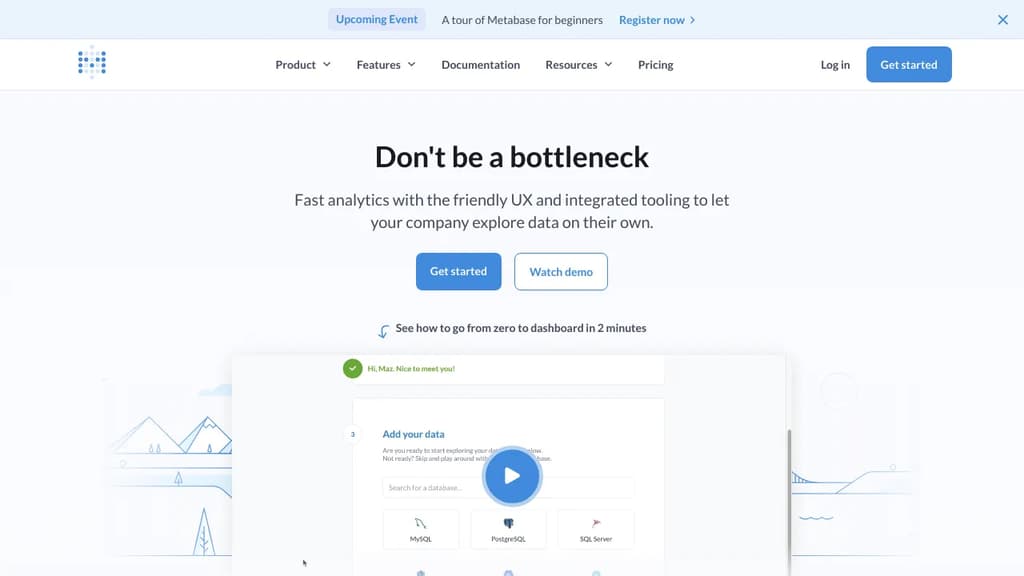
Metabase is an open-source business intelligence and analytics platform that transforms how organizations interact with their data. It offers a seamless blend of power and simplicity, making it an ideal choice for companies of all sizes.
Key benefits of Metabase include:
- Intuitive Interface: Easy-to-use dashboard creation and data exploration tools, enabling users of all skill levels to gain insights quickly.
- Versatile Connectivity: Supports a wide range of databases and data sources, allowing you to centralize your data analysis efforts.
- Powerful Visualization: Create stunning charts, graphs, and interactive dashboards to communicate complex data effectively.
- Collaborative Features: Share insights across your organization with ease, fostering a data-driven culture.
- Customizable and Extensible: Tailor Metabase to your specific needs with custom visualizations and integrations.
- Secure and Scalable: Enterprise-grade security features and the ability to handle large datasets make Metabase suitable for growing organizations.
- Active Community: Benefit from a vibrant open-source community, regular updates, and extensive documentation.
Whether you're a small startup or a large enterprise, Metabase provides the tools you need to turn your data into actionable insights, driving informed decision-making across your organization.

Redash is an open-source data visualization and analytics platform that helps teams make sense of their data through SQL queries and interactive dashboards.
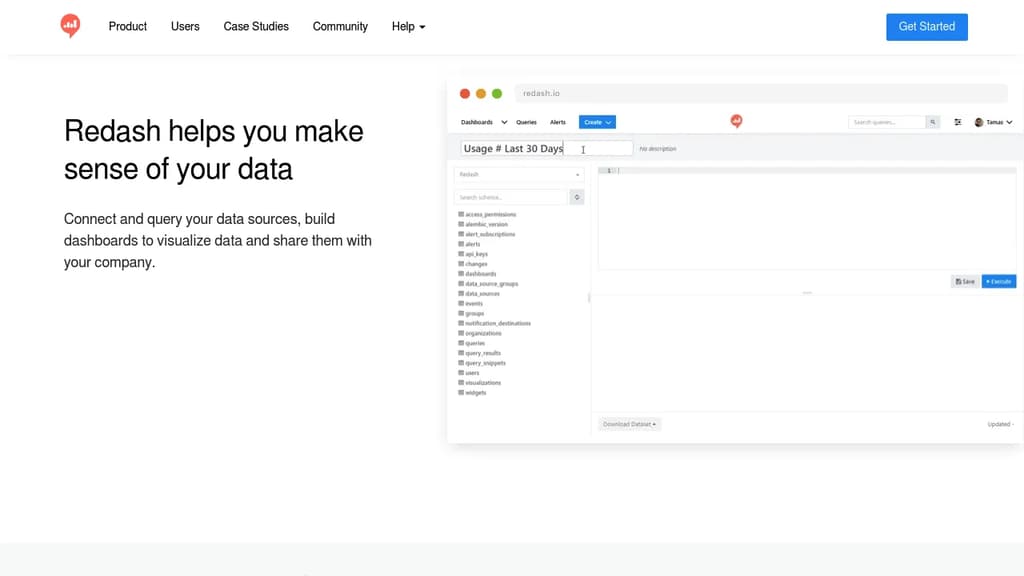
Redash is a powerful, open-source data visualization and analytics platform designed to help teams connect, query, visualize, and share their data effectively. Here's what makes Redash stand out:
-
Versatile Data Connectivity:
- Supports a wide range of data sources, including SQL, NoSQL, Big Data, and APIs
- Allows querying from multiple sources to answer complex questions
-
Powerful Query Editor:
- Intuitive SQL editor with schema browsing and click-to-insert functionality
- Ability to create and reuse query snippets for efficiency
-
Interactive Dashboards:
- Drag-and-drop interface for creating customizable dashboards
- Resize and arrange visualizations to suit your needs
- Schedule automatic refreshes from data sources
-
Collaboration and Sharing:
- Share dashboards with team members or make them public
- User management features for access control
-
Visualizations and Alerts:
- Create various types of visualizations to represent your data
- Set up alerts to stay informed about important data changes
-
Open-Source Advantage:
- Customize and add features to suit your specific needs
- No vendor lock-in
- Active community for support and contributions
-
API Access:
- Integrate Redash with other tools and services using its API
Redash is trusted by data-driven companies to make sense of their information, enabling better decision-making and deeper understanding of their data. Whether you're a small startup or a large enterprise, Redash provides the tools you need to turn your data into actionable insights.

People are looking for alternatives to...
View all alternatives
Spotify

Claude Code

CapCut

Claude

Notion

Lovable
 Sent – Messaging Infrastructure for Developers. One API for SMS, WhatsApp, and RCS across 190+ countries.
 Bright Data