Open Source Canva Alternatives
A curated collection of the 2 best open source alternatives to Canva.
The best open source alternative to Canva is Penpot. If that doesn't suit you, we've compiled a ranked list of other open source Canva alternatives to help you find a suitable replacement. Other interesting open source alternative to Canva is Graphite.
Canva alternatives are mainly Online Design Tools but may also be UI/UX Design Tools or Whiteboarding Tools. Browse these if you want a narrower list of alternatives or looking for a specific functionality of Canva.

Written by Piotr Kulpinski


Design, prototype, and hand off to developers in one platform. Supports design systems, tokens, flexible layouts, and AI workflows with real CSS/HTML output.
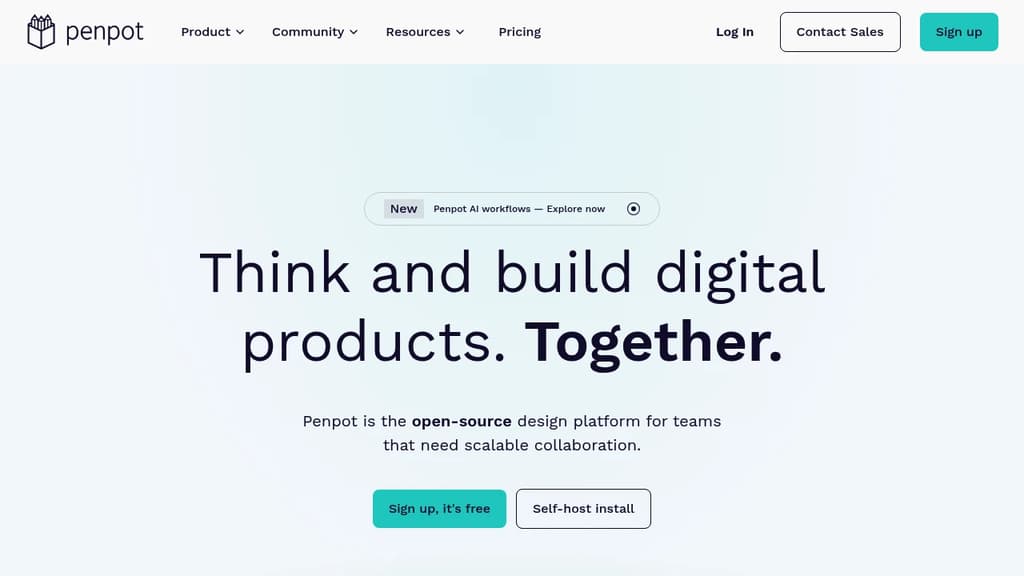
Penpot is a browser-based design and prototyping platform built for teams working on digital products. It covers the full design process, from early wireframes through polished UI, interactive prototypes, and developer handoff, without requiring separate tools for each stage. It's self-hostable, so teams with strict data requirements can run it on their own infrastructure.
The core workflow connects designers and developers more directly than most tools. Instead of exporting assets and writing specs separately, Penpot generates 1:1 CSS, HTML, SVG, and JSON directly from the design. What you see in the canvas is what developers get in code, which cuts down on the back-and-forth that usually happens during implementation.
Key capabilities include:
- Design Systems with reusable components and design tokens, giving teams a shared source of truth that stays in sync across projects
- Flexible layouts using grid and auto-layout tools suited for responsive UI design
- Prototyping with interactive flows built directly on the canvas, no separate prototyping mode required
- AI workflows with multi-directional agentic support, letting teams connect any LLM or agent into their design process
- Code inspect that surfaces accurate CSS and HTML values without manual annotation
Penpot is a practical alternative to Sketch or Adobe XD for teams that want full control over their tooling. Because it's open source and web-native, there's no per-seat licensing tied to a vendor's pricing decisions, and it works across operating systems without a desktop install.
It suits product teams where designers and engineers work closely together, particularly those building design systems at scale or looking to bring AI tooling into their existing design process.

A free, open source vector graphics editor built around nondestructive, node-based design. Runs locally in the browser, exports SVG, PNG, and JPG.
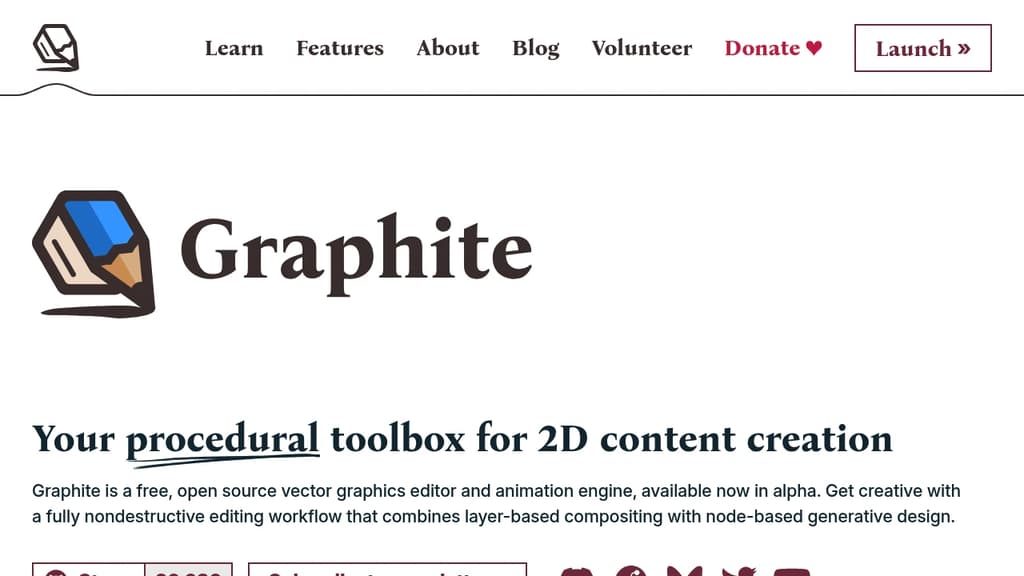
Graphite is a free, open source vector and procedural graphics editor that runs entirely in your browser without requiring an account or installation. It's aimed at designers who want a nondestructive workflow, where every creative decision stays editable through parameters rather than being baked in permanently.
Unlike most online design tools, Graphite is built around a node graph at its core. Instead of drawing shapes and committing to them, you build systems of nodes that generate and transform artwork procedurally. Want your scattered circles denser? Drag a slider. Want a different fill pattern? Swap a node. Nothing is destructive by default.
Key capabilities include:
- Procedural vector editing using a node-based layer system that lets you compose, reuse, and automate design workflows
- Nondestructive boolean operations for combining and modifying shapes without losing the originals
- Parametric iteration so you can morph between states, blend color schemes, or adjust placement areas with sliders rather than manual edits
- Infinite scalability with no pixelation, and export to SVG, PNG, or JPG at any resolution
- Fully local execution with no server involved, keeping your work private on your own hardware
Graphite is built with WebAssembly and WebGPU, which gives it performance closer to a native app than a typical browser tool. It's architecturally more like a game engine than a conventional creative app.
Desktop apps for Windows, Mac, and Linux are in late development, but the browser version is already functional and kept current. The project is in alpha, so some planned features like raster editing, live collaboration, and standalone program compilation from node graphs aren't available yet.
For designers tired of jumping between a vector editor, a compositing tool, and a generative design environment, Graphite is building toward a single app that handles all of it. It's a credible open source alternative to tools like Penpot for those who want procedural depth over a traditional layer-based approach.

People are looking for alternatives to...
View all alternatives
Spotify

Claude Code

CapCut

Claude

Notion

Lovable
 Postiz – The All-in-One agentic social media scheduling tool
 Sent
Sent