Open Source Azure AD Alternatives
A curated collection of the 3 best open source alternatives to Azure AD.
The best open source alternative to Azure AD is Keycloak. If that doesn't suit you, we've compiled a ranked list of other open source Azure AD alternatives to help you find a suitable replacement. Other interesting open source alternatives to Azure AD are: VoidAuth and Authgear.
Azure AD alternatives are mainly Authentication & SSO Providers but may also be Authorization & Permissions Tools. Browse these if you want a narrower list of alternatives or looking for a specific functionality of Azure AD.

Written by Piotr Kulpinski


Comprehensive open source identity management solution offering single sign-on, social login, and fine-grained authorization for applications and services.
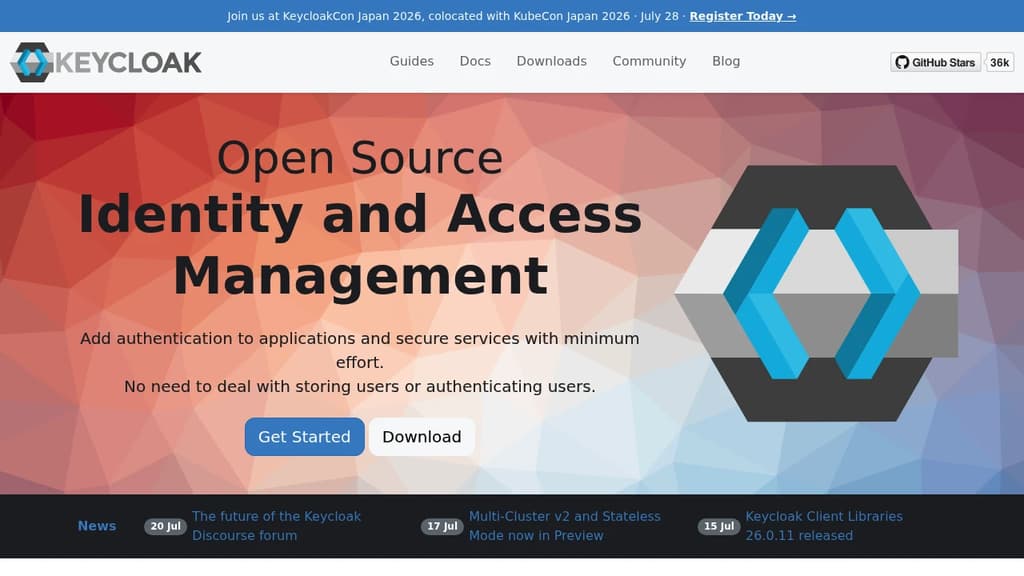
Keycloak simplifies application security by providing a complete identity and access management solution. With built-in single sign-on (SSO), users authenticate once to access multiple applications, eliminating repetitive logins and logouts.
The platform offers robust identity features including:
- Social login integration with popular providers
- LDAP and Active Directory federation
- OpenID Connect, OAuth 2.0, and SAML 2.0 protocol support
- Fine-grained authorization policies
- Two-factor authentication
- User account management
Administrators benefit from a centralized console to manage users, configure authentication flows, and set security policies. Users get a self-service portal to manage their profiles, passwords, and linked accounts.
Enterprise-ready capabilities include high performance, clustering support for scalability, customizable themes, and extensive APIs for integration. As a Cloud Native Computing Foundation project, Keycloak maintains high standards for security, reliability, and community-driven development.

Open-source single sign-on and user management for your self-hosted applications, with OIDC, ForwardAuth, LDAP and passkey support.
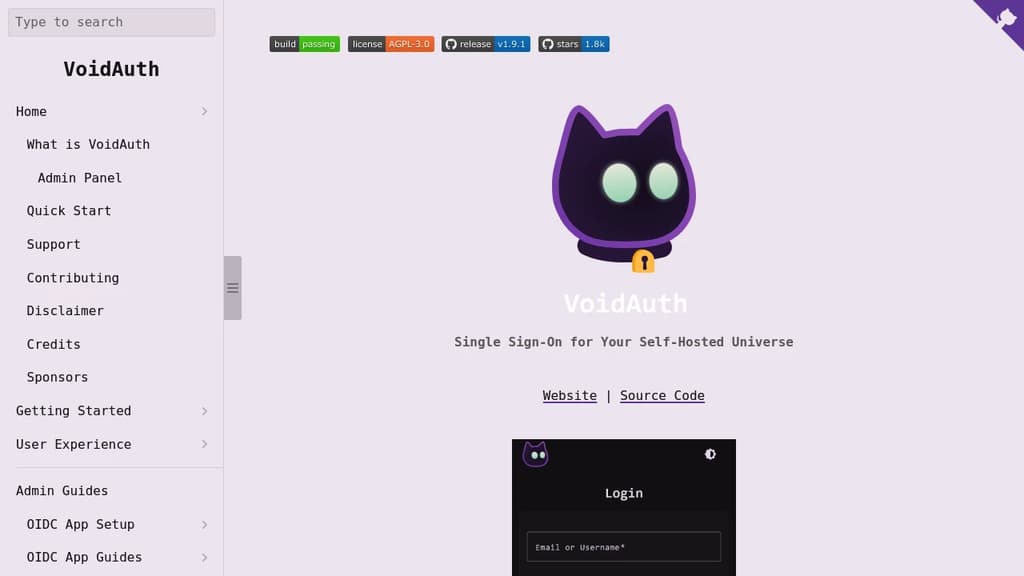
VoidAuth is an open-source single sign-on provider for self-hosted applications. It sits in front of your apps and handles authentication and user management from one place, for both admins and end users.
- Unified access control: Manage users, groups, and access from a central admin panel.
- Standard protocols: Works as an OpenID Connect (OIDC) provider, a proxy ForwardAuth target, and an LDAP directory server.
- Account security: Supports multi-factor authentication, passkeys, passkey-only accounts, and encryption at rest with a Postgres or SQLite database.
- User onboarding: Invite users or let them self-register, with email verification for password resets.
- Customization: Set your own logo, title, theme color, and email templates.
VoidAuth runs alongside your existing reverse proxy, such as Caddy, Traefik, or nginx, so authentication stays on infrastructure you control.

Authgear is a managed IAM platform handling authentication, SSO, and user management for B2C and B2B apps, with biometrics, MFA, and zero-trust support.
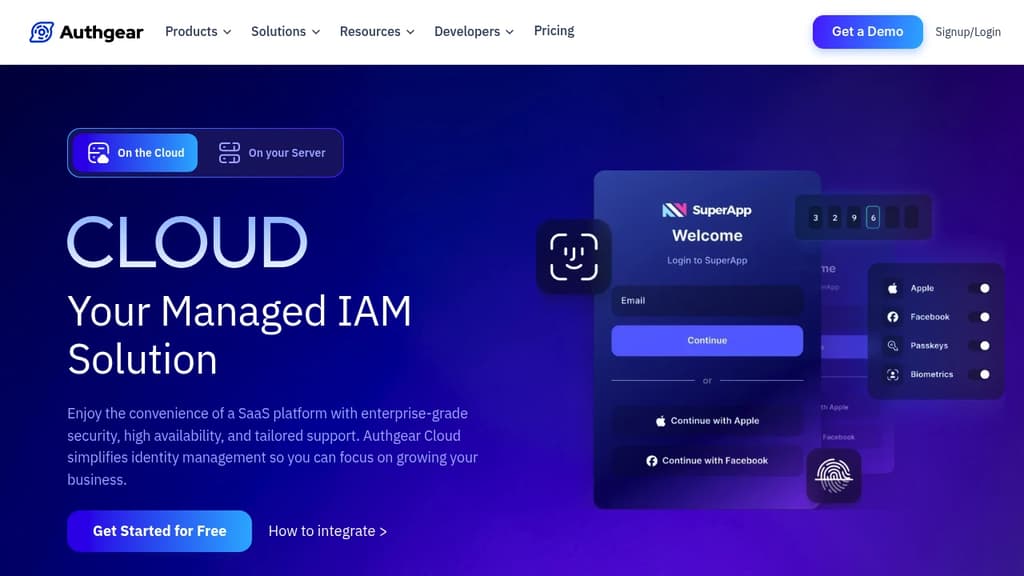
Authgear is a managed authentication and SSO platform built for developers who need to handle complex identity requirements without building auth infrastructure from scratch. It covers the full range: login flows, multi-factor authentication, biometrics, Single Sign-On, and fine-grained access control, all through a low-code setup that keeps integration overhead low.
It's designed to work for both B2C products (where you're managing large volumes of end users) and B2B setups with multi-tenant hierarchies, role-based permissions, and enterprise identity providers. Real-world deployments include integrating Azure AD for internal staff while routing external users through WhatsApp OTP, or adding biometric login to mobile apps without rearchitecting the backend.
Key capabilities include:
- Multiple login methods: passwords, biometrics, phone OTP, social login, and passkeys
- SSO across services: users authenticate once and move between microservices without re-logging in
- JWT-based access control: tokens issued per request, aligned with zero-trust principles
- Granular authorization: role- and permission-based access controls tied to user context
- Centralized identity for microservices: one identity layer instead of fragmented auth per service
- MFA and 2FA: configurable second factors including biometrics and OTP
- Custom branding: white-label login flows to match your product
Compared to self-hosted options like Keycloak or authentik, Authgear trades configuration depth for operational simplicity. It's ISO 27001 and SOC 2 Type II certified, which matters for enterprise procurement. If you're evaluating managed alternatives to Okta or AWS Cognito, Authgear positions itself as a developer-friendly middle ground with enterprise compliance built in.
A free trial is available for teams evaluating it before committing.

People are looking for alternatives to...
View all alternatives
Spotify

Claude

Claude Code

CapCut

Lovable

Amazon Prime
 Stellar Hosted – Managed Open Source software hosting in the EU: secure, compliant, fast.

 Windshift