Open Source Amazon Neptune Alternatives
A curated collection of the 4 best open source alternatives to Amazon Neptune.
The best open source alternative to Amazon Neptune is Neon Postgres. If that doesn't suit you, we've compiled a ranked list of other open source Amazon Neptune alternatives to help you find a suitable replacement. Other interesting open source alternatives to Amazon Neptune are: OceanBase, FalkorDB, and Memgraph.
Amazon Neptune alternatives are mainly Relational Databases (SQL) but may also be Graph Databases or Vector Databases. Browse these if you want a narrower list of alternatives or looking for a specific functionality of Amazon Neptune.

Written by Piotr Kulpinski


Cloud-native, auto-scaling Postgres with instant branching, bottomless storage, and pay-per-use pricing
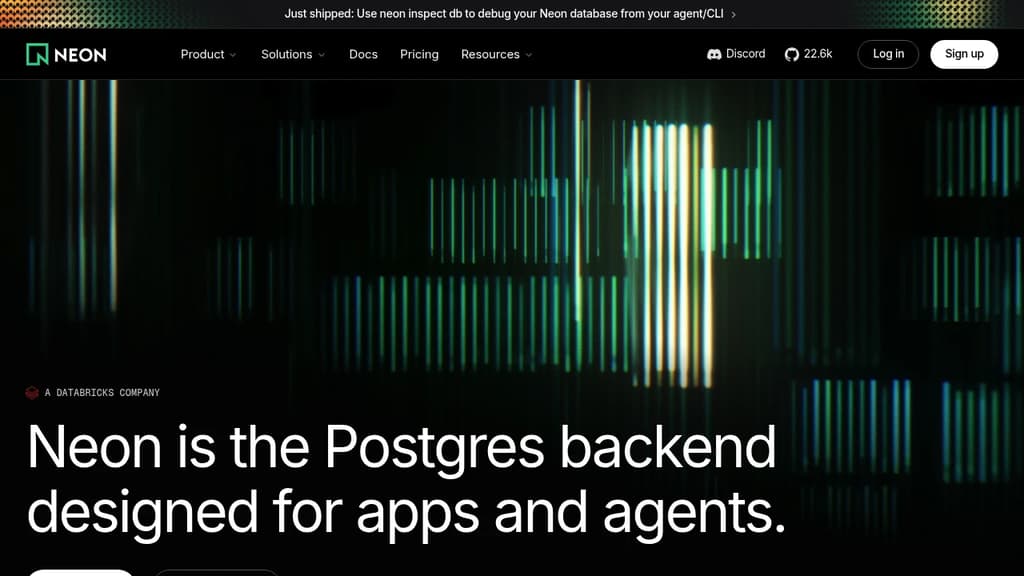
Neon Postgres revolutionizes database management with its serverless, cloud-native architecture. Built for modern applications, it offers a powerful combination of features that enhance developer productivity and optimize resource usage.
Key benefits include:
- Serverless Architecture: Enjoy automatic scaling and pay only for the resources you use, eliminating the need for manual capacity planning.
- Instant Branching: Create database branches in seconds, perfect for development, testing, and CI/CD workflows.
- Bottomless Storage: Leverage separated storage and compute with practically unlimited capacity, ensuring your data grows with your application.
- Multi-Cloud Support: Deploy across multiple cloud providers for enhanced reliability and global presence.
- Advanced Security: Benefit from built-in encryption, access controls, and compliance features to keep your data safe.
- Postgres Compatibility: Utilize the full power of Postgres, including extensions and the latest versions.
- Developer-Friendly: Integrate seamlessly with modern development tools and frameworks for a smooth workflow.
Neon Postgres combines the reliability of traditional databases with the flexibility of cloud-native solutions, making it an ideal choice for startups, enterprises, and everything in between. Experience the future of database management with Neon Postgres.
Scalable, high-availability database system supporting OLTP, OLAP, and hybrid transactional/analytical processing workloads.
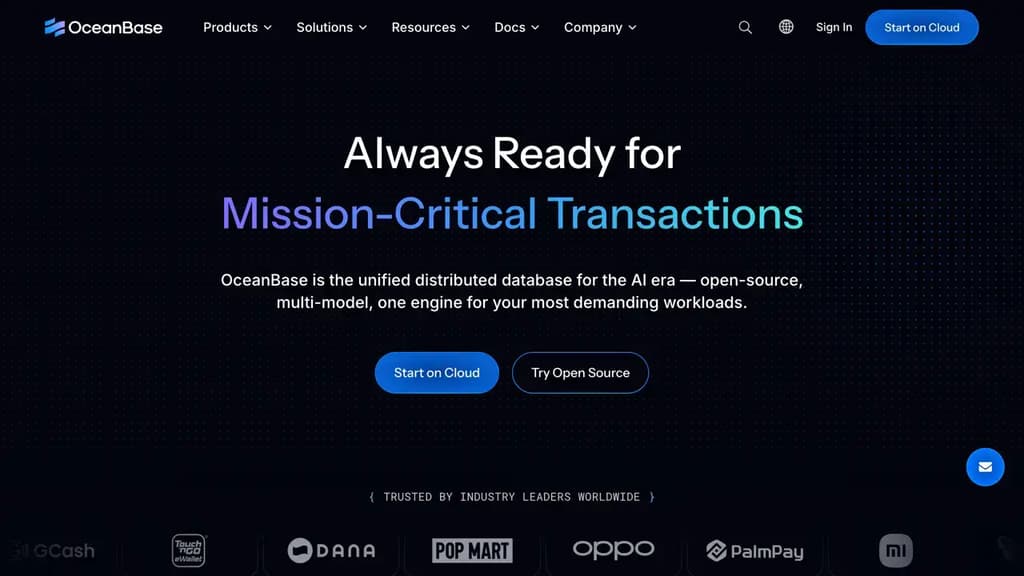
OceanBase is a cutting-edge distributed relational database management system designed to handle massive-scale data processing with unparalleled performance and reliability. Built to meet the demands of modern enterprises, OceanBase offers:
- Scalability: Easily scale out to handle petabytes of data and millions of transactions per second.
- High Availability: Multi-paxos consensus algorithm ensures 99.999% uptime and strong data consistency.
- Versatility: Supports OLTP, OLAP, and HTAP workloads, eliminating the need for separate systems.
- Cost-Effective: Significantly reduces hardware costs and operational complexity compared to traditional databases.
- Compatibility: Supports MySQL and Oracle protocols, facilitating seamless migration and integration.
- Real-Time Analytics: Perform complex queries on live transactional data without impacting performance.
- Multi-Tenancy: Efficiently isolate and manage multiple database instances within a single cluster.
OceanBase's innovative architecture combines the benefits of distributed systems with the familiarity of traditional relational databases, making it an ideal choice for organizations seeking to modernize their data infrastructure while maintaining operational continuity.

Graph database using sparse matrix representation and linear algebra to deliver ultra-low latency Cypher queries, native multi-tenancy, and built-in GraphRAG support for AI applications.
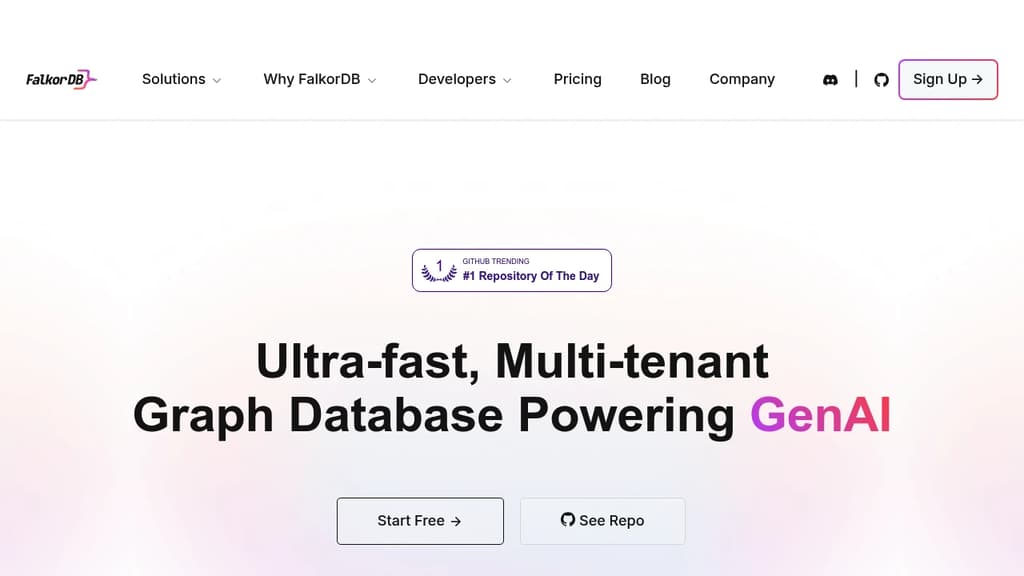
FalkorDB is a graph database built specifically for AI workloads that demand fast, relationship-aware retrieval. It uses sparse matrices for adjacency representation and linear algebra for query execution, which is a fundamentally different architecture from most graph databases. The result is latency measured in milliseconds, not seconds, and memory usage that runs significantly leaner than competitors like TigerGraph or Amazon Neptune.
The primary audience is AI and ML teams building GraphRAG pipelines, agentic systems, or context-aware chatbots that need a memory layer capable of storing and traversing complex relationships at scale. It's also a fit for fraud detection teams and security vendors who need real-time graph analytics across large, interconnected datasets.
Key capabilities include:
- GraphRAG support: Combines LLMs with domain-specific knowledge graphs. Includes ontology auto-detection, built-in agent orchestration, and natural language query support to reduce hallucinations.
- Native multi-tenancy: Supports 10,000+ graphs (tenants) with zero overhead and full isolation, no separate instances required.
- Vector search: Pairs graph traversal with vector search for hybrid retrieval, useful for agentic AI and personalization systems.
- Cypher query language: Uses the industry-standard query language, making migration from Neo4j straightforward.
- Horizontal scalability: Designed for distributed deployments with a pay-as-you-grow model across GCP, AWS, and Azure.
- Persistent conversation history: Stores long-term memory context for chatbots and agentic applications across sessions.
FalkorDB runs as a Redis-based system, which contributes to its low-latency profile. It supports cluster deployment, high availability, multi-zone setups, TLS, VPC, and graph-level access control. Automated backups and continuous persistence are included.
For teams already using tools like Dify or Agno to orchestrate AI workflows, FalkorDB slots in as the graph memory and retrieval layer without requiring changes to the surrounding pipeline architecture.

Memgraph is a scalable, in-memory graph database solution offering high-performance computing and Neo4j compatibility.
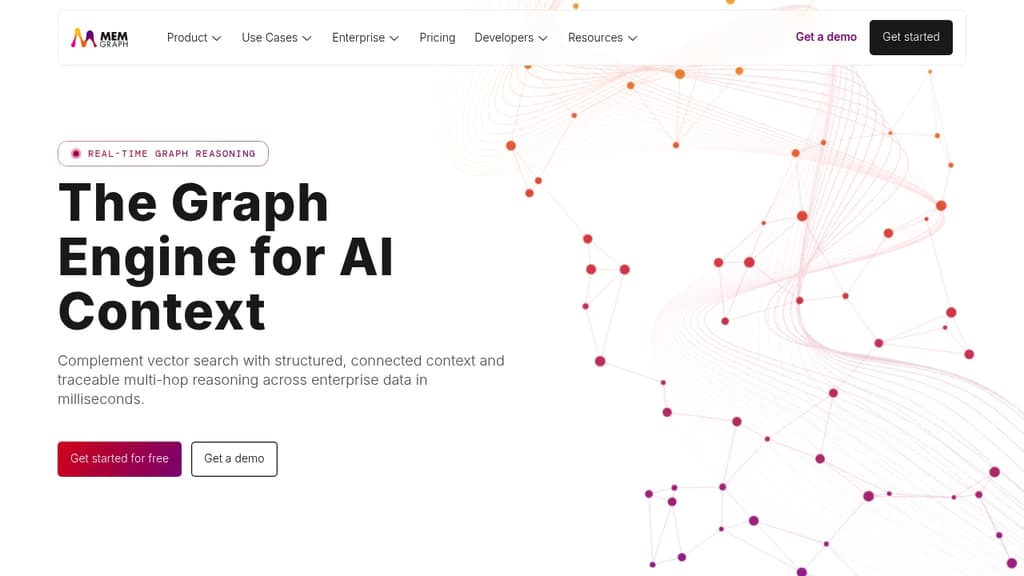
Memgraph is a powerful, in-memory graph database designed for high-performance computing and scalable data analysis. It offers seamless Neo4j compatibility, allowing users to easily transition existing projects or leverage familiar query languages.
Key benefits of Memgraph include:
- Lightning-fast performance: Optimized for in-memory operations, enabling rapid querying and analysis of large-scale graph data.
- Scalability: Designed to handle growing datasets and complex relationships efficiently.
- Real-time analytics: Ideal for mission-critical environments processing over 1,000 transactions per second on both reads and writes.
- Developer-friendly: Supports popular graph query languages and provides extensive documentation and tools.
- Flexible deployment: Can be used on-premises or in cloud environments to suit various infrastructure needs.
Memgraph excels in use cases such as fraud detection, recommendation engines, network analysis, and knowledge graphs. Its ability to handle graph sizes from 100 GB to 4 TB makes it suitable for a wide range of applications.
With a strong focus on performance and scalability, Memgraph empowers organizations to unlock the full potential of their connected data, enabling deeper insights and more efficient decision-making processes.

People are looking for alternatives to...
View all alternatives
Spotify

Claude Code

CapCut

Claude
Notion

Lovable
 c15t – Open-source cookie banner, built for control and lightening fast modern web apps.
 Docmost