Orca vs T3 Code
Learn how Orca and T3 Code differ in their key features, development activity, technology
stack and community adoption, so you can decide which of these ai coding agent orchestrators is best for you.
Learn how Orca and T3 Code differ in their key features, development activity, technology stack and community adoption, so you can decide which of these ai coding agent orchestrators is best for you.

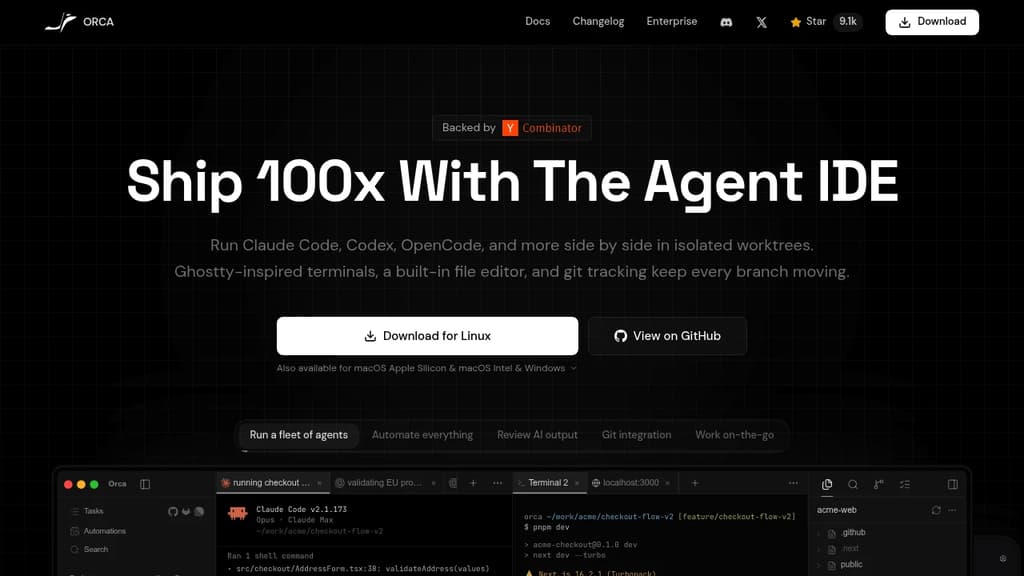
Orca
Last 30 days
Last commit
4 hours agoRepository age
8 monthsVersion
v1.4.264License
MITRepository
stablyai/orca

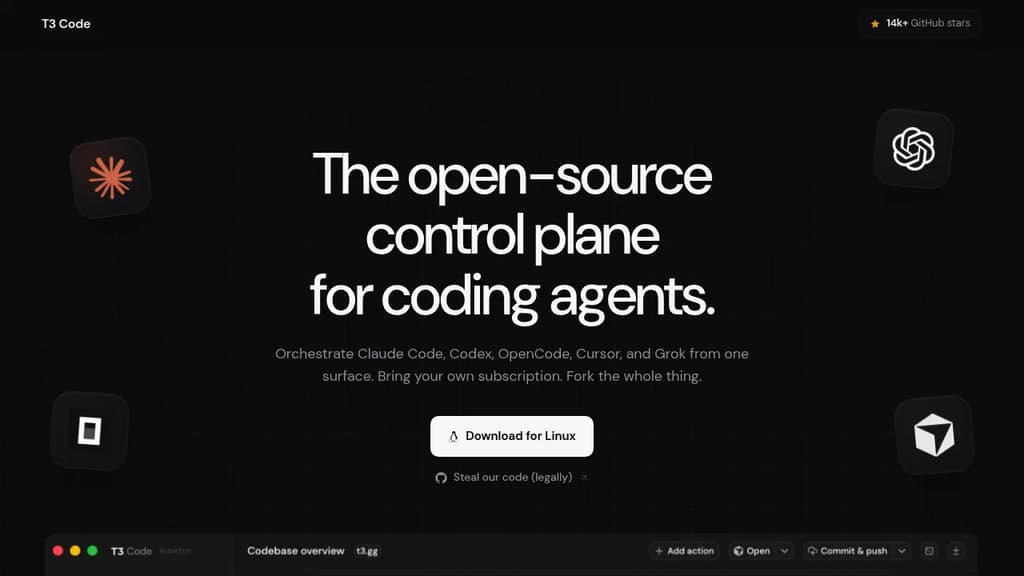
T3 Code
Last 30 days
Last commit
4 hours agoRepository age
9 monthsVersion
v0.1.10License
MITRepository
pingdotgg/t3code
Detailed Comparison
Both Orca and T3 Code have their unique strengths and serve similar purposes effectively. Consider your specific needs regarding popularity, growth, activity, technology, maturity, licensing and features when making your decision.
Both Orca and T3 Code have their unique strengths and serve similar purposes effectively. Consider your specific needs regarding popularity, growth, activity, technology, maturity, licensing and features when making your decision.
Community & Popularity
Orca leads in popularity with 129,745 stars vs 66,252 stars for T3 Code. The 96% higher star count indicates stronger community adoption. In terms of developer contributions, T3 Code has 11,567 forks, indicating strong developer engagement.
Growth Momentum
T3 Code is growing faster, adding 37,430 stars in the last 30 days (+130%) against adding 30,197 stars for Orca (+30%). T3 Code is the smaller project of the two, so it is closing the gap rather than extending a lead.
Development Activity
Both projects show recent activity, with Orca last updated 4 hours ago and T3 Code 4 hours ago.
Technology Stack
Both tools share common technology foundations, being built with JavaScript, CSS, Typescript, JSX. However, they differ in their additional technology choices: Orca uses Bash, Python, Swift, Ruby, Kotlin.
Project Maturity
Both projects started around the same time, with Orca beginning 8 months ago and T3 Code 9 months ago.
Licensing
Both projects use the MIT license, providing identical terms for usage and distribution.
Use Cases & Features
Both tools serve similar use cases in AI Coding Agent Orchestrators.









 Docmost – Open-source wiki software with real-time collaboration, diagrams, AI, SSO, RBAC permissions and more.