Astuto vs LogChimp
Learn how Astuto and LogChimp differ in their key features, development activity, technology
stack and community adoption, so you can decide which of these feedback & feature request management tools is best for you.
Learn how Astuto and LogChimp differ in their key features, development activity, technology stack and community adoption, so you can decide which of these feedback & feature request management tools is best for you.

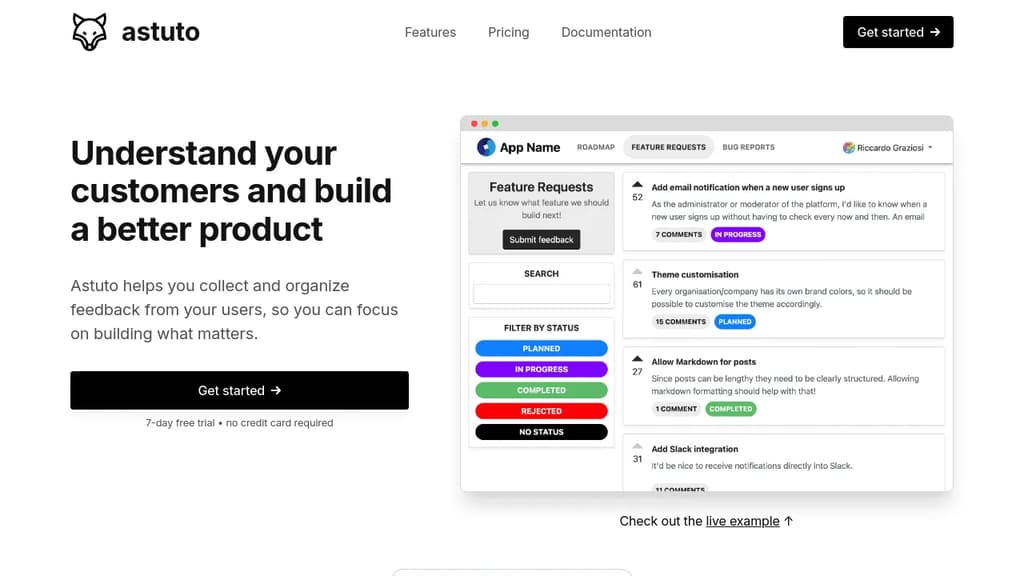
Astuto
Warning: This repository was archived by the owner. It might not be actively maintained anymore.
Auto-fetched .

LogChimp
Stars
1,091Forks
205Last commit
15 hours agoRepository age
6 yearsLicense
Apache-2.0Self-hosted
Yes
Auto-fetched .

Detailed Comparison
Both Astuto and LogChimp have their unique strengths and serve similar purposes effectively. Consider your specific needs regarding popularity, activity, technology, maturity, licensing and features when making your decision.
Both Astuto and LogChimp have their unique strengths and serve similar purposes effectively. Consider your specific needs regarding popularity, activity, technology, maturity, licensing and features when making your decision.
Community & Popularity
Astuto leads in popularity with 2,345 stars vs 1,091 stars for LogChimp. The 115% higher star count indicates stronger community adoption. In terms of developer contributions, LogChimp has 205 forks, indicating moderate developer engagement.
Development Activity
LogChimp shows more recent development activity with its last commit 15 hours ago, while Astuto was last updated 4 months ago. This suggests LogChimp is being more actively maintained.
Technology Stack
Both tools share common technology foundations, being built with JavaScript, Bash, Typescript. However, they differ in their additional technology choices: Astuto uses JSX, SCSS, Ruby while LogChimp leverages CSS, Vue.
Project Maturity
Both projects started around the same time, with Astuto beginning 7 years ago and LogChimp 6 years ago.
Licensing
The projects use different licenses: Astuto is licensed under AGPL-3.0 while LogChimp uses Apache-2.0. Consider the licensing requirements when choosing for your project.
Use Cases & Features
Both tools serve similar use cases in Feedback & Feature Request Management, Community Feedback Platforms.
Hosting & Deployment
Both Astuto and LogChimp offer self-hosting capabilities, giving you full control over your data and infrastructure.




 Stellar Hosted – Managed Open Source software hosting in the EU: secure, compliant, fast.